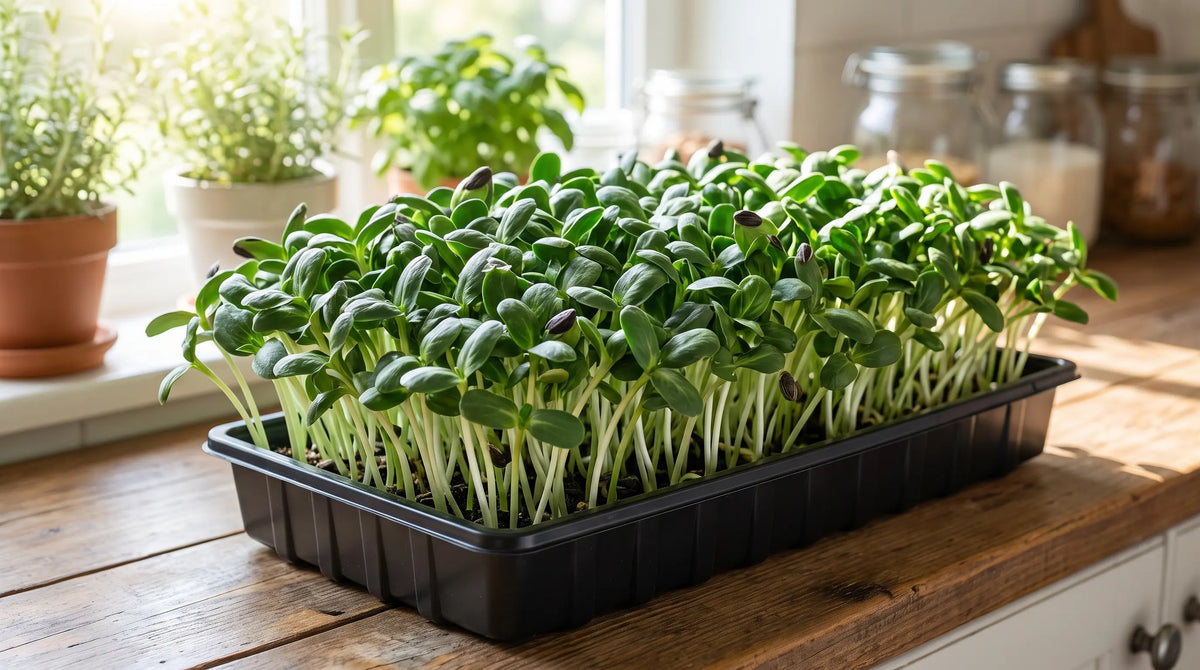
Sunflower microgreens growing in a dense tray at harvest stage

How to Grow Sunflower Microgreens

Updated July 2026

Sunflower microgreens are among the most satisfying shoots you can grow at home: thick, crunchy, and full of a fresh, nutty flavor. Started from black oil sunflower seeds, they go from soaked seed to harvest in just 8 to 12 days, standing 3 to 4 inches tall. They grow indoors on a simple tray year-round, needing only water, light, and a little patience, which makes them a favorite first crop for anyone new to microgreens.

Best tip

Use a weighted blackout for the first few days. Sunflower's biggest headache is hulls clinging to the leaves, and gentle pressure from a second stacked tray or a weighted dome is what pushes them off cleanly. No special equipment is needed, just something to add a little weight while the shoots lift.

At a glance

Botanical nameHelianthus annuus (black oil sunflower)
Plant typeMicrogreen
SunBright light or grow light (after blackout)
Days to maturity8 to 12 days
Height3 to 4 in
WaterBottom-water; keep evenly moist

When to plant

Sunflower microgreens grow indoors year-round, so you never have to wait for a season. Keep them somewhere warm and bright, ideally around 65 to 75F, on a sunny windowsill or under a simple grow light. Because they are a cut-once crop, the trick to a steady supply is to sow a fresh tray every week or so and keep two or three going on rotation.

How to plant

Start by soaking the black oil sunflower seeds in cool water for 8 to 12 hours, which softens their hard hulls for fast, even germination. Spread a shallow tray with an inch or two of fine seed-starting mix or coconut coir, level it, and sow the soaked seeds densely and evenly with minimal overlap. Mist the surface, then cover with a second tray or a weighted blackout dome for the first 2 to 4 days; the pressure helps the shoots push off their hulls. Once they have lifted, uncover the tray and move it into bright light to green up.

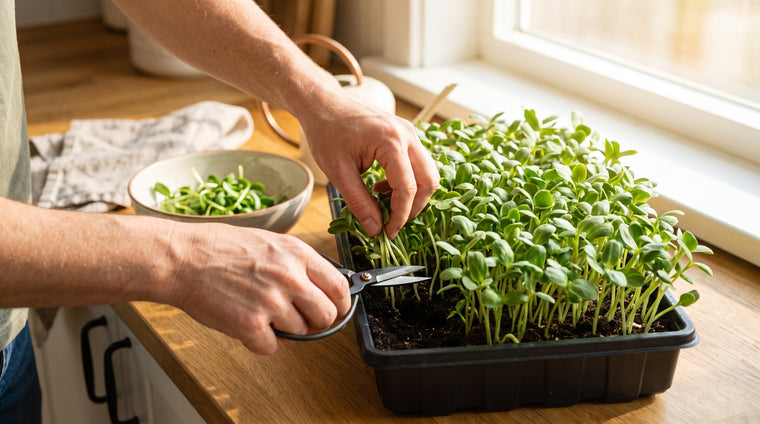
Harvest sunflower shoots with clean scissors just above the soil line.

Growing and care

After germination, always bottom-water by pouring into the tray below so the foliage stays dry and mold-free, keeping the medium evenly moist but never soggy. Give the shoots 10 to 16 hours of bright light a day and good airflow around the tray, and hold the temperature around 65 to 75F. Clean trays, thinner sowing, and dry leaves are the best defense against mold, so err on the side of less water and more air.

White fuzz is almost always root hairs, not mold. The most common beginner worry with sunflower microgreens is a halo of fine white fuzz on the stem near the seed. That is normal root hair and disappears the moment you mist it. Real mold is slimy or cobweb-like, spreads across the soil surface, and smells sour. If you see that, improve airflow, water less, and sow more thinly next time.

Harvest

Sunflower microgreens are ready in about 8 to 12 days, once they stand 3 to 4 inches tall with their first true leaves just appearing and most of the black hulls have dropped. Cut the whole tray with clean scissors just above the soil line, and gently rub off any hulls that still cling to the leaves. Store the harvested shoots dry in an airtight container in the fridge and wash them just before use. Sunflower does not regrow after cutting, so compost the roots and start a fresh tray.

Uses

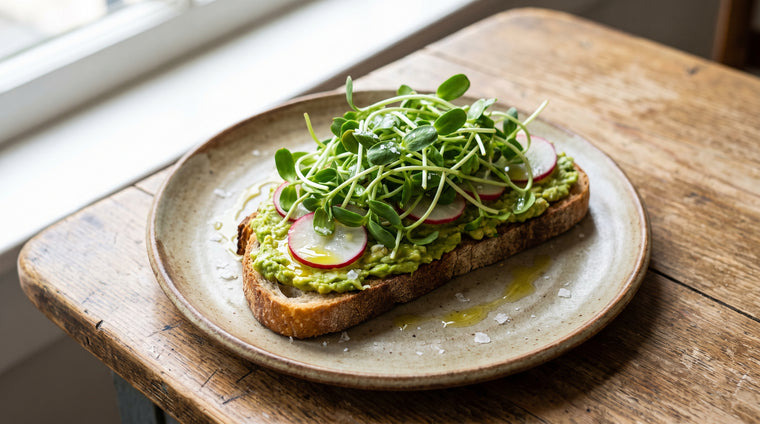
Sunflower microgreens are thick, crunchy, and nutty, holding up beautifully as more than a garnish. Pile them onto salads, sandwiches, wraps, and grain bowls, layer them on avocado toast, or blend a handful into a smoothie. Like all microgreens they are nutrient-dense, and their sturdy crunch makes them one of the most satisfying shoots to eat by the handful.

Crunchy sunflower microgreens on fresh avocado toast.

Common problems

  • Seed hulls stuck on the leaves: the most common sunflower issue. Use a weighted blackout dome so the shoots shed hulls, harvest after most have dropped, and mist then gently rub off any that remain.
  • White fuzz on the stems: usually harmless root hairs near the seed that vanish when misted. Slimy or cobweb-like growth across the soil with a sour smell is true mold, so improve airflow, water less, and sow thinner.
  • Damping off (shoots collapsing at the base): too wet and too little air. Bottom-water only, thin your sowing, and increase airflow.
  • Leggy, pale shoots: not enough light after the blackout period. Move the tray into brighter light or under a grow light sooner.
  • Uneven germination: uneven soaking, sowing, or moisture. Soak fully, spread seeds evenly, and keep the medium uniformly moist.

Frequently asked questions

Do I need to soak sunflower seeds before planting?

Yes. Sunflower is a large, hard seed, so soaking is required. Soak the black oil sunflower seeds in cool water for 8 to 12 hours before sowing. This softens the hull and gives you fast, even germination across the tray.

How long do sunflower microgreens take to grow?

About 8 to 12 days from sowing to harvest. After a 2 to 4 day blackout period the shoots green up quickly, and they are ready once they stand 3 to 4 inches tall with the first true leaves just appearing.

The seed hulls are stuck on my sunflower microgreens. What do I do?

Black hulls clinging to the leaves are the most common sunflower problem. Use a weighted blackout dome for the first few days so the emerging shoots push against pressure and shed their hulls. Wait to harvest until most hulls have dropped and the first true leaves show, then gently rub or pick off any that remain.

Is that white fuzz on my sunflower microgreens mold?

Usually not. Fine white fuzz clustered on the stem right near the seed is almost always root hairs, which are normal and disappear when you mist. True mold is slimy or cobweb-like, spreads across the soil surface, and often smells sour. If you see that, improve airflow, water less, and sow a little thinner next time.

Do sunflower microgreens grow back after cutting?

No. Sunflower microgreens are a cut-once crop. Once you snip the shoots just above the soil they will not regrow, so harvest the whole tray and start a fresh sowing for your next batch. Running two or three trays on rotation gives you a steady supply.

Are sunflower microgreens good for you?

Yes. Like all microgreens they are nutrient-dense, and sunflower shoots are especially prized for their thick, crunchy texture and fresh, nutty flavor. They are a high-yielding crop that packs a lot of green into a small tray, making them one of the most satisfying microgreens to grow at home.

Ready to grow your own sunflower microgreens? Start with non-GMO, heirloom microgreen and sprouting seeds for thick, crunchy, nutty shoots in under two weeks.

Want to grow a rainbow of microgreens? Try these non-GMO favorites alongside your sunflower:

Broccoli Sprouting & Microgreens Seeds 1lb
Broccoli Sprouting & Microgreens Seeds 1lbNon-GMOBroccoli microgreens - mild, fresh flavor with a nutrition-packed brassica punch.$23.99$21.99
View product
Radish Sprouting & Microgreen Seeds 1lb
Radish Sprouting & Microgreen Seeds 1lbNon-GMORadish microgreens - bold, peppery flavor and fast to grow.$19.99$17.99
View product
Beet Sprouting & Microgreens Seeds 1lb
Beet Sprouting & Microgreens Seeds 1lbNon-GMOBeet microgreens - earthy, sweet flavor with striking magenta stems.$24.99$21.99
View product
Maxim Kaufman, Founder and CEO of Organo Republic

By Maxim Kaufman — Founder & CEO, Organo Republic

Maxim founded Organo Republic in 2017 and personally selects, tests, and grows the heirloom, non-GMO varieties the company offers. Under his leadership, Organo Republic was named Agri Business Review’s Top Non-GMO Seed Variety Solution 2026.