- 10
- 15
- 20
- 25
- 30
- 50
- Featured
- Most relevant
- Best selling
- Alphabetically, A-Z
- Alphabetically, Z-A
- Price, low to high
- Price, high to low
- Date, old to new
- Date, new to old
Sort by:
- Featured
- Most relevant
- Best selling
- Alphabetically, A-Z
- Alphabetically, Z-A
- Price, low to high
- Price, high to low
- Date, old to new
- Date, new to old
Included in Sets - Starts at $0.48 per Sage Seeds Variety
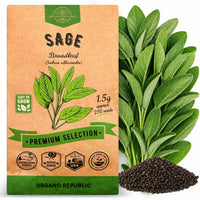
Grow your own sage (Salvia officinalis), the soft, silver-green herb whose warm, savory flavor defines autumn cooking. Whether you want to buy sage seeds for stuffing and roasts, brown-butter pasta, or a handsome evergreen edging for a sunny bed, you are in the right place. Our non-GMO heirloom sage seed grows into hardy, aromatic perennials that return and get better year after year. Sage is a drought-tolerant, low-maintenance herb that thrives in poor soil and full sun. Browse our sage seeds below, then follow our complete sage growing guide to take your plants from seed to harvest.
What we love about growing sage
- Warm, savory flavor that makes autumn and holiday cooking sing
- Hardy perennial that returns and grows fuller every year
- Drought-tolerant and low-maintenance, thriving even in poor soil
- Soft, silver-green foliage that looks handsome in any bed or pot
- Purple-blue flower spikes that bees and pollinators love
The savory Mediterranean herb worth a spot in your garden
Sage (Salvia officinalis) is a woody, evergreen perennial grown for its soft, velvety, silver-green leaves and warm, earthy, slightly peppery flavor. A classic of Mediterranean and holiday cooking, it is the herb behind sausage stuffing, brown-butter sauces, and roast pork. Its mounding, aromatic foliage looks handsome edging a bed or filling a container, and in summer it sends up spikes of purple-blue flowers that bees find irresistible.
How to grow sage from seed
Sage is an easygoing perennial once it gets going. Sow sage seeds about a quarter inch deep in well-drained soil in full sun after the last frost, and keep them lightly moist until they germinate. Thin plants to stand 18 to 24 inches apart, as they grow into rounded, woody clumps. Sage is drought-tolerant, reaches 12 to 30 inches, and is ready to harvest in its first season, returning larger each year. For the full step-by-step, see our complete guide to growing sage from seed.
How to use sage
Sage shines in rich, savory dishes. Fry whole leaves in butter until crisp for pasta and gnocchi, chop it into sausage stuffing and sausage meat, or lay sprigs over roast pork and poultry. It flavors breads, beans, and hearty soups beautifully. Beyond the kitchen, sage leaves are traditionally brewed into herbal teas, and dried bundles are used for their fragrance around the home.
Sage and its Mediterranean cousins
If you love sage, you will enjoy the other sun-loving Mediterranean herbs. Try rosemary for a piney evergreen partner, thyme for a fragrant low groundcover, or oregano for a bold, savory staple. You can explore the full range in our herb seeds collection.
Why buy sage seeds from Organo Republic
Every packet of sage seed we sell is non-GMO, open-pollinated heirloom, and germination tested, so you can sow with confidence. As a U.S. family business, we work directly with trusted growers to keep quality high and prices low, and every pack carries a QR code that links straight to free online growing guidance. Orders over $49 ship free. Whether you want a single pack of sage or a curated herb collection, you will find dependable, easy-to-grow seed here.