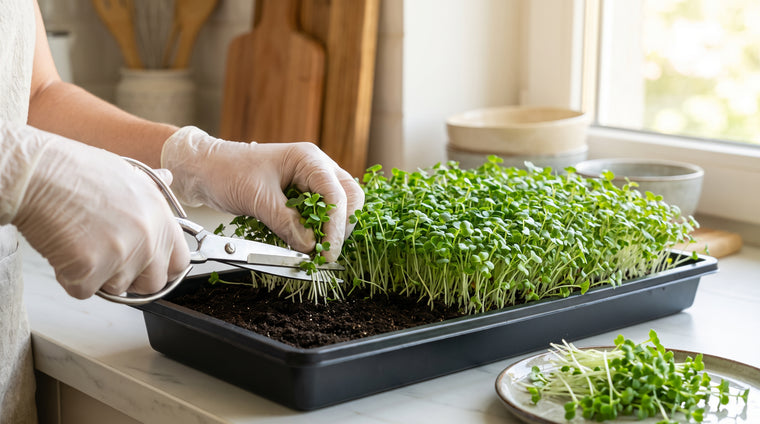
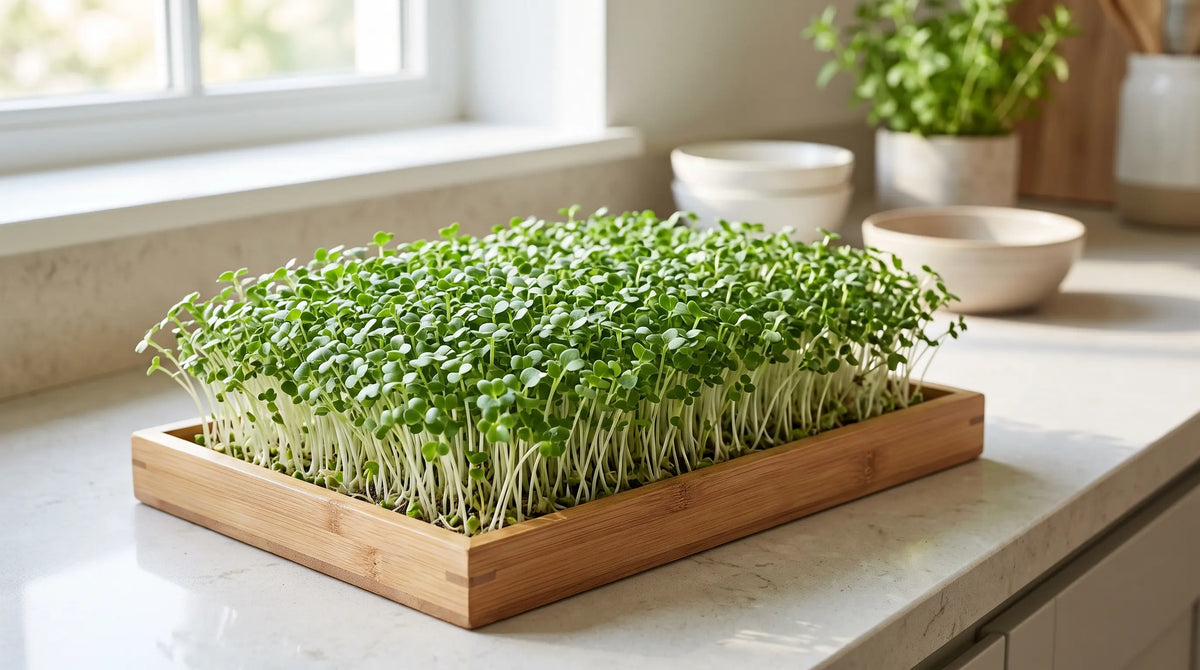
Alfalfa microgreens tray and a jar of alfalfa sprouts

How to Grow Alfalfa Microgreens

Updated July 2026

Alfalfa is the classic sprout, and it is one of the easiest fresh greens to grow in your own kitchen. With a mild, fresh, nutty flavor, it can be grown two ways: as tangled jar sprouts in a mesh-topped mason jar or as a fine, leafy microgreen on a shallow tray. Either method is ready in under a week and needs no soil for the jar version, just clean water and a rinse morning and night. It is a fast, forgiving crop that rewards a little care with safe, healthy greens year-round.

Best tip

Rinse well and drain thoroughly, 2 to 3 times a day. With alfalfa, clean water and good drainage matter more than anything else, both for safe sprouts and for avoiding mold. No special equipment is needed, just a jar with a mesh lid and a habit of rinsing morning and night.

At a glance

Botanical nameMedicago sativa
Plant typeMicrogreen
SunIndirect bright light (jar) or bright light / grow light (tray)
Days to maturity5 to 10 days (sprouts 4 to 6 days)
Height1 to 2 in
WaterRinse and drain 2 to 3x daily (jar); bottom-water (tray)

When to plant

Alfalfa grows indoors year-round, whether you sprout it in a jar or grow it on a tray, so any week of the year is a good time to start. Keep it somewhere comfortable, around 65 to 75F, out of hot direct sun for jar sprouts and under bright light or a grow light for tray microgreens. Because a batch is ready in under a week, starting a fresh jar or tray every few days keeps a steady supply on hand.

How to plant

Alfalfa seed is tiny, so no long soak is needed. For the classic jar method, put a spoonful of seed in a wide-mouth jar with a mesh lid, add a short 3 to 4 hour rinse-soak, then drain fully and set the jar tilted mouth-down to keep draining. Rinse and drain 2 to 3 times a day and the sprouts are ready in 4 to 6 days. To grow alfalfa as a tray microgreen instead, spread a shallow tray with fine seed-starting mix or coconut coir, sow the seed densely and evenly, mist, and cover for 2 to 3 days of blackout before moving the tray into bright light to green up.

Alfalfa grows as jar sprouts or as a fine tray microgreen.

Growing and care

For jar sprouts, the whole job is rinsing well 2 to 3 times a day, draining thoroughly so they never sit in water, and keeping the jar cool and out of direct sun; a final rinse in bright indirect light greens them up. For tray microgreens, bottom-water to keep the fine foliage dry, give 10 to 16 hours of bright light, and keep good airflow with even, not soggy, moisture. In both methods, clean equipment and thorough draining are your best protection against mold and off smells.

Raw sprouts, especially alfalfa, have been linked to foodborne illness. The same warm, moist conditions that sprout the seed can also grow bacteria, so treat food safety as part of the recipe. Use clean equipment, rinse well 2 to 3 times a day, keep everything cool, and rinse the sprouts again right before eating. Anyone who is pregnant, very young, elderly, or immune-compromised may prefer to cook them.

Harvest

Jar sprouts are ready in about 4 to 6 days when the tails are an inch or so long and the leaves are just greening; give them one last rinse and drain them well before eating. Tray microgreens are ready in about 5 to 10 days at 1 to 2 inches tall, cut with clean scissors just above the soil line. Store either one dry in an airtight container in the fridge and rinse again before use. Alfalfa does not regrow after cutting, so start a fresh batch for your next harvest.

Uses

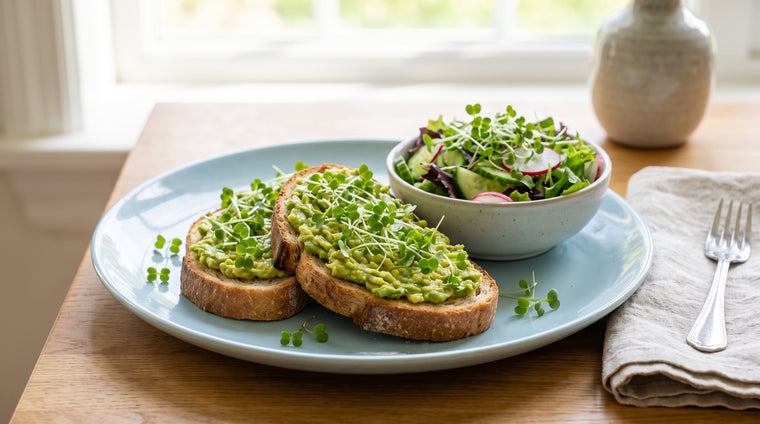
Alfalfa has a mild, fresh, nutty flavor that goes with almost anything. Pile the sprouts into sandwiches and wraps, scatter them over salads and grain bowls, or use the tray microgreens as a fresh green garnish. Like all microgreens and sprouts they are low in calories and nutrient-dense, which is a big part of their long-standing popularity as a health food.

Fresh alfalfa sprouts pile onto a healthy sandwich.

Common problems

  • Slimy sprouts or a sour smell: too much moisture and not enough draining. Rinse more thoroughly, drain fully so seeds never sit in water, and keep the jar tilted mouth-down.
  • White fuzz along the roots: usually harmless root hairs that vanish when rinsed. Grey, dark, or cobweb-like growth that smells musty is true mold, so discard the batch and clean everything well.
  • Mold in the jar or tray: often from dirty equipment or warm, stagnant conditions. Sanitize gear, keep things cool, and improve airflow and drainage.
  • Poor or uneven germination: too many seeds, old seed, or uneven moisture. Use a modest amount of fresh seed and rinse evenly.
  • Leggy, pale tray microgreens: not enough light after the blackout period. Move the tray into brighter light sooner.

Frequently asked questions

Do I need to soak alfalfa seeds before growing?

No soak is needed for tray microgreens because alfalfa seed is tiny. For the jar sprouting method a short 3 to 4 hour rinse-soak helps kick off germination, but that is all. Just rinse and drain well, and the seeds do the rest.

How long do alfalfa sprouts and microgreens take?

Jar sprouts are ready in about 4 to 6 days, when the tails are an inch or so long and the leaves are just greening. Grown as a tray microgreen, alfalfa takes about 5 to 10 days to reach a harvestable 1 to 2 inches.

Are raw alfalfa sprouts safe to eat?

Raw sprouts, especially alfalfa, have been linked to foodborne illness because the warm, moist sprouting conditions can also grow bacteria. To stay safe, use clean equipment, rinse well 2 to 3 times a day, keep everything cool, and rinse the sprouts again just before eating. Anyone who is pregnant, very young, elderly, or immune-compromised may prefer to cook them.

Is the white fuzz on alfalfa sprouts mold?

Almost always it is root hairs, not mold. Fine white fuzz that appears in a halo right along the roots and vanishes when you rinse is completely normal. Real mold is grey or dark, cobweb-like, smells musty or sour, and does not rinse away. If in doubt, rinse well and improve drainage and airflow.

Should I grow alfalfa as jar sprouts or tray microgreens?

Both work. The classic method is jar sprouts, which need no soil, just rinsing and draining, and give you the familiar tangle of sprouts in under a week. Grown on a shallow tray as a microgreen, alfalfa stands a little taller with greener leaves and a fresher look. Try both and pick your favorite.

Are alfalfa sprouts good for you?

Yes. Alfalfa sprouts and microgreens are low in calories and nutrient-dense, with a mild, fresh, nutty flavor that suits almost any dish. Just follow safe sprouting practices, keeping everything clean and rinsing before eating, to enjoy them at their best.

Ready to grow your own alfalfa sprouts and microgreens? Start with non-GMO, heirloom microgreen and sprouting seeds for fresh, nutty greens in under a week.

Want to grow a rainbow of microgreens? Try these non-GMO favorites alongside your alfalfa:

Broccoli Sprouting & Microgreens Seeds 1lb
Broccoli Sprouting & Microgreens Seeds 1lbNon-GMOBroccoli microgreens - mild, fresh flavor and a favorite for beginners.$23.99$21.99
View product
Radish Sprouting & Microgreen Seeds 1lb
Radish Sprouting & Microgreen Seeds 1lbNon-GMORadish microgreens - bold, peppery flavor and quick to grow on a tray.$19.99$17.99
View product
Beet Sprouting & Microgreens Seeds 1lb
Beet Sprouting & Microgreens Seeds 1lbNon-GMOBeet microgreens - earthy, sweet flavor with vivid magenta stems.$24.99$21.99
View product
Maxim Kaufman, Founder and CEO of Organo Republic

By Maxim Kaufman — Founder & CEO, Organo Republic

Maxim founded Organo Republic in 2017 and personally selects, tests, and grows the heirloom, non-GMO varieties the company offers. Under his leadership, Organo Republic was named Agri Business Review’s Top Non-GMO Seed Variety Solution 2026.