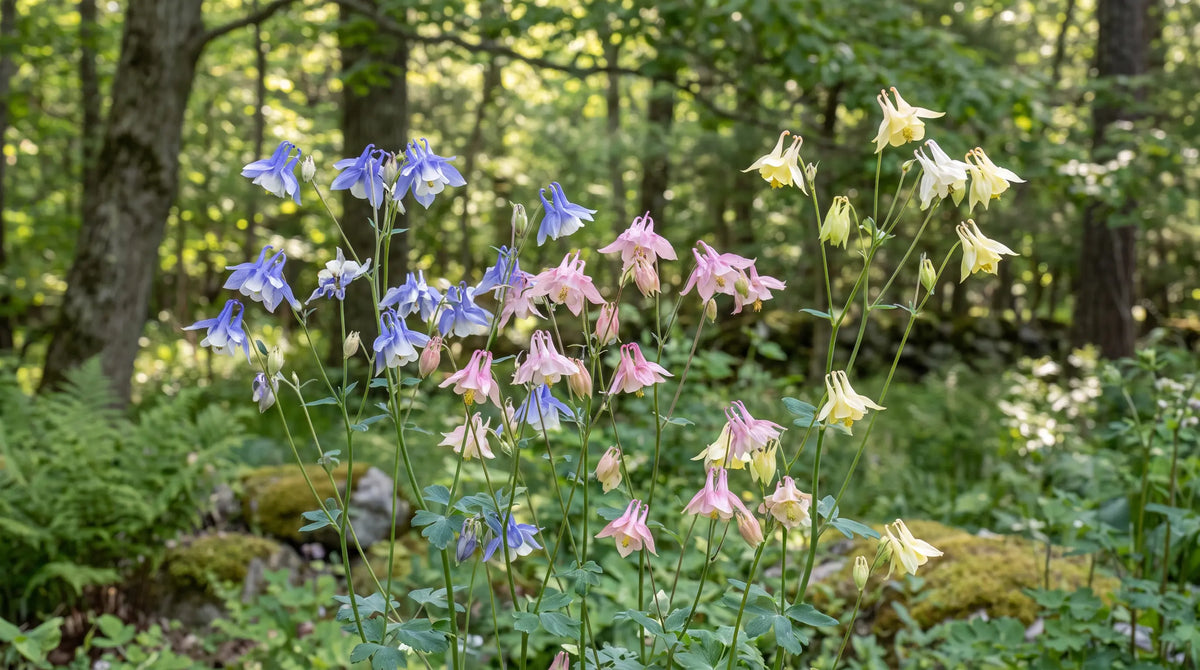
How to grow columbine: Aquilegia in bloom at a woodland edge

How to Grow Columbine From Seed

Updated July 2026

Columbine (Aquilegia) is the graceful, spurred wildflower that nods over part-shade borders and woodland edges in late spring, in colors from clear blue and pink to deep wine and yellow. It is a perennial that hummingbirds love, self-sows into easygoing drifts, and thrives in the dappled light where many flowers sulk. Growing it from seed takes a little know-how, since the seed needs both a cold spell and light to sprout. Here is how to grow columbine from seed, the reliable way.

Best tip

Sow in fall and let winter do the work. Columbine seed needs a cold-moist chill and light to germinate well, and the easiest way to give it both is to scatter the seed on prepared soil in autumn and leave it uncovered over winter. It stratifies naturally and sprouts in spring, saving you the fussy fridge routine entirely.

At a glance

Botanical nameAquilegia spp.
Plant typeShort-lived herbaceous perennial
USDA zones3 to 8
SunPart shade to full sun
Days to maturityBlooms in late spring, usually the second year
Height1 to 3 feet
Spacing1 to 2 feet apart
WaterModerate; keep evenly moist, well-drained

When to plant

Columbine is a perennial that rewards a little patience. The simplest approach is to sow in fall and let winter chill the seed naturally, so it sprouts in spring. You can also sow in early spring after giving the seed a cold-moist period in the fridge. As a perennial, columbine usually spends its first year making a leafy clump and then blooms the following late spring. In hot regions, sow so plants establish in the cool of spring or fall, and site them where they get afternoon shade.

How to plant

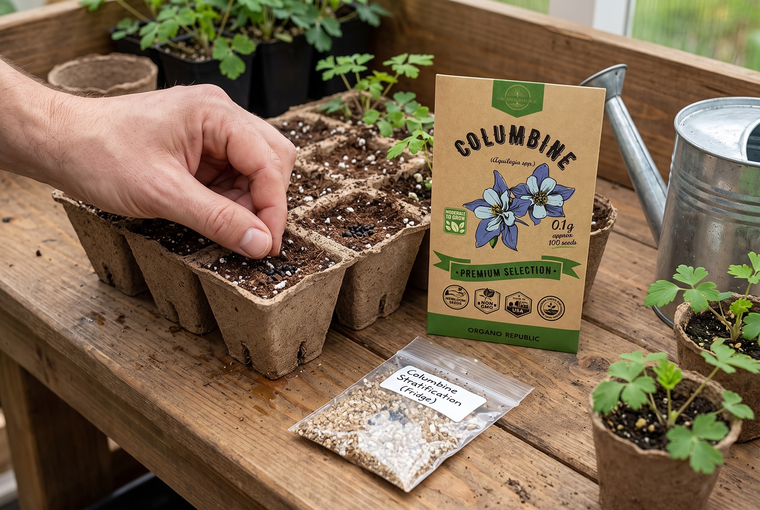
Two things make or break columbine from seed: cold and light. The seed germinates best after a cold-moist spell, so either sow in fall or chill the seed in a damp paper towel or sand in the fridge for two to three weeks first. Then surface-sow, since columbine needs light to germinate, pressing the seed onto moist mix without covering it. Keep it cool and evenly moist; germination is slow and uneven, often 3 to 4 weeks. Transplant carefully, because columbine has a taproot, spacing plants 1 to 2 feet apart in well-drained soil in part shade to sun.

Surface-sow chilled columbine seed and press it in; it needs light to sprout.

Growing and care

Columbine is low-maintenance once settled. Keep the soil evenly moist but never waterlogged, and go easy on feeding, since rich soil pushes leaves at the expense of flowers. Deadhead to tidy the plant and, if you like, to limit self-sowing, though many gardeners leave some seed to ripen so new plants replace the short-lived originals. If leaf miners leave white trails on the foliage, simply cut the plant back after bloom and it flushes clean new leaves.

SaleMycorrhizal Fungi Granules
Mycorrhizal Fungi GranulesFeeds roots naturallyMix into the planting area to help columbine's taproot draw up water and nutrients.
Price$39.99Starting at$29.99
View product

The best companion plants

Columbine suits other pollinator plants that tolerate cooler, partly shaded beds. These heirloom, non-GMO companions pair well with it:

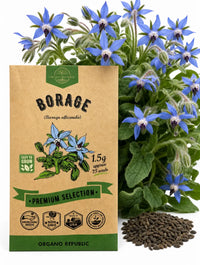
SaleBorage Seeds – Non-GMO Heirloom
Borage Seeds – Non-GMO HeirloomHeirloom, non-GMOBorage draws bees and hoverflies to the same partly shaded beds columbine loves.
Price$5.99 Sale Price$4.99
View product
SaleMarigold Seeds Pack
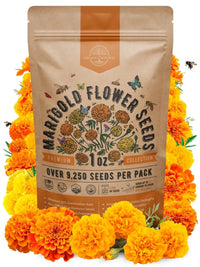
Marigold Seeds PackHeirloom, non-GMOMarigolds deter pests and add warm color once columbine's spring show fades.
Price$12.99Starting at$8.99
View product
SaleNasturtium Seeds for Sale – Non-GMO Heirloom
Nasturtium Seeds for Sale – Non-GMO HeirloomHeirloom, non-GMONasturtiums scramble over bare ground and share columbine's love of cool weather.
Price$14.99Starting at$6.99
View product

Columbine seed needs cold and light to sprout. The most common reason seeds fail is being buried and never chilled. Give the seed a cold-moist period, then surface-sow it in the light, and be patient, since germination is naturally slow. Skip either step and you will likely get poor, uneven sprouting.

Harvest

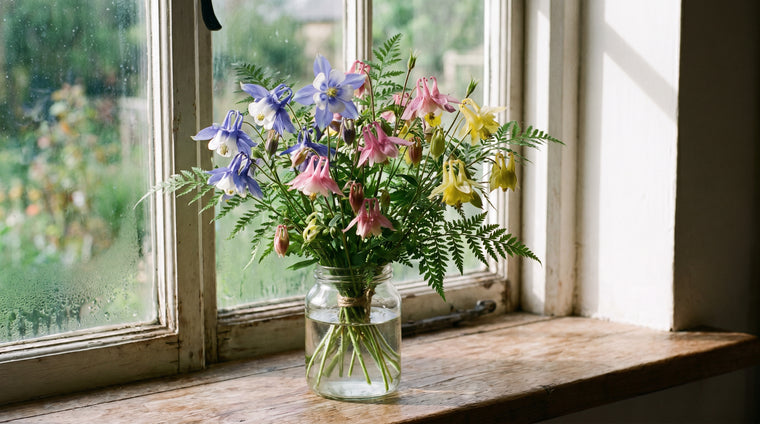
Columbine is grown for its beauty rather than a harvest, but its nodding, spurred flowers make a lovely, airy cut flower. Snip stems in the cool of the morning when the blooms are freshly open for the longest vase life, and pair them with their own fern-like foliage for a delicate cottage arrangement. Leave some flowers on the plant to set seed if you want it to self-sow and keep coming back.

Uses

Columbine is a star of the part-shade garden, one of the few flowering perennials that thrives at a woodland edge or on the shady side of a border. Its nectar-rich, spurred flowers are a classic favorite of hummingbirds and are also worked by bees and butterflies. The delicate blooms and lacy foliage make an airy cut flower, and because it self-sows, it naturalizes into drifting, ever-changing colonies of color.

Cut columbine makes a delicate, airy cottage bouquet.

Common problems

  • Seeds won't germinate: they need cold stratification and light. Chill the seed, then surface-sow it and wait, since it is slow.
  • White trails on leaves: leaf miners, mostly cosmetic. Remove affected leaves and cut the plant back after bloom for fresh growth.
  • No flowers the first year: normal for this perennial; it usually blooms in its second spring.
  • Flops or fades fast: columbine is short-lived, so let some plants self-sow to replace themselves over time.
  • Poor bloom in rich soil: ease off fertilizer, which pushes foliage over flowers.

Frequently asked questions

How do I cold stratify columbine seeds?

Columbine germinates best after a cold, moist spell. The easy way is to sow in fall and let winter do the work. To start indoors, mix the seed with a little damp sand or a moist paper towel in a sealed bag and refrigerate for two to three weeks, then surface-sow, since the seed also needs light to sprout.

Why won't my columbine seeds germinate?

The two most common reasons are burying the seed and skipping the chill. Columbine needs light to germinate, so press the seed onto the surface rather than covering it, and give it a cold-moist period first. Germination is also slow and uneven, often taking three to four weeks, so be patient.

Where is the best place to plant columbine?

Columbine is happiest in dappled or part shade with well-drained soil, which makes it one of the few flowering perennials that thrives at a woodland edge or on the shady side of a border. It also grows in full sun in cooler climates, but appreciates afternoon shade where summers are hot.

How often should I divide columbine?

Columbine has a taproot and does not love being moved, so it rarely needs dividing. If a clump gets crowded after several years, you can lift and divide it in early spring or fall, though many gardeners simply let it self-sow and replace itself, since it is a short-lived perennial.

Is columbine deer resistant?

Yes, columbine is one of the more deer-resistant flowering perennials, and rabbits usually pass it by as well. That makes it a reliable choice for shady borders in areas with heavy browsing, though no plant is ever completely deer-proof when food is scarce.

What causes the white trails on columbine leaves?

Those squiggly white lines are the work of leaf miners, tiny larvae that tunnel inside the leaf. They are mostly cosmetic and rarely harm the plant. Pick off and destroy affected leaves, and cut the whole plant back after flowering to push out clean new growth.

Ready to grow your own? Start with heirloom, non-GMO columbine seeds for elegant, hummingbird-loved blooms in the part-shade garden.

SaleColumbine Flower Seeds – Non-GMO Heirloom
Columbine Flower Seeds – Non-GMO HeirloomHeirloom, non-GMOHeirloom columbine — elegant, hummingbird-loved blooms for the part-shade garden.
Price$4.99Starting at$3.99
View product

Want more than columbine? These value sets all include columbine seeds, plus many more flowers:

SaleEdible Flower Seeds Variety Pack – Non-GMO Heirloom
Edible Flower Seeds Variety Pack – Non-GMO Heirloom31 varieties, columbine includedThe biggest edible-flower collection, columbine alongside 30 other varieties.
Price$20.99Starting at$17.99
View product
Maxim Kaufman, Founder and CEO of Organo Republic

By Maxim Kaufman — Founder & CEO, Organo Republic

Maxim founded Organo Republic in 2017 and personally selects, tests, and grows the heirloom, non-GMO varieties the company offers. Under his leadership, Organo Republic was named Agri Business Review’s Top Non-GMO Seed Variety Solution 2026.

Stay Connected

Join Our Garden Community

Daily garden inspiration, how-to videos & behind-the-seeds stories.