


How to Grow Radish Microgreens
Updated July 2026
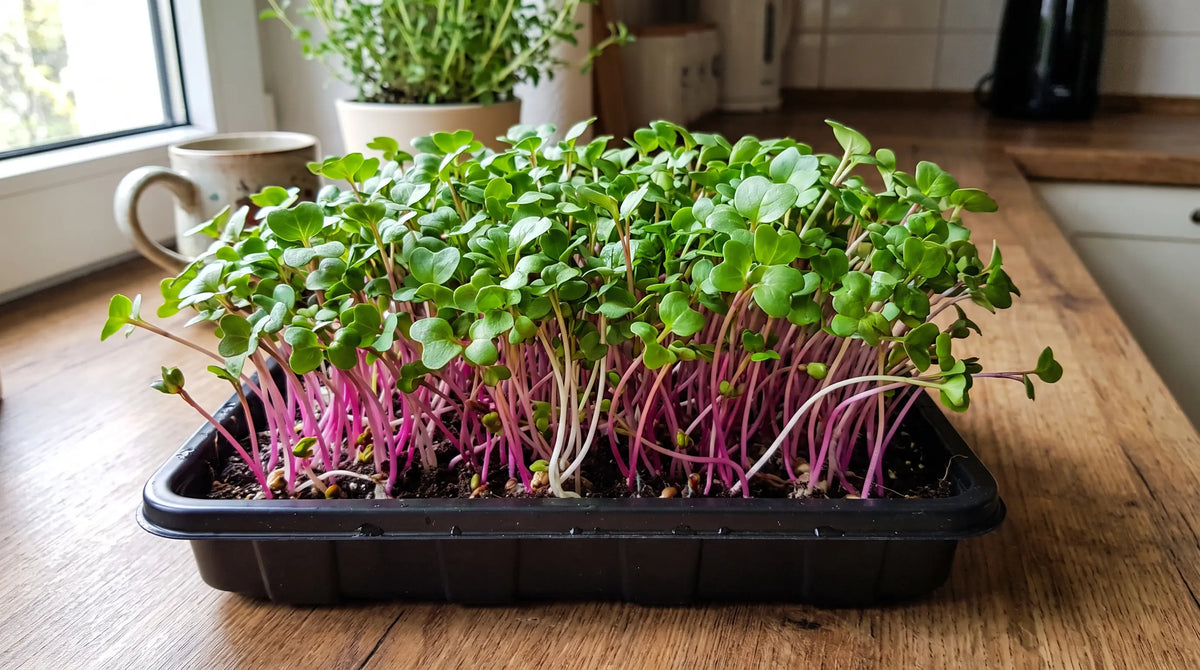
Radish microgreens are the tender young shoots of radish, harvested in just 6 to 10 days, with vivid pink or purple stems, bright green leaves, and a bold, spicy, peppery bite. They are one of the fastest and highest-yielding microgreens you can grow, so easy and forgiving that they are perfect for a first-time grower. Raise them in a shallow tray on any bright windowsill, or sprout them in a jar with no soil at all. Best of all, they grow indoors year-round and pack the concentrated nutrition microgreens are famous for.
Ready to grow trays? Shop our radish microgreens seeds.
Best tip
At a glance
 Botanical name Botanical name | Raphanus sativus |
|---|---|
 Plant type Plant type | Microgreen |
 Sun Sun | Bright light or grow light (after blackout) |
 Days to maturity Days to maturity | 6 to 10 days |
 Height Height | 1.5 to 2.5 in |
 Water Water | Bottom-water; keep evenly moist |
When to plant
How to plant
Growing and care
Harvest
Uses
Common problems
Frequently asked questions
Do I need to soak radish seeds before growing microgreens?
No. Radish seeds are small and germinate quickly without soaking, so you can sow them dry straight onto the tray. An optional 4 to 8 hour soak in cool water can speed things up slightly, but it is not necessary for a great crop.
How long do radish microgreens take to grow?
Radish is one of the fastest microgreens you can grow, ready to harvest in about 6 to 10 days from sowing. This speed, combined with a high yield, makes it a perfect crop for beginners and for keeping a steady supply on rotation.
Is the white fuzz on my radish microgreens mold?
Almost always, it is harmless root hairs, not mold. Fine white fuzz that hugs the stem near the seed and disappears when you mist it is normal root hair. Real mold looks slimy or cobweb-like, spreads across the soil, and smells sour. If you see that, improve airflow, water less, and sow more thinly.
Do radish microgreens regrow after cutting?
No. Like most microgreens, radish does not regrow after you cut it. Harvest the whole tray at once and start a fresh sowing for your next crop. Because radish is so fast, a new tray is only about a week away.
Can I grow radish microgreens in a jar instead of a tray?
Yes. Radish sprouts well in a jar, which is a good quick option. Soak, drain, and rinse 2 to 3 times a day until the sprouts are the size you like. For fuller, leafy microgreens with stronger stems and higher yield, though, the tray method with a growing medium is best.
Are radish microgreens good for you?
Yes. Microgreens are remarkably nutrient-dense, often packing more concentrated vitamins and antioxidants than the mature vegetable. Radish microgreens add a bold, spicy, peppery kick to dishes while delivering those nutrients, making them a flavorful and healthy garnish.
Sale

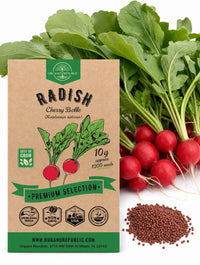
Radish Sprouts & Microgreens Seeds – Non-GMO HeirloomNon-GMO, heirloomNon-GMO Radish microgreen & sprouting seeds — fast, high-yield, and bold and spicy.
Price$19.99
Sale Price$17.99
Growing radish microgreens? These other Non-GMO microgreen seeds are just as fast and easy to grow at home:
Sale

Broccoli Sprouting & Microgreen Seeds – Non-GMO HeirloomNon-GMOBroccoli microgreens — fresh, mild broccoli flavor.
Price$12.99Starting at$9.99
Sale

Beet Microgreens & Sprouting Seeds – Non-GMO HeirloomNon-GMOBeet microgreens — earthy, mildly sweet flavor.
Price$24.99
Sale Price$21.99
Sale

Arugula Microgreens Seeds – Non-GMO HeirloomNon-GMOArugula microgreens — peppery, nutty flavor.
Price$14.99Starting at$12.99

- Choosing a selection results in a full page refresh.


















 Easy Returns 30-day guarantee