


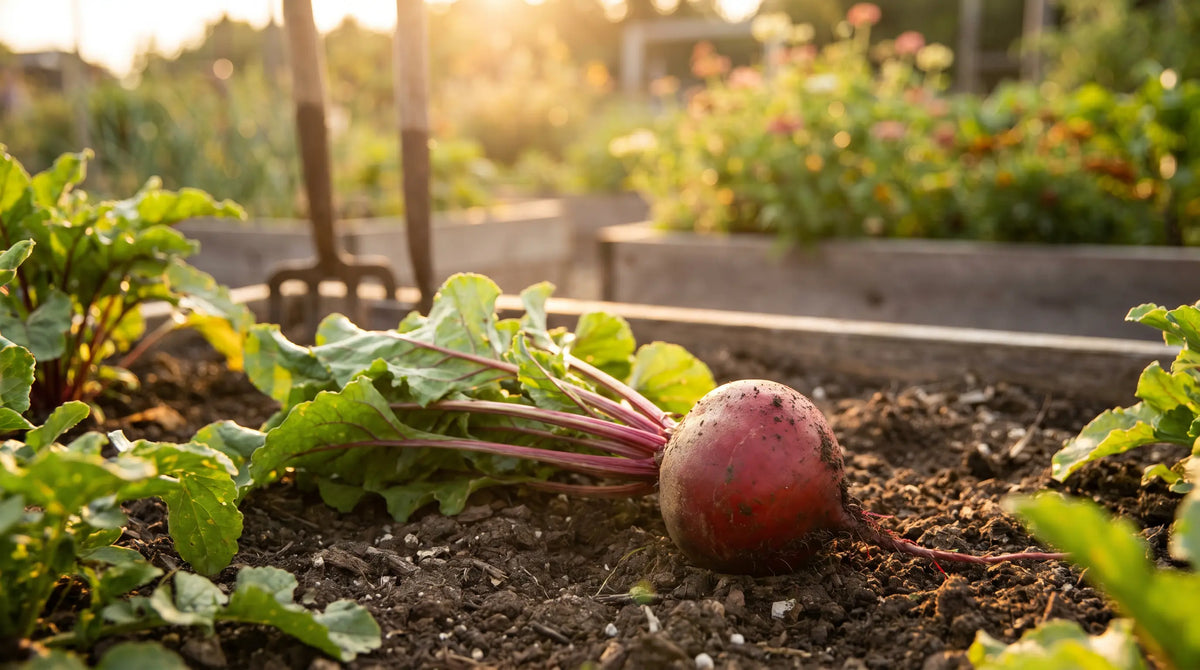
How to Grow Ruby Queen Beets From Seed
Updated July 2026
Ruby Queen is one of those heirloom beets that earns its reputation the moment you slice one open. The roots come out smooth, round, and a deep glossy red, with flesh that stays tender and remarkably sweet. It is an award-winning canning and table favorite, so it holds up beautifully whether you are pickling a batch or roasting a tray for dinner. This non-GMO variety is easy to direct sow and forgiving for new gardeners, which makes it a reliable pick for your first beet patch.
Quick start
Best tip
At a glance
 Botanical name Botanical name | Beta vulgaris |
|---|---|
 Plant type Plant type | Cool-season biennial grown as an annual |
 USDA zones USDA zones | 2 to 11 (grown as an annual) |
 Sun Sun | Full sun to part shade (6+ hours) |
 Days to maturity Days to maturity | ~55 days |
 Height Height | 10 to 14 inches |
 Spacing Spacing | 3 to 4 inches apart |
 Water Water | Even and consistent; about 1 inch a week |
Uses
Frequently asked questions
How long does Ruby Queen beet take to mature?
Ruby Queen is a quick variety, usually ready in about 55 days from sowing. You can begin pulling roots a little earlier as baby beets, or leave them to size up fully.
What does a Ruby Queen beet look and taste like?
Ruby Queen produces smooth, round roots with a deep-red interior and tender flesh. The flavor is notably sweet and mild, which is why it is a favorite for both fresh eating and canning.
What is Ruby Queen beet best used for?
Ruby Queen is an award-winning canning and table beet, prized for its smooth skin and sweet flavor. It holds its color and texture well, so it shines pickled, canned, roasted, or boiled, and the young greens are great in the kitchen too.
Any growing tip for the best Ruby Queen beets?
Thin seedlings to 3 to 4 inches apart once they are a couple inches tall, since each wrinkled seed is actually a cluster. Crowded beets stay small, so giving each root room is the single biggest step toward large, smooth Ruby Queen roots.
Sale

Ruby Queen Beet Seeds – Non-GMO HeirloomHeirloom, non-GMOHeirloom Ruby Queen — smooth, sweet round roots ideal for canning.
Price$4.99Starting at$3.99
Want more beets? These value packs pair Ruby Queen with other varieties:
Sale

Rare Beet Seeds Variety Pack – Non-GMO Heirloom10 rare beet varietiesTen rare beet varieties in one pack, from deep red and golden to candy-striped Chioggia. The easiest way to grow a whole rainbow of roots.
Price$16.99
Sale Price$14.99

- Choosing a selection results in a full page refresh.









 Easy Returns 30-day guarantee