


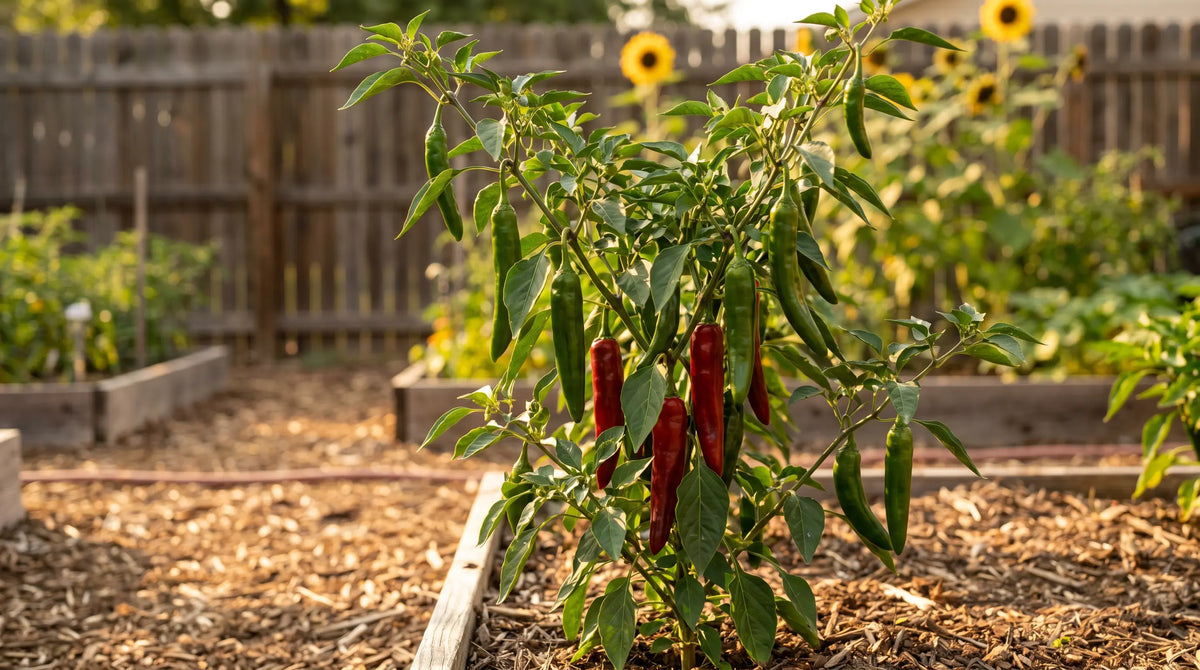
How to Grow Big Jim Pepper From Seed
Updated July 2026
Big Jim is the legendary New Mexico chile bred for size, producing some of the longest pods of any pepper, commonly 8 to 12 inches. The meaty, mild-to-medium fruit ripens from green to red and rates only about 500 to 2,000 Scoville heat units, so its rich chile flavor shines without overwhelming heat. It is the classic pepper for fire-roasting, chile rellenos, and green chile stew. Give it room, sun, and support and it will produce generously.
Ready to grow your own? Shop Hot Pepper Big Jim Seeds from Organo Republic.
Quick start
Best tip
At a glance
 Botanical name Botanical name | Capsicum annuum |
|---|---|
 Plant type Plant type | Warm-season annual |
 USDA zones USDA zones | 3 to 12 (grown as an annual) |
 Sun Sun | Full sun (6 to 8+ hours) |
 Days to maturity Days to maturity | 75 to 80 days green; ~100 red |
 Height Height | 24 to 36 inches |
 Spacing Spacing | 18 to 24 inches apart |
 Water Water | Regular and deep; keep evenly moist |
Uses
Frequently asked questions
How long does Big Jim pepper take to grow?
Big Jim needs a long, warm season. Expect about 75 to 80 days from transplant to harvest green pods, and around 100 days for fully red-ripe fruit. Start seeds indoors 8 to 10 weeks before your last frost.
How hot is a Big Jim pepper?
Big Jim is mild to medium, roughly 500 to 2,000 Scoville heat units, so it is much milder than a jalapeno. That gentle, rich chile flavor is what makes it ideal for roasting and rellenos.
How big do Big Jim peppers get?
Big Jim is famous for its size: pods commonly reach 8 to 12 inches long on tall, productive plants. Because the fruit is heavy, stake or cage the plants so branches do not break under the load.
What are Big Jim peppers used for?
Big Jim is the classic New Mexico roasting chile. Fire-roast and peel the long pods for chile rellenos, green chile stew, enchilada sauce, or freezing. Picked green it is mild and bright; ripened red it turns sweeter and richer.

Big Jim Pepper Seeds – Non-GMO HeirloomHeirloom, non-GMOHeirloom Big Jim chile — famously long pods, mild heat, great for roasting.
Price$4.99
Want more peppers? These value packs pair Big Jim with other varieties:
Sale

Pepper Seeds Variety Pack – Non-GMO Heirloom13 super-hot varietiesThirteen fiery chilis for heat lovers, from habanero to the hottest peppers we carry.
Price$19.99Starting at$16.99

- Choosing a selection results in a full page refresh.









 Easy Returns 30-day guarantee