


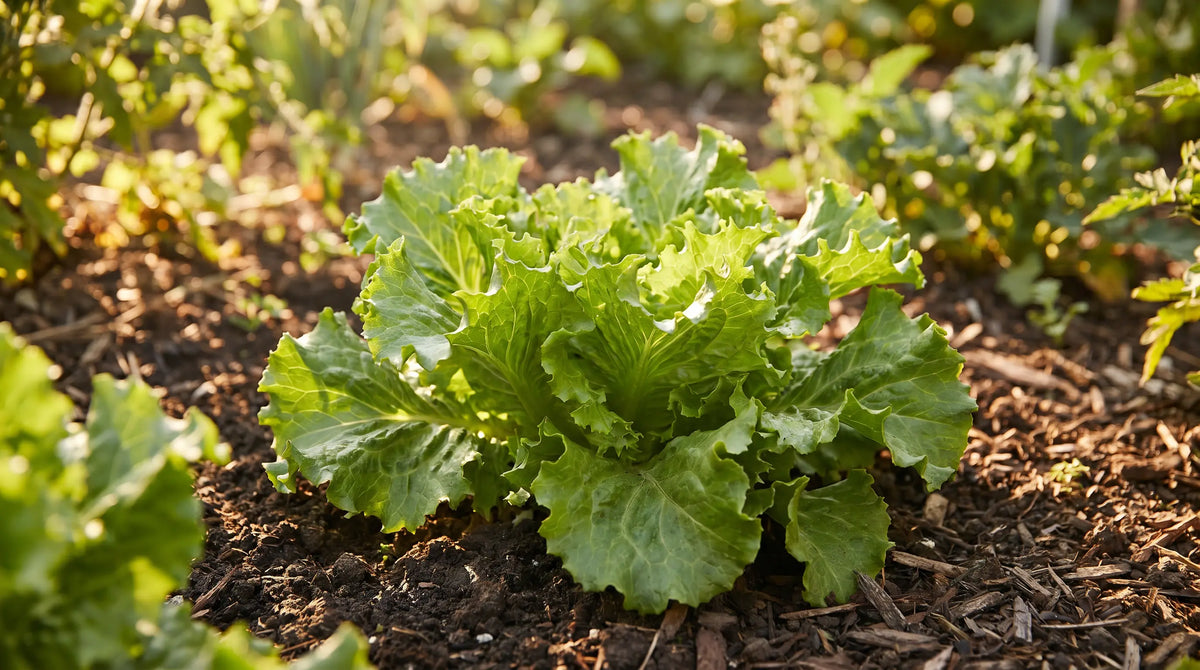
How to Grow Broadleaf Endive From Seed
Updated July 2026
Broadleaf endive is the escarole type, forming a broad, open rosette of wide, slightly wavy green leaves. Maturing in about 85 days, it is a cool-season crop grown mainly for a fall harvest, when the weather keeps its flavor mild and pleasantly bitter. Blanching the center a couple of weeks before harvest turns the heart pale, tender, and much sweeter. It is excellent both raw in salads and cooked into soups and sautes.
Quick start
Best tip
At a glance
 Botanical name Botanical name | Cichorium endivia var. latifolia |
|---|---|
 Plant type Plant type | Cool-season annual/biennial grown as an annual |
 USDA zones USDA zones | 3 to 9 (grown as an annual) |
 Sun Sun | Full sun to part shade (6+ hours ideal) |
 Days to maturity Days to maturity | About 85 days from sowing |
 Height Height | 10 to 14 inches |
 Spacing Spacing | 8 to 12 inches apart |
 Water Water | Consistent and even; about 1 to 1.5 inches per week |
Uses
Frequently asked questions
How long does Broadleaf endive take to grow?
This broad-leaved escarole matures in about 85 days from sowing. Sow in mid to late summer for a fall harvest, when cooler weather keeps the leaves milder and sweeter.
How do I make Broadleaf endive less bitter?
Blanch the center. About two to three weeks before harvest, gather the outer leaves and tie them up, or set a plate over the crown, to block light from the heart. The blanched inner leaves turn pale, tender, and much sweeter.
Is Broadleaf endive the same as escarole?
Yes. Broadleaf endive is the escarole type, with wide, slightly wavy leaves rather than the frilly fringe of curly endive (frisee). It has a milder, less bitter flavor and is excellent both raw in salads and cooked in soups.
When should I plant Broadleaf endive?
Endive is a cool-season crop and grows best for a fall harvest. Sow in mid to late summer so the plants mature as temperatures drop; hot weather makes the leaves more bitter and can cause bolting.

Escarole Seeds – Broadleaf Endive, Non-GMO HeirloomHeirloom, non-GMOHeirloom Broadleaf Endive — broad, slightly bitter leaves for bright salads.
Price$4.99
Want more than endive? These value packs pair cool-season greens like escarole with a whole garden of vegetables:
Sale

Vegetable Seeds Variety Pack55 vegetable varietiesFifty-five heirloom vegetables in one big value pack — the widest variety for a full-season kitchen garden.
Price$21.99Starting at$17.99

- Choosing a selection results in a full page refresh.










 Easy Returns 30-day guarantee