


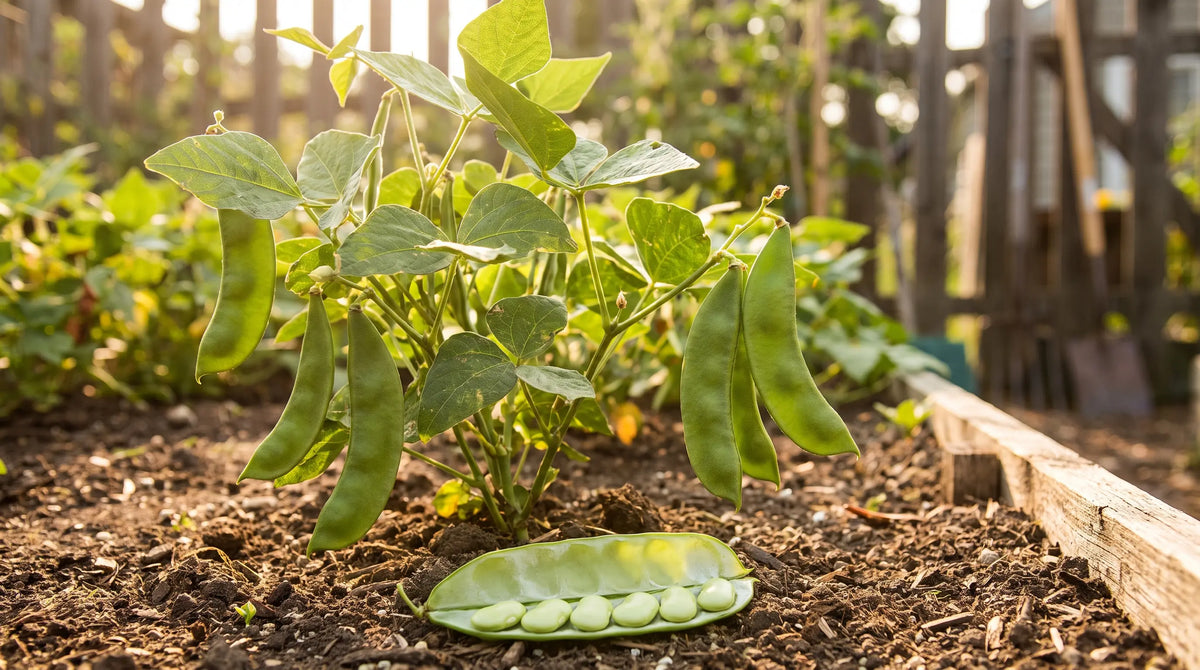
How to Grow Lima Beans From Seed
Updated July 2026
Lima beans, also known as butter beans, are the creamy, buttery shelling bean worth waiting for. This is a bush lima that needs no trellis, but it does ask for more warmth and a longer season than snap beans, so patience with the weather pays off. Give it a hot, sunny bed and about 75 days, and it rewards you with broad pods full of smooth, mild, nutty beans. Here is what makes this variety special and how to get the best from it.
Quick start
Best tip
At a glance
 Botanical name Botanical name | Phaseolus lunatus |
|---|---|
 Plant type Plant type | Warm-season annual legume (bush lima) |
 USDA zones USDA zones | 3 to 12 (grown as a warm-season annual) |
 Sun Sun | Full sun (6 to 8+ hours) |
 Days to maturity Days to maturity | ~75 days from sowing (shelling) |
 Height Height | About 24 inches |
 Spacing Spacing | 3 to 4 inches apart; rows 18 to 24 inches |
 Water Water | Steady and even; keep soil evenly moist |
Uses
Frequently asked questions
How long do lima beans take to mature?
Lima beans need a longer, warmer season than snap beans, typically about 75 days from sowing to the first harvest. Wait for truly warm soil before planting, since cold ground slows or rots the seeds.
What do lima beans look and taste like?
Lima beans, also called butter beans, are broad and flat with a pale green to cream color. Shelled from their wide pods, they have a smooth, buttery texture and a mild, creamy, slightly nutty flavor.
How are lima beans best used?
Lima beans are a shelling bean, so you eat the seeds rather than the pod. Enjoy them fresh in succotash, soups, and stews, or let some pods dry on the plant for storage. They also freeze and can very well.
Any tips for growing lima beans?
Give limas plenty of warmth and a long season, and do not rush them into cold soil. This is a bush lima, so it needs no trellis. Harvest when the pods feel full and firm, and pick regularly to encourage the plant to keep setting more.
Want more beans? These value packs pair limas with other varieties:
Sale

Vegetable Seeds Variety Pack55 vegetable varietiesBeans plus 54 more vegetables in one pack — the easiest way to fill a whole garden from a single order.
Price$21.99Starting at$17.99

- Choosing a selection results in a full page refresh.












 Easy Returns 30-day guarantee