


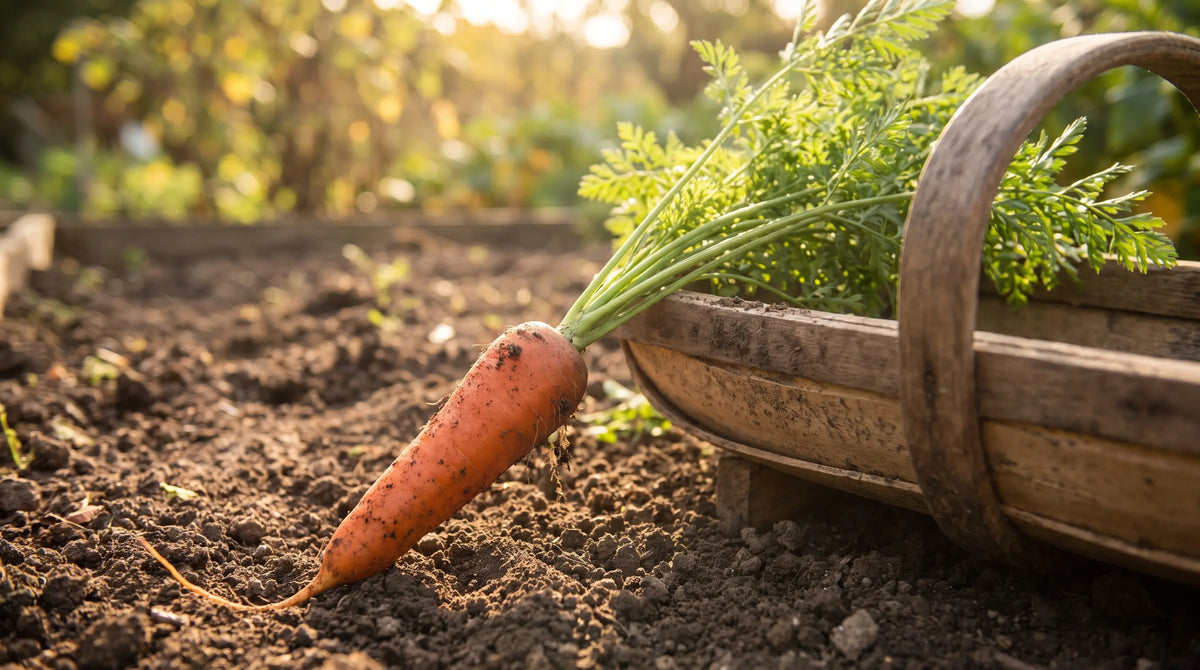
How to Grow Tendersweet Carrots From Seed
Updated July 2026
Tendersweet lives up to its name, a long, tapered, deep-orange carrot with smooth, near-coreless flesh that is exceptionally sweet. Roots reach 8 to 10 inches in about 70 to 75 days, making it a favorite for juicing and fresh eating. To grow them long and straight, give this variety deep, loose, stone-free soil. The reward is a tender, richly colored carrot with almost no woody center.
Prefer a ready mix? Try our heirloom carrot seeds and grow multiple carrot types from a single pack.
Quick start
Best tip
At a glance
 Botanical name Botanical name | Daucus carota subsp. sativus |
|---|---|
 Plant type Plant type | Cool-season biennial grown as an annual |
 USDA zones USDA zones | 2 to 11 (grown as an annual) |
 Sun Sun | Full sun (6+ hours); tolerates light shade |
 Days to maturity Days to maturity | 70 to 75 days |
 Height Height | Roots 8 to 10 inches |
 Spacing Spacing | Thin to 2 to 3 inches apart |
 Water Water | Even and steady; about 1 inch a week |
Uses
Frequently asked questions
How long do Tendersweet carrots take to grow?
Tendersweet matures in about 70 to 75 days from sowing. Give it the full season to reach its long, sweet potential.
How long do Tendersweet carrots get?
They grow into long, tapered roots about 8 to 10 inches long, so they need deep, loose soil to size up straight. In shallow or rocky soil the tips may fork.
Why is Tendersweet good for juicing?
Its flesh is very sweet and nearly coreless, so it juices smoothly with high sugar and little waste. That same sweetness makes it excellent eaten fresh.
What soil do Tendersweet carrots need?
They do best in deep, loose, stone-free soil worked at least 10 inches down, or a deep raised bed. This lets the long taproot grow straight and smooth.
Sale

Tendersweet Carrot Seeds – Non-GMO HeirloomHeirloom, non-GMOHeirloom Tendersweet — long, coreless roots prized for juicing.
Price$5.99
Sale Price$4.99
Want more carrots? These value packs pair Tendersweet with other varieties:
Sale

Rainbow Carrot Seeds – Variety Pack, Non-GMO Heirloom10 carrot varietiesTen unique carrots in one pack, from classic orange to purple, red, yellow, and white. The easiest way to grow a whole rainbow of carrots.
Price$14.99
Sale Price$13.49

- Choosing a selection results in a full page refresh.











 Easy Returns 30-day guarantee