


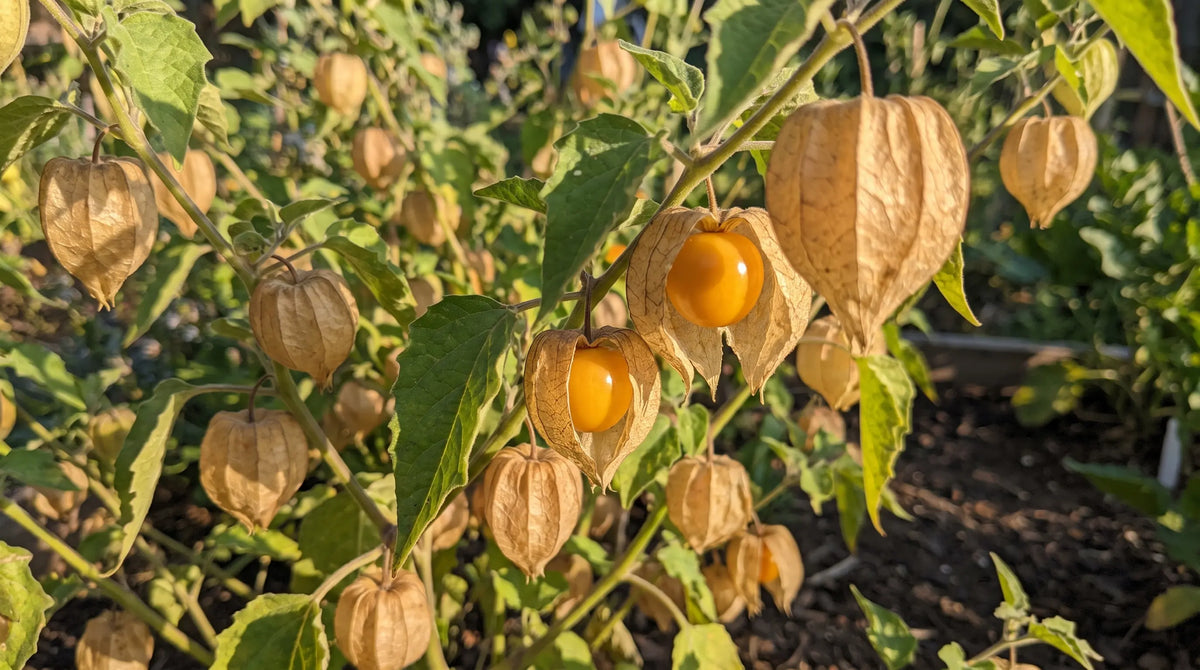
How to Grow Cape Gooseberry From Seed
Updated July 2026
Cape gooseberry, also called ground cherry, is the sweet side of the husk-fruit family. Each papery lantern hides a golden-orange berry with a bright, sweet-tart flavor that many compare to pineapple and mango, delicious eaten fresh or cooked into jam. Unlike its tart green tomatillo cousin, cape gooseberry is self-fertile, so even a single compact 2 to 3 foot plant will set fruit. When the ripe berries drop from the plant to the ground, they are ready, so simply gather the fallen fruit and enjoy.
Ready to grow your own? Shop Tomatillo Cape Gooseberry Seeds from Organo Republic.
Quick start
Best tip
At a glance
 Botanical name Botanical name | Physalis peruviana |
|---|---|
 Plant type Plant type | Tender perennial grown as an annual (husk cherry) |
 USDA zones USDA zones | 3-11 as annual (perennial in 8-11) |
 Sun Sun | Full sun (6+ hours) |
 Days to maturity Days to maturity | 90-120 days from transplant |
 Height Height | 2-3 ft, bushy |
 Spacing Spacing | 24-36 in apart |
 Water Water | About 1 in per week, even moisture |
Uses
Frequently asked questions
How long does Cape Gooseberry take to mature?
It runs a little longer than a tomatillo, about 90 to 120 days from transplant. Start seeds indoors 6 to 8 weeks before your last frost and give the plants a warm, sunny spot so the fruit has time to ripen fully.
What does Cape Gooseberry taste like?
The golden-orange berry inside the husk is sweet-tart, with a bright tropical flavor some compare to pineapple and mango. Unlike a tart green tomatillo, it is delicious eaten straight from the husk.
What is Cape Gooseberry best used for?
Enjoy the ripe golden berries fresh out of the husk as a garden snack, scatter them over salads and desserts, or cook them down into a golden jam and preserves. They also keep well in their husks for a couple of weeks.
Any tips for growing Cape Gooseberry?
Good news: it is self-fertile, so even a single plant will set fruit. The plants stay a compact 2 to 3 feet and need only a light stake. Watch the ground, when the ripe berry drops from the plant it is ready, so gather the fallen fruit every day or two.

Ground Cherry Seeds (Cape Gooseberry) – Non-GMO HeirloomHeirloom, non-GMOCape Gooseberry seeds, our sweet-tart golden husk cherry for fresh snacking and jam. Self-fertile, so even one plant will fruit.
Price$4.99
Want more husk fruits? These value packs pair Cape Gooseberry with other varieties:
Sale

Tomato & Tomatillo Seeds Variety Pack – Non-GMO Heirloom14 varietiesOur 14 Tomato & Tomatillo Variety Pack pairs Grande Rio Verde tomatillos with a rainbow of heirloom tomatoes for a full salsa-and-sauce garden.
Price$19.99
Sale Price$16.99
Sale

Vegetable Seeds Variety Pack55 varietiesOur biggest vegetable collection, 55 varieties, for gardeners who want tomatillos plus a season's worth of everything else.
Price$21.99Starting at$17.99

- Choosing a selection results in a full page refresh.










 Easy Returns 30-day guarantee