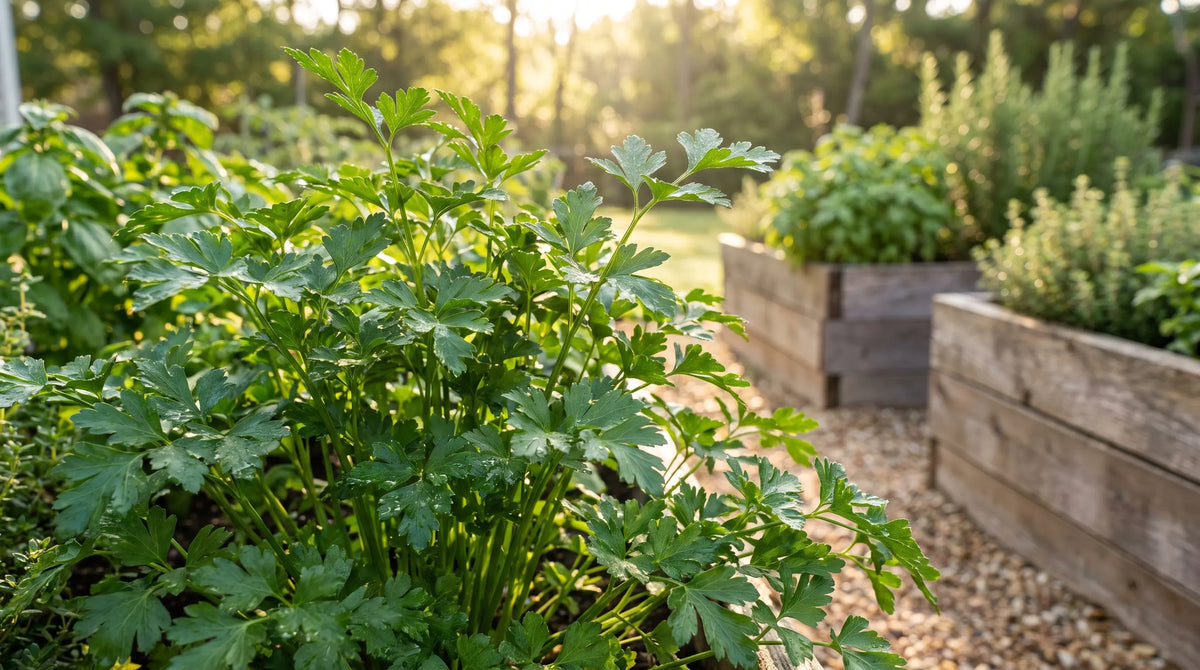
Lush full-grown Italian flat-leaf parsley plant in a sunny raised-bed herb garden

How to Grow Parsley From Seed

Updated July 2026

Parsley (Petroselinum crispum) is a kitchen essential that earns its space, even if it makes you wait at the start. This flat-leaf Italian variety has a clean, peppery flavor and a heavy yield, and once it settles in it gives you cut-and-come-again leaves from spring right through to frost. The only real hurdle is germination: parsley is slow to sprout, but an overnight soak and a few weeks of patience get you there. Here is how to grow parsley from seed, start to finish.

Building a kitchen garden? Our culinary herb seeds variety pack puts the everyday cooking herbs together in one box.

Best tip

Do not give up on parsley in the first two weeks. Soak the seed overnight, keep it warm and moist, and expect three to four weeks before you see green. Because it is a biennial that bolts and turns bitter in its second year, start a fresh sowing every spring rather than nursing an old plant.

At a glance

Botanical namePetroselinum crispum
Plant typeBiennial herb (grown as annual)
USDA zones3 to 9 (grown as annual)
SunFull sun to part shade
Days to maturity70 to 90 days
Height12 to 30 inches
Spacing6 to 8 inches apart
WaterRegular; keep evenly moist

When to plant

Parsley is cold-hardy and in no hurry, so give it a long, cool start. Direct-sow outdoors 4 to 6 weeks before your last spring frost, as soon as the soil can be worked, or start it indoors even earlier for a head start. Sow again in late summer for a fall supply. Just be patient: parsley germinates slowly, so the seeds may sit for weeks before they wake up.

How to plant

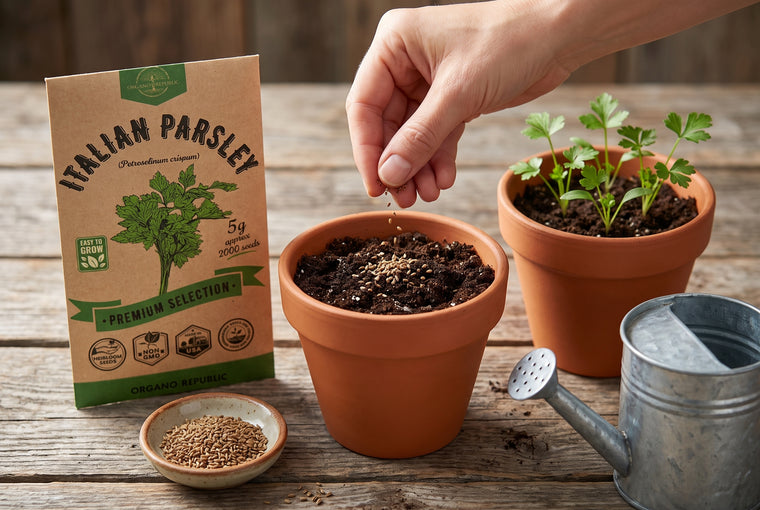
Soak the seeds overnight in warm water first to soften the coat and speed things along. Sow them about a quarter inch deep in rich, moist soil, in the garden, a raised bed, or a deep pot, since parsley has a taproot and dislikes being disturbed. Keep the soil around 70F and never let it dry out. Germination is famously slow and uneven, taking 2 to 4 weeks, so do not give up. Once seedlings are up, thin or transplant them to about 6 to 8 inches apart.

Soak parsley seeds overnight, then sow a quarter inch deep in pots or a bed.

Growing and care

Parsley is easy once it is growing. It has shallow feeder roots, so keep the soil evenly moist and mulch to hold water and keep weeds down. Give it full sun, or a little afternoon shade in hot climates. A dose of compost or balanced feed once or twice through the season keeps the leaves lush and green. Pick often to keep new growth coming, and watch for aphids and for the green-and-black parsley worms, which are the caterpillars of swallowtail butterflies.

Climate shapes how long a plant lasts: parsley is a biennial, so in milder regions like the South, the mid-Atlantic, and the Pacific Northwest (roughly USDA zone 7 and warmer) a fall planting will often overwinter under a few inches of mulch and give you an early spring cut before it bolts. In colder northern gardens it usually winter-kills, so treat it as a fresh spring sowing each year.

SaleMycorrhizal Fungi Granules
Mycorrhizal Fungi GranulesFeeds roots naturallyMix a little into the pot or planting hole to boost parsley's roots.
Price$39.99Starting at$29.99
View product

The best companion plants

Parsley plays well with almost everything, and once it flowers its umbels pull in hoverflies and parasitic wasps that hunt garden pests. These four make especially good neighbors, and you can add any of them in one click:

SaleRed Beefsteak Tomato Seeds
Red Beefsteak Tomato SeedsHeirloom, non-GMOA classic bed-mate: parsley's flowers pull in the good bugs that protect tomatoes.
Price$4.99Starting at$3.99
View product
SaleNasturtium Seeds
Nasturtium SeedsHeirloom, non-GMOA trap crop that lures aphids away from your parsley.
Price$14.99Starting at$6.99
View product
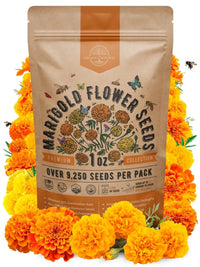
SaleMarigold Seeds Pack
Marigold Seeds PackHeirloom, non-GMOIts scent helps keep aphids and pests off the herb bed.
Price$12.99Starting at$8.99
View product
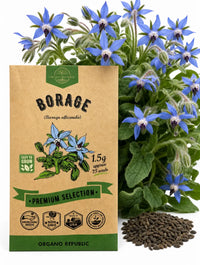
SaleBorage Seeds
Borage SeedsHeirloom, non-GMODraws bees and beneficial insects that keep the whole patch healthy.
Price$5.99 Sale Price$4.99
View product

Remember that parsley is a biennial. In its second year it bolts to flower, and the leaves turn bitter and sparse, so most gardeners treat it as an annual and sow a fresh batch each spring.

Harvest

You can start snipping once the plants are bushy, usually about 10 to 11 weeks from sowing. Take the outer stems first, cutting them right down at the base, and leave the young inner leaves to keep growing. Harvest regularly and the plant stays productive from spring right through to hard frost. Use parsley fresh, or freeze it to keep that bright flavor.

Uses

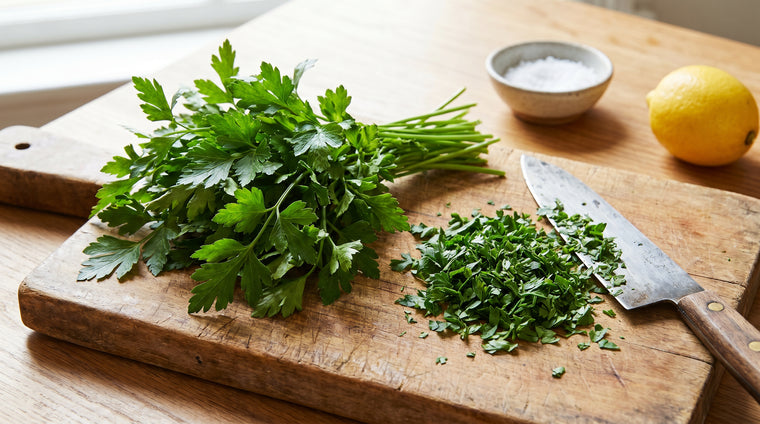
Flat-leaf Italian parsley is a kitchen workhorse with a clean, peppery-green flavor. Chop it into tabbouleh and salads, stir it through soups, sauces, and pasta, or blitz it into chimichurri, gremolata, and salsa verde. Add it near the end of cooking so it stays fresh and bright, and keep a little raw on hand as a natural breath freshener.

Fresh flat-leaf parsley, chopped and ready for the kitchen.

Common problems

  • Slow or patchy germination: this is normal for parsley. Soak the seeds overnight, keep the soil warm and constantly moist, and wait it out, up to a month.
  • Parsley worms: striped green caterpillars that become swallowtail butterflies. Leave a few if you can spare the leaves, or pick them off by hand.
  • Aphids: rinse them off with a strong spray of water and invite ladybugs with nearby flowers.
  • Bolting: in its second year, or in extreme heat, parsley flowers and turns bitter; resow for tender new leaves.

Frequently asked questions

Why are my parsley seeds taking so long to sprout?

Parsley is famously slow and uneven, often taking 2 to 4 weeks. Soaking the seeds overnight first and keeping the soil warm (around 70F) and constantly moist speeds things up a lot.

Should I soak parsley seeds before planting?

Yes. An overnight soak in warm water softens the hard seed coat and rinses off natural germination inhibitors, giving you faster, more even sprouting.

Can I direct-sow parsley or should I start it indoors?

Both work. Parsley is cold-hardy, so you can direct-sow in early spring. But because it germinates so slowly, many gardeners start it indoors in deep pots for a head start, then transplant gently to avoid disturbing its taproot.

Is parsley an annual or a perennial?

Parsley is a biennial: it makes leaves the first year, then flowers, sets seed, and dies in its second. Most gardeners grow it as an annual and resow each year for the best leaves.

How do I harvest parsley so it keeps growing?

Snip the outer stems right at the base whenever you need them, leaving the young central growth to carry on. Regular cutting keeps the plant bushy and productive until frost.

What are the caterpillars eating my parsley?

Those green-and-black striped caterpillars are parsley worms, the larvae of black swallowtail butterflies. If you can spare a few leaves, leave them be and you will get beautiful butterflies; otherwise move them by hand.

Ready to grow your own? Start with a packet of heirloom Italian flat-leaf parsley, prized for its bold flavor and heavy, cut-and-come-again yield.

SaleItalian Parsley Seeds
Italian Parsley SeedsHeirloom, non-GMOFresh heirloom flat-leaf parsley, about 2,000 seeds: bold flavor and a heavy yield.
Price$4.99Starting at$3.99
View product

Want more than parsley? These value sets all include parsley seeds, plus many more herbs and veggies:

Sale75 Herb & Vegetable Seeds Variety Pack
75 Herb & Vegetable Seeds Variety Pack75 varieties, parsley includedOur biggest herb-and-vegetable collection, parsley included.
Price$63.99 Sale Price$59.99
View product
SaleCulinary Herb Seeds Variety Pack
Culinary Herb Seeds Variety Pack18 herbs, parsley includedA well-rounded starter collection of kitchen herbs, with parsley.
Price$12.99Starting at$9.99
View product
Maxim Kaufman, Founder and CEO of Organo Republic

By Maxim Kaufman — Founder & CEO, Organo Republic

Maxim founded Organo Republic in 2017 and personally selects, tests, and grows the heirloom, non-GMO varieties the company offers. Under his leadership, Organo Republic was named Agri Business Review’s Top Non-GMO Seed Variety Solution 2026.

Stay Connected

Join Our Garden Community

Daily garden inspiration, how-to videos & behind-the-seeds stories.