


How to Grow Daikon Radish From Seed
Updated July 2026
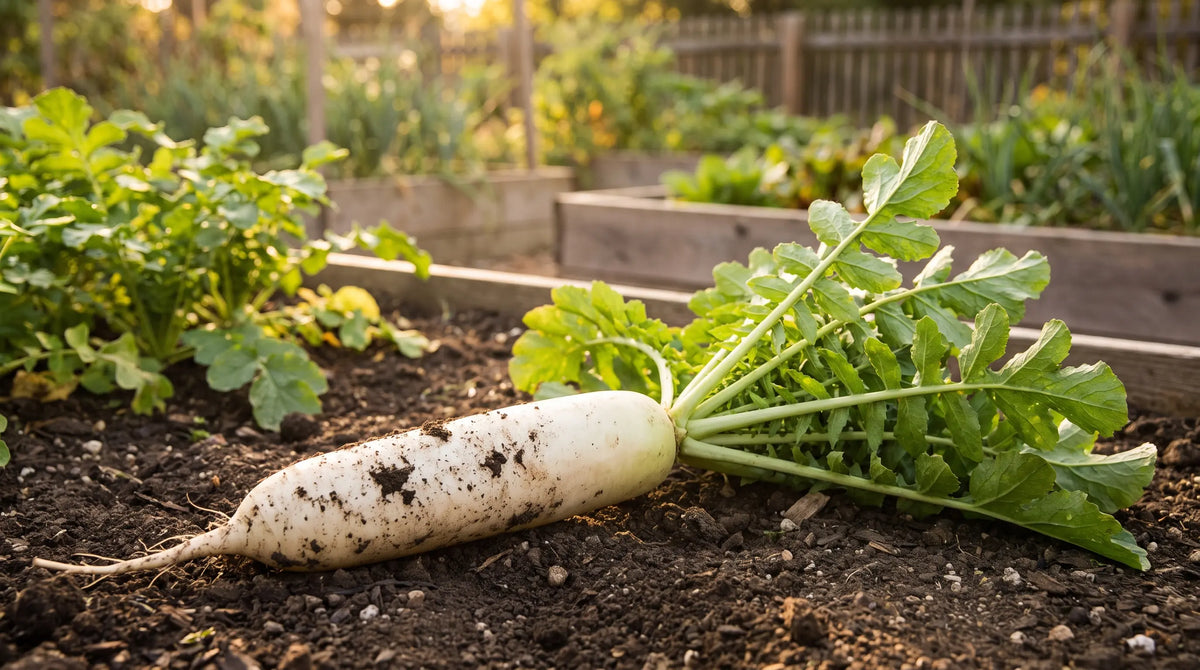
Daikon is a large Asian radish that produces long, white, cylindrical roots often a foot or more in length. Milder and sweeter than salad radishes, it is a staple of Japanese, Korean, and Chinese cooking, delicious grated, pickled, or simmered in soups. Daikon is a fall crop, sown in late summer to mature in the cool of autumn over about 50 to 60 days. Its deep roots also help break up and loosen heavy soil.
Quick start
Best tip
At a glance
 Botanical name Botanical name | Raphanus sativus var. longipinnatus |
|---|---|
 Plant type Plant type | Cool-season root vegetable (annual) |
 USDA zones USDA zones | 2 to 11 (grown as a cool-season annual) |
 Sun Sun | Full sun to part shade (6+ hours) |
 Days to maturity Days to maturity | 50 to 60 days |
 Height Height | 12 to 24 inches (tops) |
 Spacing Spacing | 1 inch, then thin to 2 to 6 inches apart |
 Water Water | Even and consistent; keep soil evenly moist |
Uses
Frequently asked questions
How long does Daikon radish take to grow?
Daikon needs about 50 to 60 days, far longer than salad radishes. It is a fall crop, sown in late summer to mature as the weather cools.
What does a Daikon radish look like and taste like?
It forms long, white, cylindrical roots often 10 to 14 inches long and several inches thick. The flavor is mild and slightly sweet, much gentler than small salad radishes.
What is Daikon radish best used for?
Daikon is central to Asian cooking: grate it into slaws and garnishes, pickle it for takuan and banchan, or simmer it in soups and stews where it turns tender and sweet.
Any tips for growing Daikon radish?
Sow in late summer in deep, loose, stone-free soil so the long roots grow straight. Thin to about 4 to 6 inches apart, keep the soil evenly moist, and harvest in fall before hard frost.
Sale

Daikon Radish Seeds – White Stem, Non-GMO HeirloomHeirloom, non-GMOHeirloom Daikon radish — long white stems for crisp, mild Asian-style roots.
Price$4.99Starting at$3.99
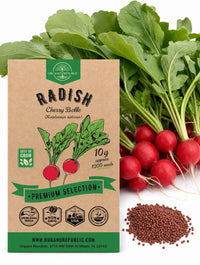
Want more radishes? These value packs pair Daikon with other varieties:

- Choosing a selection results in a full page refresh.










 Easy Returns 30-day guarantee