


How to Grow Watermelon Radishes From Seed
Updated July 2026
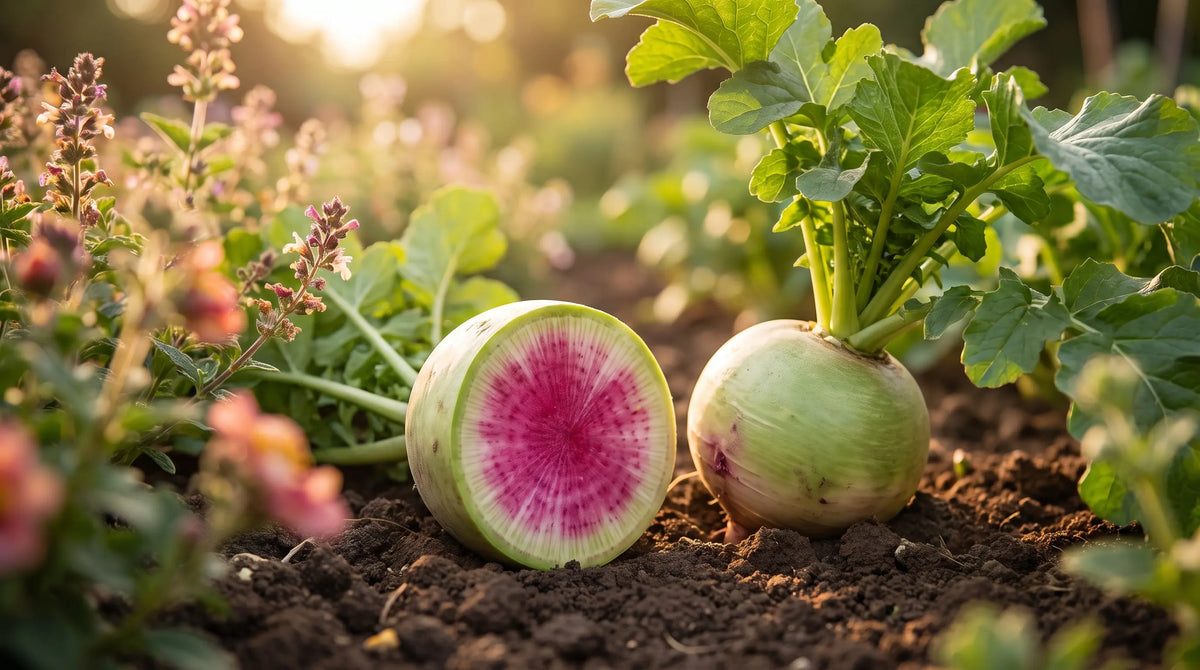
Watermelon radish is a beautiful heirloom daikon type with pale green-and-white skin that hides a vivid magenta-pink interior, just like a tiny watermelon. Sweeter and milder than most radishes, it is prized as much for its stunning color as its flavor. A fall crop, it matures in about 55 to 65 days from a late-summer sowing and grows to the size of a small apple. Sliced open, it is one of the most striking vegetables in the garden.
Quick start
Best tip
At a glance
 Botanical name Botanical name | Raphanus sativus |
|---|---|
 Plant type Plant type | Cool-season root vegetable (annual) |
 USDA zones USDA zones | 2 to 11 (grown as a cool-season annual) |
 Sun Sun | Full sun to part shade (6+ hours) |
 Days to maturity Days to maturity | 55 to 65 days |
 Height Height | 10 to 14 inches (tops) |
 Spacing Spacing | 1 inch, then thin to 2 to 6 inches apart |
 Water Water | Even and consistent; keep soil evenly moist |
Uses
Frequently asked questions
How long does Watermelon radish take to grow?
Watermelon radish needs about 55 to 65 days, so it is a fall crop. Sow it in late summer to mature in cool autumn weather, which brings out its sweetest color.
What does a Watermelon radish look like and taste like?
Outside it is pale green and white; inside it reveals a vivid magenta-pink flesh. The flavor is mild and slightly sweet, less peppery than salad radishes.
What is Watermelon radish best used for?
Its dramatic color makes it a showstopper sliced raw into salads, arranged on platters, or cut into rounds for garnishing. It is also lovely pickled or roasted.
Any tips for growing Watermelon radish?
Sow in late summer for a fall harvest, as heat and long days make it woody and dull-colored. Give deep soil, thin to about 4 inches apart, keep moist, and harvest before hard frost.
Sale

Watermelon Radish Seeds – Non-GMO HeirloomHeirloom, non-GMOHeirloom Watermelon radish — green skin hides a sweet magenta-pink core.
Price$4.99Starting at$3.99
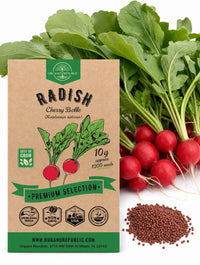
Want more radishes? These value packs pair Watermelon radish with other varieties:

- Choosing a selection results in a full page refresh.









 Easy Returns 30-day guarantee