


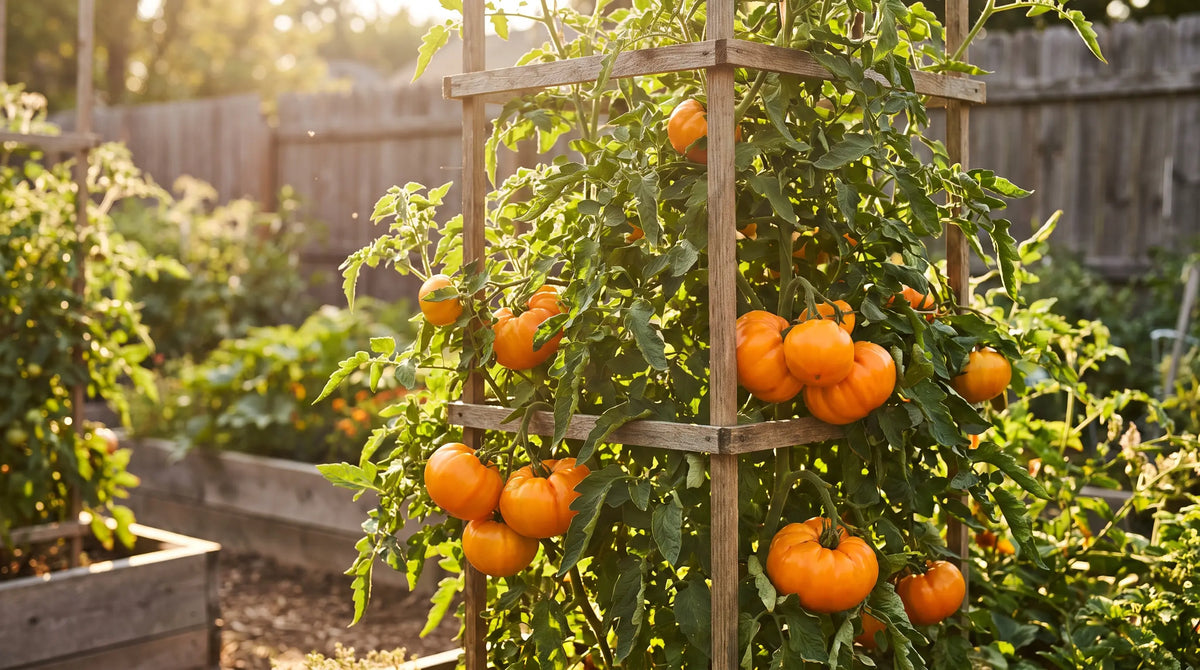
How to Grow Amana Orange Tomato From Seed
Updated July 2026
Amana Orange is a famous heirloom known for its enormous, brilliant bright-orange beefsteak fruit, often a pound or more each. It is an indeterminate (vining) tomato that grows tall and keeps setting fruit all season, so it needs strong staking or caging to carry the heavy crop. The dense, meaty flesh has a sweet, rich, low-acid flavor that stands out among big heirloom tomatoes. Grow it for showstopping golden-orange slices with mild, honeyed taste.
Ready to grow your own? Shop Tomato Amana Orange Seeds from Organo Republic.
Quick start
Best tip
At a glance
 Botanical name Botanical name | Solanum lycopersicum |
|---|---|
 Plant type Plant type | Warm-season annual (indeterminate) |
 USDA zones USDA zones | 3 to 12 (grown as an annual) |
 Sun Sun | Full sun (6 to 8+ hours) |
 Days to maturity Days to maturity | 85 days from transplant |
 Height Height | 6 to 8+ feet (indeterminate) |
 Spacing Spacing | 24 to 36 inches apart |
 Water Water | Deep and even; 1 to 2 inches a week |
Uses
Frequently asked questions
How long does Amana Orange tomato take to grow?
Amana Orange is ready to pick about 85 days after transplant. Start seeds indoors 6 to 8 weeks before your last frost, then set plants out once the soil is warm, and this large heirloom ripens through mid to late summer.
Is Amana Orange determinate or indeterminate?
Amana Orange is an indeterminate (vining) tomato that keeps growing and setting fruit all season until frost. Plants reach 6 to 8+ feet and carry very heavy fruit, so use a tall stake or strong cage and space plants 24 to 36 inches apart.
How big are Amana Orange tomatoes and what do they taste like?
Amana Orange produces huge, bright orange beefsteak fruit, often one to two pounds each, with dense, meaty flesh. The flavor is sweet, rich, and low in acid, one of the standout tastes among big heirloom tomatoes.
What is Amana Orange best used for?
Its thick golden-orange slices bring color and mild, sweet flavor to sandwiches, salads, and tomato platters. The size and sweetness also make a beautiful, richly colored fresh sauce or salsa.

Amana Orange Tomato Seeds – Non-GMO HeirloomHeirloom, non-GMOHeirloom Amana Orange — huge, low-acid orange beefsteaks with tropical-sweet flavor.
Price$4.99
Want more tomatoes? These value packs pair Amana Orange with other varieties:
Sale

Tomato & Tomatillo Seeds Variety Pack – Non-GMO Heirloom14 tomato & tomatillo varietiesFourteen heirloom tomatoes and tomatillos in one pack — the easiest way to grow a whole rainbow of varieties.
Price$19.99
Sale Price$16.99

- Choosing a selection results in a full page refresh.













 Easy Returns 30-day guarantee