


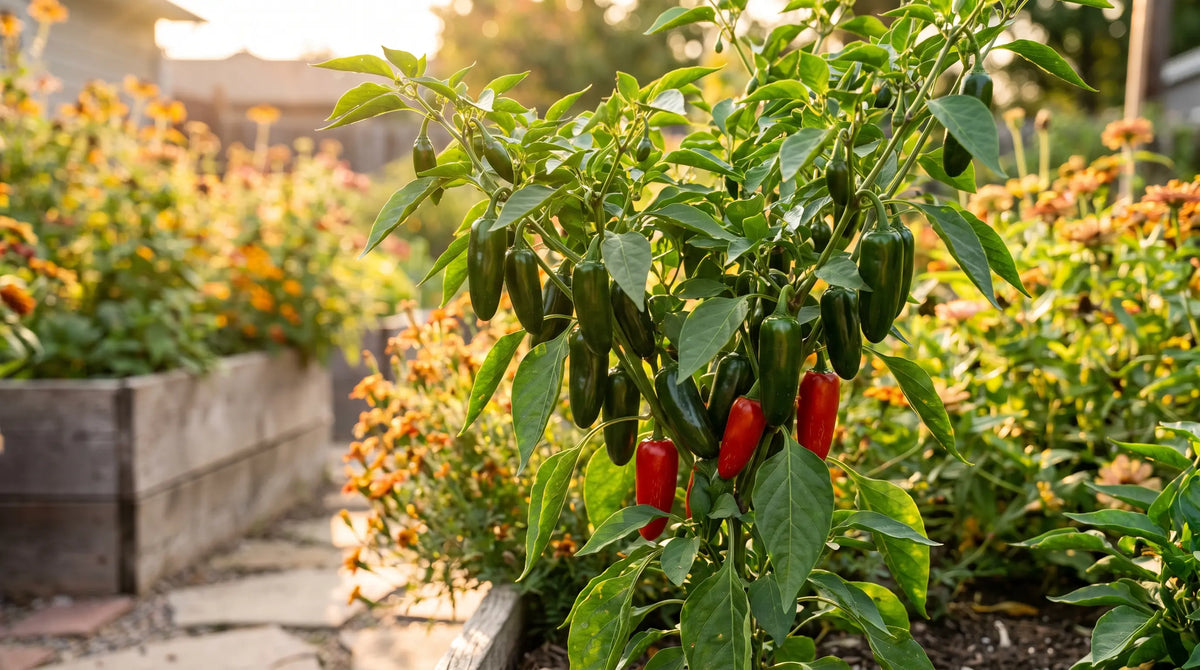
How to Grow Jalapeno Pepper From Seed
Updated July 2026
The jalapeno is the most popular hot pepper in America, and for good reason. Its plump, 3-inch pods start glossy dark green and ripen to bright red, delivering a medium heat of roughly 2,500 to 8,000 Scoville units with a crisp, grassy bite. It is endlessly useful, from fresh salsa and stuffed poppers to pickling and smoking into chipotles. Easy to grow and wildly productive, the jalapeno is the perfect first hot pepper for any garden.
Ready to grow your own? Shop Hot Pepper Jalapeno Seeds from Organo Republic.
Quick start
Best tip
At a glance
 Botanical name Botanical name | Capsicum annuum |
|---|---|
 Plant type Plant type | Warm-season annual |
 USDA zones USDA zones | 3 to 12 (grown as an annual) |
 Sun Sun | Full sun (6 to 8+ hours) |
 Days to maturity Days to maturity | 70 to 75 days green; ~90 red |
 Height Height | 24 to 36 inches |
 Spacing Spacing | 18 to 24 inches apart |
 Water Water | Regular and deep; keep evenly moist |
Uses
Frequently asked questions
How long do jalapenos take to grow?
Jalapenos are usually ready to pick dark green at about 70 to 75 days from transplant. Leave them on the plant another two to three weeks and they ripen to bright red, becoming a little sweeter and often slightly hotter.
How hot is a jalapeno?
Jalapenos land at a medium heat of roughly 2,500 to 8,000 Scoville heat units. Removing the seeds and white ribs tames much of the burn, while stress from heat and dry spells can make the pods hotter and cause the pale corky lines called corking, which is harmless.
Should I pick jalapenos green or red?
Both are great. Green jalapenos give the familiar crisp, grassy bite for poppers, salsa, and pickling. Red, fully ripe pods are sweeter and richer and are what is smoke-dried to make chipotles. Picking often keeps the plant producing more.
How big does a jalapeno plant get?
Plants are compact and bushy, usually 24 to 36 inches tall, and are heavy producers. A small cage or stake keeps a fruit-laden plant upright, and jalapenos also do very well in containers on a sunny patio.
Sale

Jalapeno Pepper Seeds – Non-GMO HeirloomHeirloom, non-GMOHeirloom Jalapeno — the classic medium-heat pepper for salsa and poppers.
Price$4.99Starting at$3.99
Want more peppers? These value packs pair jalapenos with other varieties:
Sale

Pepper Seeds Variety Pack – Non-GMO Heirloom13 super-hot varietiesThirteen fiery chilis for heat lovers, from habanero to the hottest peppers we carry.
Price$19.99Starting at$16.99

- Choosing a selection results in a full page refresh.









 Easy Returns 30-day guarantee