


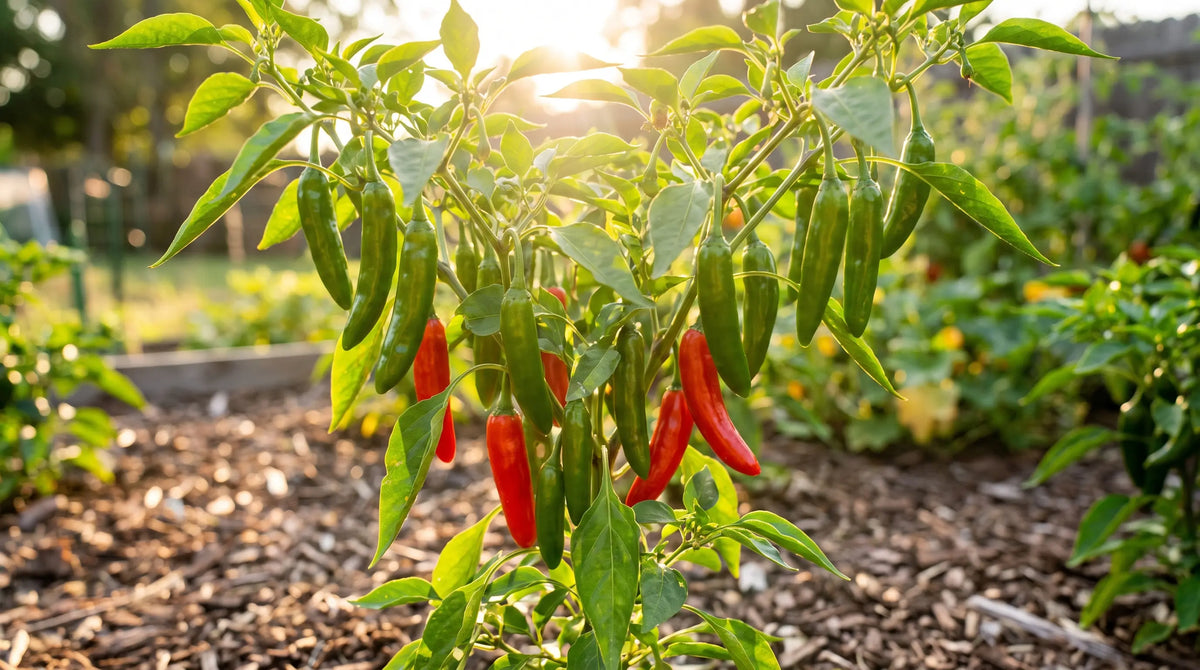
How to Grow Serrano Pepper From Seed
Updated July 2026
The serrano is a small but fiery Mexican chile, several times hotter than a jalapeno at roughly 10,000 to 25,000 Scoville units. Its slim, 2-inch pods start bright green and ripen through orange to vivid red, with thin walls and a clean, bright heat that make them perfect for fresh salsas. Incredibly prolific, a single plant can set dozens of pods at once. If you love the punchy heat of authentic pico de gallo and salsa verde, this is the pepper to grow.
Ready to grow your own? Shop Hot Pepper Serrano Seeds from Organo Republic.
Quick start
Best tip
At a glance
 Botanical name Botanical name | Capsicum annuum |
|---|---|
 Plant type Plant type | Warm-season annual |
 USDA zones USDA zones | 3 to 12 (grown as an annual) |
 Sun Sun | Full sun (6 to 8+ hours) |
 Days to maturity Days to maturity | 75 to 80 days green; ~90 red |
 Height Height | 24 to 36 inches |
 Spacing Spacing | 18 to 24 inches apart |
 Water Water | Regular and deep; keep evenly moist |
Uses
Frequently asked questions
How long do serrano peppers take to mature?
Serranos are usually ready to pick green at about 75 to 80 days from transplant, and will ripen through orange to bright red if left on the plant another couple of weeks. They are prolific, so expect steady harvests through the season.
How hot is a serrano compared to a jalapeno?
Serranos are noticeably hotter, roughly 10,000 to 25,000 Scoville heat units, several times spicier than a jalapeno. They deliver a bright, clean, immediate heat, so use them when you want more kick in your salsa or hot sauce.
What are serranos best used for?
Serranos shine raw and fresh because their thin walls do not need roasting or peeling. Chop them into pico de gallo, guacamole, salsa verde, and hot sauces, or pickle them. Red ripe serranos are a bit sweeter and can be dried.
How big does a serrano plant get?
Serrano plants are upright and vigorous, often 24 to 36 inches or taller, and can carry dozens of small pods at once. Give them a stake or cage, since a heavy fruit set can otherwise splay or break the branches.
Sale

Serrano Pepper Seeds – Non-GMO HeirloomHeirloom, non-GMOHeirloom Serrano — crisp, bright heat hotter than a jalapeno, great fresh.
Price$4.99Starting at$3.99
Want more peppers? These value packs pair serranos with other varieties:
Sale

Pepper Seeds Variety Pack – Non-GMO Heirloom13 super-hot varietiesThirteen fiery chilis for heat lovers, from habanero to the hottest peppers we carry.
Price$19.99Starting at$16.99

- Choosing a selection results in a full page refresh.









 Easy Returns 30-day guarantee