


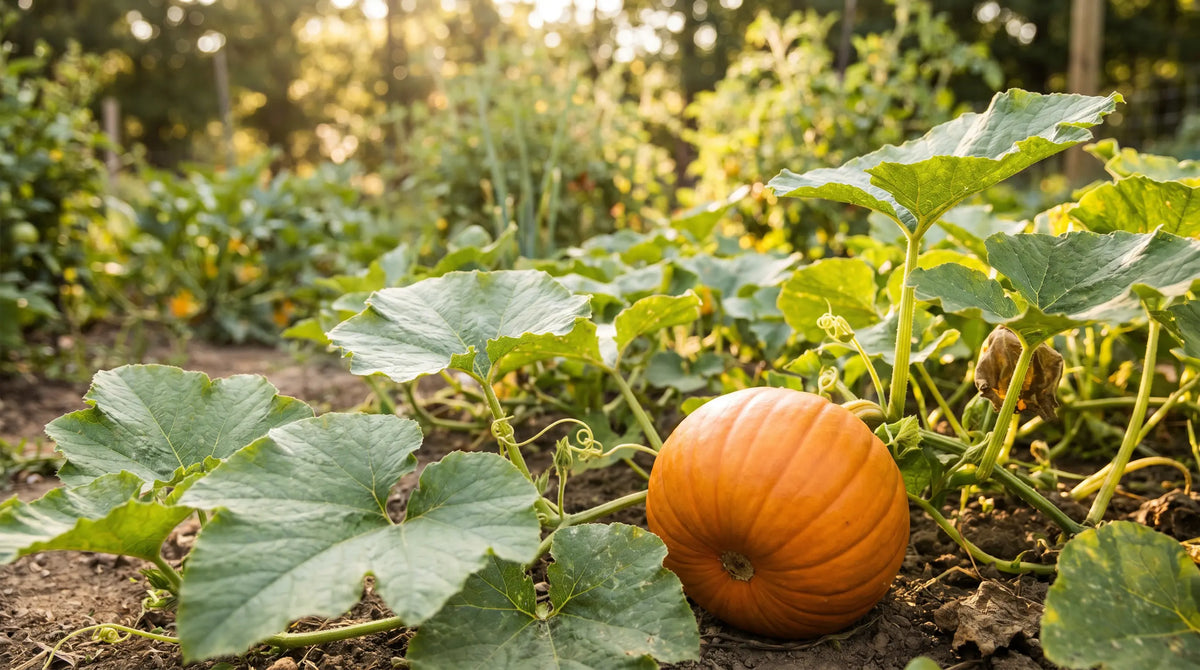
How to Grow Sugar Pie Pumpkins From Seed
Updated July 2026
Sugar Pie is a small, sweet heirloom pumpkin bred for the kitchen rather than the porch. Its fine-grained, deep-orange flesh is smooth and richly flavored, making it the classic choice for pies, purees, and soups. The compact 4 to 8 pound fruit ripens in about 100 days on vigorous vines. If you want homemade pumpkin puree that beats the can, Sugar Pie is the pumpkin to grow.
Quick start
Best tip
At a glance
 Botanical name Botanical name | Cucurbita pepo |
|---|---|
 Plant type Plant type | Warm-season annual vine |
 USDA zones USDA zones | 3 to 9 (grown as a summer annual) |
 Sun Sun | Full sun (6 to 8 hours) |
 Days to maturity Days to maturity | About 100 days |
 Height Height | Vines sprawl 8 to 15 ft |
 Spacing Spacing | 2 to 3 plants per hill, hills 4 to 6 ft apart |
 Water Water | 1 to 2 inches per week, steady |
Uses
Frequently asked questions
How long does Sugar Pie pumpkin take to grow?
Sugar Pie needs about 100 days from sowing to a fully ripe pumpkin. Because it is a long-season crop, gardeners in cool or short-summer areas should start seeds indoors two to three weeks early so the fruit colors up and hardens before the first fall frost.
How big does a Sugar Pie pumpkin get?
Sugar Pie is a small pie pumpkin, usually 4 to 8 pounds and about 6 to 8 inches across. The compact size is part of its appeal, since one pumpkin cooks down into roughly the right amount of puree for a pie or two.
Is Sugar Pie pumpkin good for carving?
Not really. Sugar Pie is bred for eating, with thick, sweet, fine-grained flesh and a small cavity, so it does not hollow out well for jack-o-lanterns. For carving, grow a field pumpkin like Connecticut Field and save Sugar Pie for the kitchen.
How do I make puree from a Sugar Pie pumpkin?
Halve the pumpkin, scoop out the seeds, and roast the halves cut-side down at about 375F until the flesh is soft, roughly 45 minutes. Scoop the flesh from the skin and blend it smooth. The puree freezes well for baking through the winter.
Sale

Sugar Pie Pumpkin Seeds – Non-GMO HeirloomHeirloom, non-GMOHeirloom Sugar Pie Pumpkin — sweet, fine-grained flesh perfect for pies and purees.
Price$4.99Starting at$3.99
Want more than pumpkins? These value sets pack many popular vegetables into one:
Sale

Vegetable Seeds Variety Pack55 varieties, great valueOur biggest all-in-one vegetable box for a full season of harvests.
Price$21.99Starting at$17.99

- Choosing a selection results in a full page refresh.









 Easy Returns 30-day guarantee