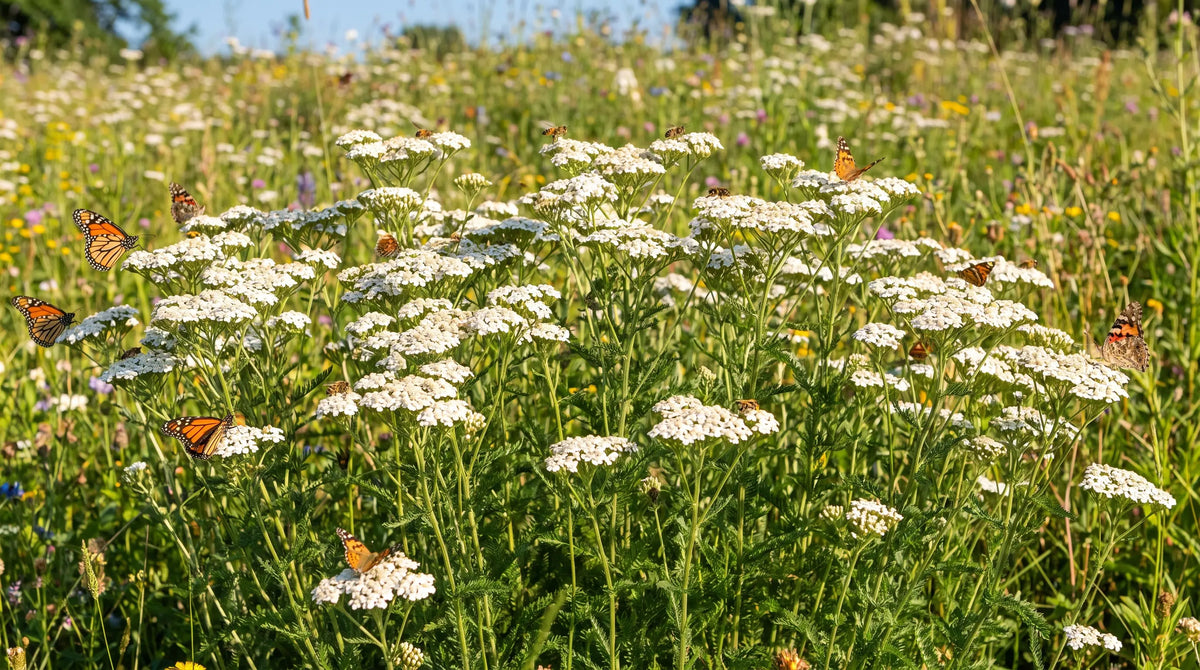
How to grow white yarrow: mature Achillea millefolium with white flower clusters and pollinators

How to Grow White Yarrow From Seed

Updated July 2026

White yarrow (Achillea millefolium) is one of the most rewarding perennials a beginner can sow: plant it once and it comes back for years, feeding pollinators with its broad, flat white flower heads above soft, ferny foliage. It is drought-tolerant, deer and rabbit resistant, and just as happy in a wildflower meadow as in a cutting bed. Here is how to grow white yarrow from seed and keep it thriving.

Best tip

Treat it mean to keep it upright. Yarrow flops when it is pampered, so plant it in your poorest, sunniest, best-drained spot and resist the urge to feed or over-water. Lean, dry conditions give you sturdy stems and far more flowers than a cushy bed ever will.

At a glance

Botanical nameAchillea millefolium
Plant typePerennial wildflower
USDA zones3 to 9
SunFull sun
Days to maturityBlooms early to late summer
Height18 to 36 inches
Spacing12 to 18 inches
WaterLow; drought-tolerant once established

When to plant

White yarrow is a tough perennial, so you plant it once and enjoy it for years. Sow directly in early spring once the soil can be worked, or in fall, or start seeds indoors 6 to 8 weeks before your last frost for the earliest flowers. An early indoor start often gives a light first-year bloom, with fuller displays every year after. Yarrow is hardy across most of the country (roughly USDA zones 3 to 9), so both spring and fall sowing work well from the Northeast to the Mountain West.

How to plant

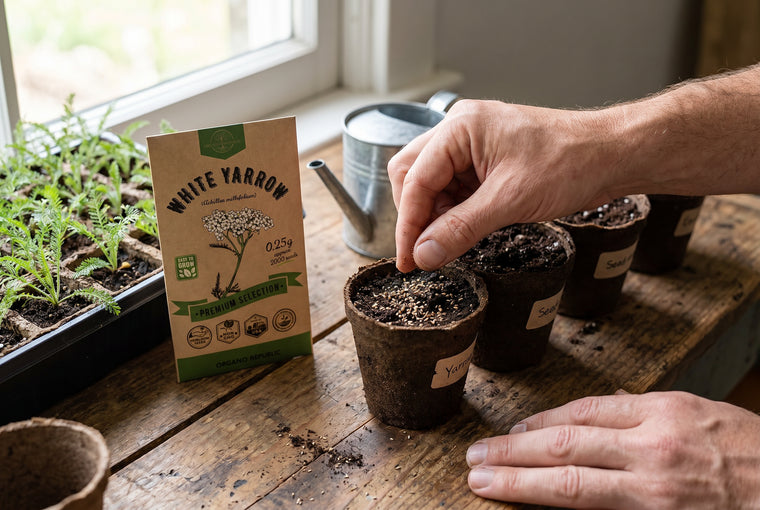
Yarrow seeds are tiny and need light, so press them onto the surface of moist soil or seed mix and do not cover them. Keep the surface lightly moist at about 65 to 75F and seedlings appear in 10 to 21 days. Thin or transplant to 12 to 18 inches apart in full sun and sandy, well-drained soil. Yarrow actually prefers lean ground, so skip the rich compost and heavy feeding, which only make the stems flop.

Press the tiny yarrow seeds onto moist mix; they need light to germinate.

Growing and care

Once established, yarrow nearly takes care of itself. Water young plants to build deep roots, then let it fend for itself; it is genuinely drought-tolerant and rots in soggy ground. Deadhead spent flower clusters to tidy the plant and encourage more blooms, and cut it back to the low leaves after flowering for fresh growth. Every 3 to 4 years, dig and divide the clump in spring or fall to keep it vigorous and stop it spreading too far. Its ferny foliage is also aromatic, which helps keep deer and rabbits browsing elsewhere.

SaleMycorrhizal Fungi Granules
Mycorrhizal Fungi GranulesFeeds roots naturallyWork a little into the planting hole to help yarrow settle into lean, dry soil.
Price$39.99Starting at$29.99
View product

The best companion plants

Yarrow is a workhorse of the pollinator garden, and its flat flower heads bring in ladybugs, hoverflies, and parasitic wasps that hunt aphids across the whole bed. It pairs naturally with other sun-loving, low-water bloomers. These four make great companions, and you can add any of them in one click:

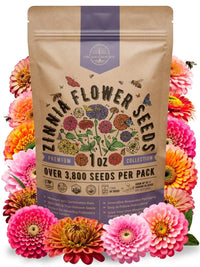
Zinnia Seeds Pack
Zinnia Seeds PackHeirloom, non-GMOZinnias share yarrow's love of full sun and bring butterflies to the same border.
Starting at$4.99
View product
SaleMarigold Seeds Pack
Marigold Seeds PackHeirloom, non-GMOMarigolds fill the front of the bed and help keep pests down among the flowers.
Price$12.99Starting at$8.99
View product
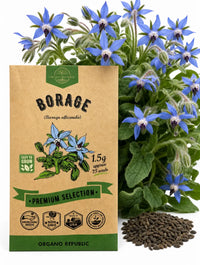
SaleBorage Seeds
Borage SeedsHeirloom, non-GMOBorage draws bees and hoverflies that team up with yarrow to hunt aphids.
Price$5.99 Sale Price$4.99
View product

Yarrow spreads and can crowd neighbors. It travels by creeping roots and self-sows freely, so a clump widens each year. Keep it in bounds by dividing every few years and deadheading before the seeds scatter, and it stays a well-behaved, generous plant.

Harvest

For cut flowers, snip whole stems in the morning once the flower clusters are fully open but still fresh and firm. To dry them for lasting arrangements, bundle a few stems, tie the ends, and hang them upside down in a warm, dark, airy place; yarrow holds its shape and color well. To save seed, let some heads mature and darken, then collect and rub out the tiny seeds and store them cool and dark.

Uses

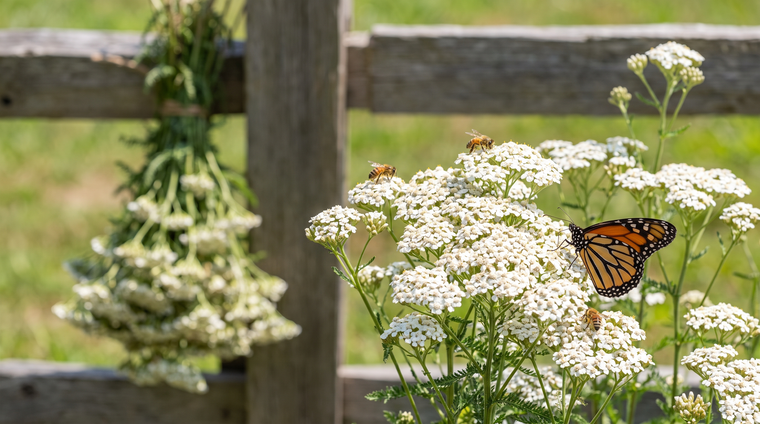
White yarrow is one of the most useful plants you can add for wildlife. Its broad, flat flower heads are landing pads for butterflies, bees, and beneficial insects, making it a cornerstone of any pollinator or meadow planting. The long-lasting blooms are excellent as fresh cut flowers and dry beautifully for everlasting arrangements and wreaths, and the aromatic, ferny foliage helps deter deer and rabbits.

A pollinator magnet that also dries beautifully for arrangements.

Common problems

  • Flopping stems: too rich a soil, too much water, or shade. Grow in full sun and lean soil, go easy on feeding, and cut back after the first bloom.
  • Spreading too fast: divide the clump every 3 to 4 years and deadhead before seeds scatter.
  • Poor germination: the seeds need light, so surface-sow and never bury them, and keep the surface evenly moist.
  • Powdery mildew in humid spells: improve airflow by thinning and dividing, and water at the base rather than overhead.

Frequently asked questions

Does white yarrow need cold stratification to germinate?

No, yarrow does not need cold stratification. The seeds do need light, though, so press them onto the surface of moist soil without covering them and keep them at about 65 to 75F. Seedlings usually appear in 10 to 21 days.

When should I plant yarrow seeds?

Sow directly in early spring or fall, or start indoors 6 to 8 weeks before your last frost. As a hardy perennial, yarrow often blooms lightly its first year from an early start and comes back stronger each year after.

Does yarrow spread, and is it invasive?

Yarrow spreads by creeping roots and by self-seeding, so a clump widens over the years and can crowd neighbors if left alone. It is not federally listed as invasive, but keep it in check by dividing clumps every 3 to 4 years and deadheading before seeds scatter.

Do deer and rabbits eat yarrow?

Yarrow's aromatic, ferny foliage is usually left alone by deer and rabbits, which makes it a good choice for gardens where browsing is a problem. No plant is fully browse-proof, but yarrow ranks among the more resistant ones.

How and when do I harvest yarrow for drying?

Cut whole stems once the flower clusters are fully open but still fresh, ideally in the morning after the dew dries. Bundle a few stems, hang them upside down in a warm, dark, airy place, and they hold their shape well for dried arrangements.

Why is my yarrow flopping over?

Floppy yarrow is almost always too rich a soil or too much water and shade. Grow it in full sun and lean, well-drained soil, go easy on feeding, and cut it back after the first flush to keep growth compact and upright.

Ready to grow your own? Sow a patch of heirloom white yarrow for a tough, drought-tolerant perennial that feeds pollinators and gives you cut and dried flowers for years.

SaleWhite Yarrow Seeds
White Yarrow SeedsHeirloom, non-GMOHeirloom white yarrow, a tough perennial that feeds pollinators year after year.
Price$5.99 Sale Price$4.99
View product

Want more than yarrow? These heirloom sets all include white yarrow, plus many more:

SaleEdible Flower Seeds Variety Pack
Edible Flower Seeds Variety Pack25 varieties, yarrow includedOur biggest edible flower collection, white yarrow included.
Price$20.99Starting at$17.99
View product
Sale75 Herb & Vegetable Seeds Variety Pack
75 Herb & Vegetable Seeds Variety Pack75 varieties, yarrow includedA whole starter garden of 75 herbs and vegetables, with yarrow tucked in.
Price$63.99 Sale Price$59.99
View product
Maxim Kaufman, Founder and CEO of Organo Republic

By Maxim Kaufman — Founder & CEO, Organo Republic

Maxim founded Organo Republic in 2017 and personally selects, tests, and grows the heirloom, non-GMO varieties the company offers. Under his leadership, Organo Republic was named Agri Business Review’s Top Non-GMO Seed Variety Solution 2026.

Stay Connected

Join Our Garden Community

Daily garden inspiration, how-to videos & behind-the-seeds stories.