FREE SHIPPING ON ORDERS OVER $49 📦

By Maxim Kaufman — Founder & CEO, Organo Republic
Updated July 2026
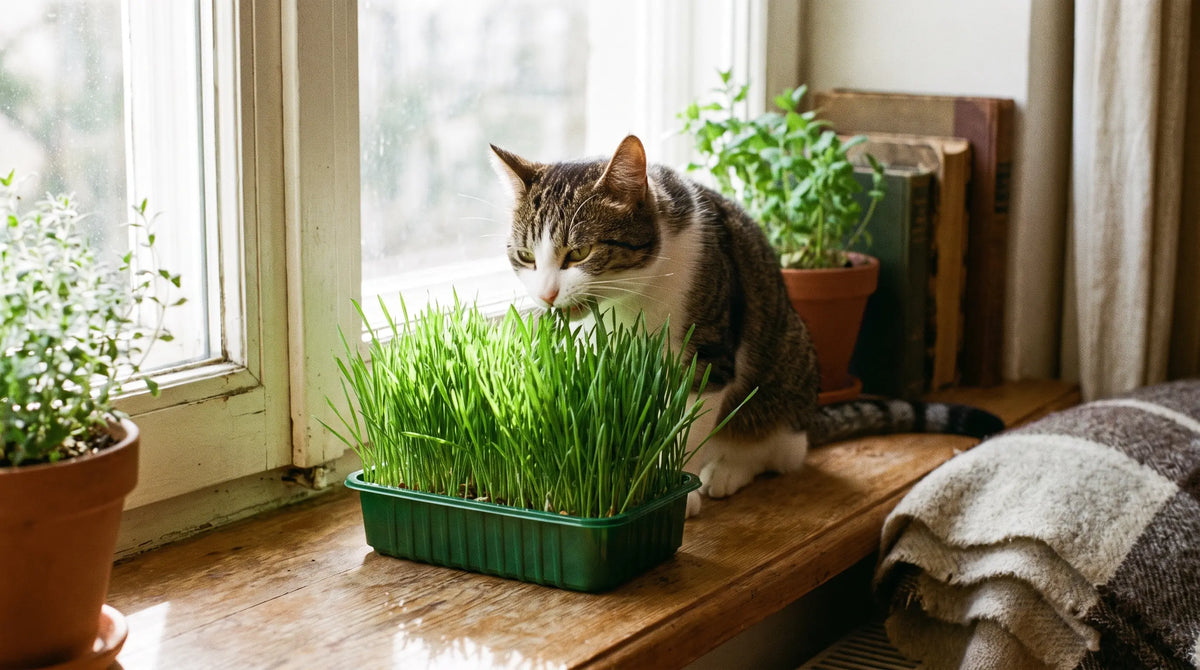
Cat grass is one of the easiest, fastest things you can grow, and you do not even need a garden. It is a pet-safe blend of barley, oat, rye, and wheat seeds that goes from a sprinkle of seed to a lush, tender tray in about a week on any windowsill. Many cats graze on it by instinct, and the extra fiber seems to help their digestion and with passing the occasional hairball. Dogs, rabbits, and guinea pigs enjoy it too, so with a fresh tray sown every couple of weeks your pets always have clean, fresh greens to nibble.
Best tip
The single biggest thing that ruins a tray of cat grass is a warm, still, overwatered corner, which is exactly what mold likes. Keep the soil evenly moist but never soggy, uncover the tray as soon as the seeds sprout, and set it somewhere with a little air movement. To keep fresh grass on hand without fighting mold, start a new tray every one to two weeks and toss the old one once it flops or yellows, rather than nursing a tired tray back to life.
| Barley, oat, rye & wheat grass blend | |
| Fast-growing cereal grasses, grown indoors for pets | |
| Grown indoors year-round, any climate | |
| Bright indirect light or a grow light | |
| 7 to 10 days | |
| 4 to 6 inches (harvest height) | |
| Sow seeds thickly; no thinning | |
| Keep evenly moist; mist daily, never soggy |
Because you grow cat grass indoors in a tray, there is no season to wait for. You can sow it any time of year, in any climate, on a windowsill or under a grow light. The trick to a steady supply is succession sowing: start a fresh tray every one to two weeks so a new one is always coming up as the last one gets grazed down. That way your pets always have tender young blades, which are the ones they like best.
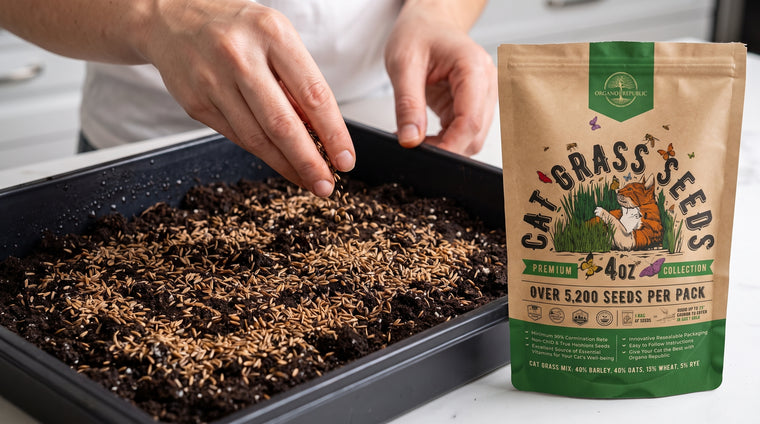
Use a shallow tray about two to three inches deep with drainage holes, and fill it with an organic potting mix or coconut coir. If you like, soak the seeds in cool water for 6 to 12 hours first to speed up sprouting, though it is optional. Scatter the seeds thickly and evenly across the moist surface, then press them in gently. Do not bury them, since cat grass sprouts best sitting right at the surface. Mist well, cover the tray with a humidity dome or loose plastic wrap to hold moisture, and keep it around 65 to 75F. Seeds usually sprout in two to four days.
You can also grow cat grass without soil. Spread soaked seeds on a few damp paper towels or a shallow hydroponic tray, keep them moist and covered until they root, then let the blades grow up. A soil-free method is handy if your cat likes to dig, and it keeps the tray cleaner indoors.

Once the seeds sprout, uncover the tray and move it to bright indirect light or under a grow light, at normal room temperature around 65 to 75F. Keep the mat of soil evenly moist but never soggy, misting or watering lightly as it dries. Good airflow is the other half of the job: a little air movement around the tray helps prevent mold and mildew, which are the most common problems with cat grass. Grown this way, the blades shoot up fast and stay a fresh, tender green.
Cat grass is easy, but do not overwater it. Soggy soil and still air lead to mold, so keep the tray evenly moist rather than wet, give it a little airflow, and start fresh soil with each new batch.
Cat grass is ready to offer when the blades reach about four to six inches tall, usually around 7 to 10 days from sowing. You can either set the whole tray out for your pet to nibble, or snip blades with clean scissors and offer a small handful at a time. Rinse cut grass before giving it to pets, and start with small amounts. Trimmed grass keeps in an airtight container in the fridge for about five to seven days. Reseed a fresh tray every one to two weeks so you always have a young, tender batch coming on.
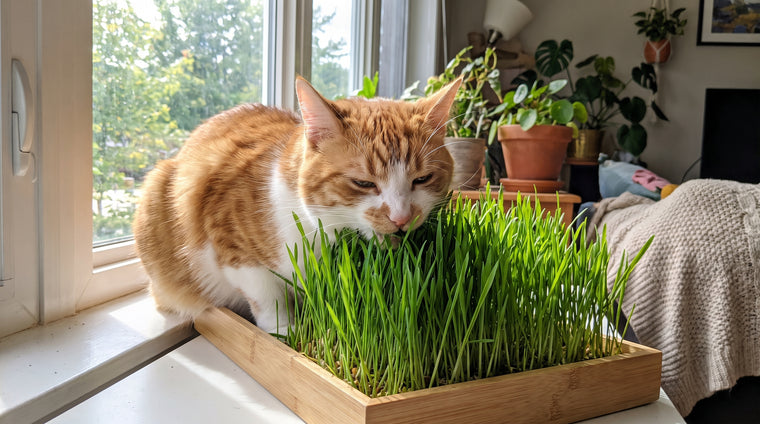
Many cats graze on grass by instinct, and a tray of fresh cat grass gives them a clean, safe place to do it indoors. The tender blades add a little fiber to their day, which many owners find helps with digestion and with passing the occasional hairball. It also gives an indoor cat something natural to chew on instead of your houseplants. This blend of barley, oat, rye, and wheat grasses is enjoyed by more than just cats. Dogs, rabbits, and guinea pigs will happily nibble it too, so one tray can serve the whole household of pets.

Why do cats eat grass?
Grazing on grass is a natural instinct for cats. Many nibble on cat grass because the extra fiber seems to aid their digestion and help them pass hairballs, and it gives an indoor cat something safe to chew on instead of your houseplants.
Is cat grass safe, and which pets can eat it?
Yes. This cat grass is a simple blend of barley, oat, rye, and wheat grasses grown indoors without pesticides, so it is safe for pets to nibble. Cats love it, and dogs, rabbits, and guinea pigs enjoy it too. Rinse cut grass first and offer small amounts.
How long does a tray of cat grass last, and how often should I reseed?
A healthy tray usually stays fresh and tender for a couple of weeks before it starts to flop or yellow. To keep a steady supply, sow a new tray every one to two weeks so a fresh one is always coming up as your pet grazes the last one down.
Can I grow cat grass without soil?
Yes. Spread soaked seeds on a few damp paper towels or in a shallow hydroponic tray, keep them moist and covered until they root, then let the blades grow up. A soil-free method is handy if your cat likes to dig, and it keeps things cleaner indoors.
Why is my cat grass molding?
Mold on cat grass almost always comes from overwatering and still air. Keep the soil evenly moist rather than soggy, uncover the tray as soon as the seeds sprout, give it a little airflow, and start with fresh soil for each new batch.
How long until cat grass is ready to eat?
Cat grass is fast. Seeds usually sprout in two to four days, and the tray is ready to offer once the blades reach about four to six inches tall, roughly 7 to 10 days from sowing.
Ready to grow your own? Our Non-GMO, heirloom Cat Grass seed mix blends barley, oat, rye, and wheat so you can grow a lush, pet-safe tray in about a week, right on your windowsill. Start a fresh tray every couple of weeks and your cats, and any dogs, rabbits, or guinea pigs, will always have fresh greens to nibble.
Want to keep the trays coming? Grab a bigger refill pack:
By Maxim Kaufman — Founder & CEO, Organo Republic
Maxim founded Organo Republic in 2017 and personally selects, tests, and grows the heirloom, non-GMO varieties the company offers. Under his leadership, Organo Republic was named Agri Business Review’s Top Non-GMO Seed Variety Solution 2026.
Thanks for subscribing!
This email has been registered!
| Product | SKU | Description | Collection | Availability | Product type | Other details |
|---|
Your cart is empty
Add some seeds and grow something great
Price
$21.99
Starting at
$17.99
Price
$12.99
Starting at
$9.99
Price
$22.99
Starting at
$16.99
Starting at
$4.99
Lures aphids & squash bugs away from your crops
Improves neighbors' flavor, deters hornworms
Attracts ladybugs & lacewings that eat aphids
Attracts hoverflies, boosts neighbors' vigor
Draws pollinators, repels moths & deer
Draws pollinators, doubles as a living trellis
Attracts butterflies, bees & ladybugs
Traps aphids, feeds beneficial insects
Brings bees, hoverflies & parasitic wasps
Its blooms feed aphid-eating hoverflies
Repels cabbage moths & carrot flies
Aromatic pest shield for veggies & vines
Draws parasitic wasps that hunt pests
Repels aphids, squash bugs & flea beetles
Ladybug & hoverfly hub for the whole bed
Keeps pollinators coming all season
Trap crop for flea beetles, protects your vines
Feeds roots for stronger, faster-growing plants
Bee balm that pulls in bees & hummingbirds
Citrus-scented bee magnet for fruiting crops
Lacy blooms that draw predatory wasps