


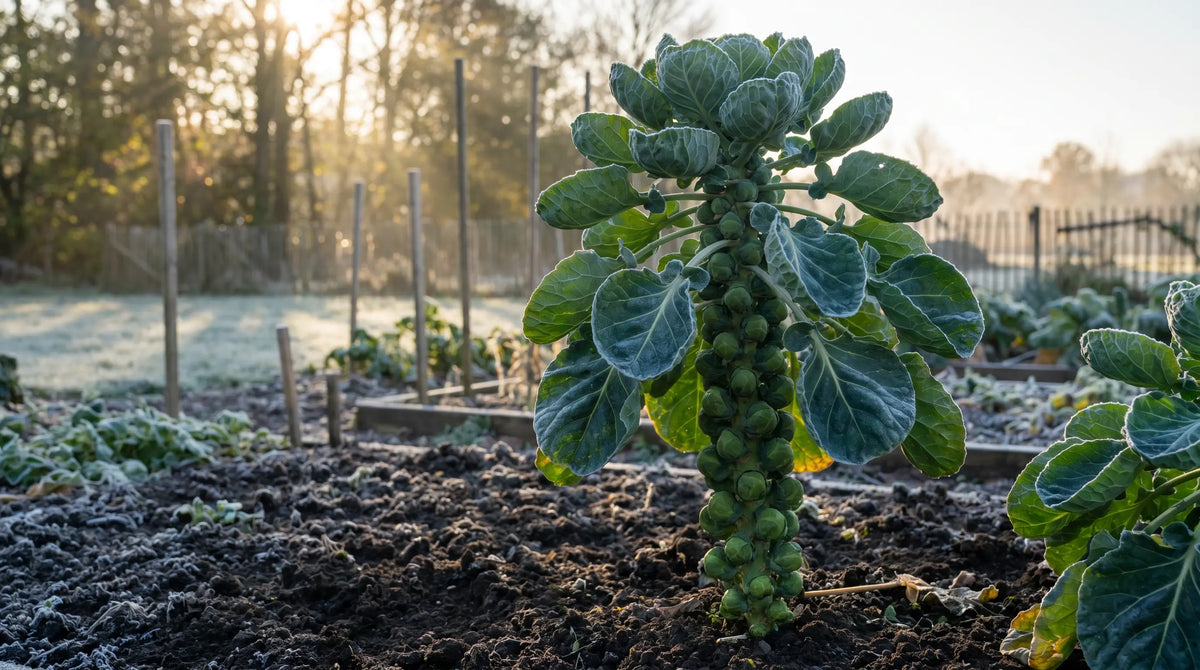
How to Grow Brussels Sprouts From Seed
Updated July 2026
Brussels sprouts (Brassica oleracea var. gemmifera) are a patient gardener's reward: tall stalks lined with rows of tight little cabbage-like buttons that taste sweetest after a fall frost. This cool-season crop needs a long, steady season and a cold finish, but the payoff is a stalk you can harvest for weeks. Here is how to grow Brussels sprouts from seed, from starting seedlings indoors to picking sweet, frost-kissed sprouts.
Best tip
At a glance
 Botanical name Botanical name | Brassica oleracea var. gemmifera |
|---|---|
 Plant type Plant type | Cool-season biennial grown as an annual |
 USDA zones USDA zones | 2 to 9 (as a cool-season crop) |
 Sun Sun | Full sun |
 Days to maturity Days to maturity | 90 to 110 days from transplant |
 Height Height | 24 to 36 inches |
 Spacing Spacing | 18 to 24 inches |
 Water Water | Regular; keep evenly moist |
When to plant
How to plant
Growing and care
The best companion plants
Sale

Nasturtium Seeds for Sale – Non-GMO HeirloomHeirloom, non-GMOA trap crop that lures aphids and cabbage pests away from your sprout stalks.
Price$14.99Starting at$6.99
Sale

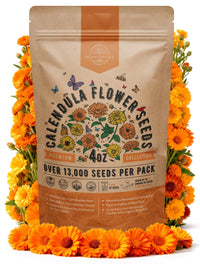
Marigold Seeds PackHeirloom, non-GMOBright blooms that repel cabbage worms and pull in pollinators near your brassicas.
Price$12.99Starting at$8.99
Sale

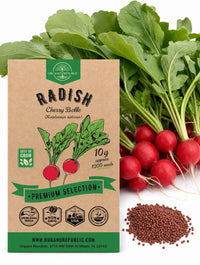
Cherry Belle Radish Seeds – Non-GMO HeirloomHeirloom, non-GMOFast radishes fill the space between young plants and draw flea beetles off the crop.
Price$4.99Starting at$3.99
Sale

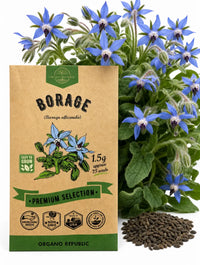
Borage Seeds – Non-GMO HeirloomHeirloom, non-GMOBorage brings in bees and beneficial insects and is said to boost brassica vigor.
Price$5.99Starting at$4.99
Harvest
Uses
Common problems
Frequently asked questions
Should I top my Brussels sprouts plants?
Topping means pinching out the growing tip at the top of the stalk about 3 to 4 weeks before your first expected harvest. It stops upward growth and pushes the plant's energy into the sprouts, so they size up more evenly all at once. It is optional; skip it if you want a longer, staggered harvest up the stalk.
Why are my Brussels sprouts loose and leafy instead of tight?
Loose, open sprouts usually mean the plant grew too fast in warm weather or in loose, over-rich soil. Brussels sprouts want firm ground, steady moisture, and a long cool finish. Firm the soil around the base, avoid heavy nitrogen late in the season, and time the crop so it matures in cool fall weather.
Do Brussels sprouts need staking?
Often, yes. Plants grow 2 to 3 feet tall and get top-heavy with sprouts, so a stake or a hilled-up base keeps them from toppling in wind or rain. Firming the soil well at planting and mounding it around the stem as they grow goes a long way.
Can I grow Brussels sprouts in a container?
You can, though they need room. Use a large pot at least 12 to 14 inches wide and deep, one plant per container, with rich soil and steady water. A stake helps in wind, and a big enough pot keeps the roots from drying out on hot days.
How do I store Brussels sprouts after harvest?
Left on the stalk in the fridge or a cold garage, sprouts keep for a couple of weeks. Picked loose, store them unwashed in a bag in the crisper for about a week. For longer storage, blanch and freeze them; they hold their color and flavor well frozen.
Are Brussels sprouts hard to grow?
They are not difficult, just patient work. The main things are a long, cool growing season, firm soil, steady moisture, and watching for cabbage worms and aphids. Time the crop to mature in fall and let a frost or two sweeten the sprouts, and the rest is mostly waiting.
Sale

Long Island Improved Brussels Sprouts Seeds – Non-GMO HeirloomHeirloom, non-GMOHeirloom Long Island Improved: dependable sprouts, sweeter after frost.
Price$4.99Starting at$3.99
Want more than Brussels sprouts? These value sets all include Brussels sprouts seeds, plus many more vegetables and herbs:
Sale

Herb & Vegetable Seeds Variety Pack – Non-GMO Heirloom75 varieties, Brussels sprouts includedOur top-selling herb-and-veg box for a whole-garden start, Brussels sprouts included.
Price$63.99
Sale Price$59.99

- Choosing a selection results in a full page refresh.









 Easy Returns 30-day guarantee