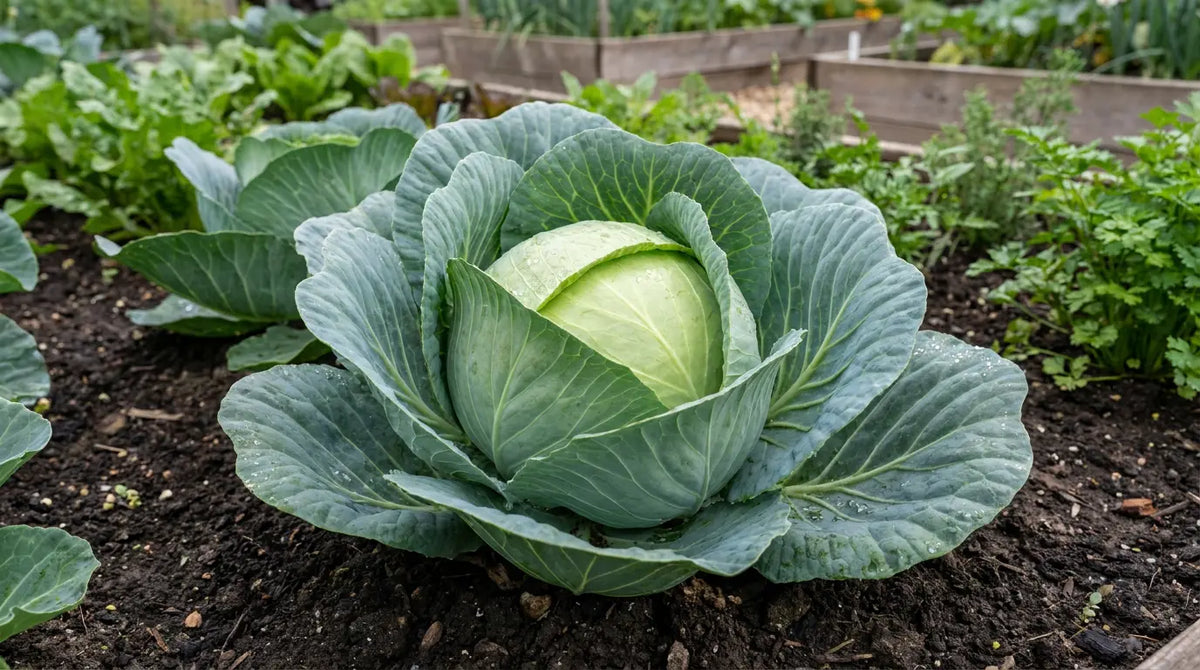
How to grow cabbage: a mature green cabbage head in the garden

How to Grow Cabbage From Seed

Updated July 2026

Cabbage is a satisfying, space-friendly crop that rewards a little cool weather with big, firm heads. This guide covers how to grow cabbage from seed across the whole family, from smooth green types to purple-red cabbage and crinkled savoy, and from quick, compact early varieties to large midseason and long-storage types that keep through winter. You will learn how to start seedlings, transplant, keep heads from splitting, and outsmart cabbage worms, whichever type you choose to grow.

Best tip

If a head matures before you are ready to use it, give the plant a gentle quarter turn to break some of its roots. That slows how fast it takes up water and buys you a week or two before it splits, which is a simple old-timer trick that really works, especially with fast, tight-heading early types. Climate note: cabbage is happiest in cool weather, so grow spring and fall crops in the North and lean on fall and winter cabbage in hot Southern regions to avoid bolting.

At a glance

Botanical nameBrassica oleracea var. capitata
Plant typeCool-season annual vegetable
USDA zones1 to 9 (grown as a cool-season annual)
SunFull sun (6 or more hours)
Days to maturity55 to 100 days from transplant, depending on variety
Height12 to 15 inches
Spacing12 to 18 inches apart, rows 24 to 36 inches
Water1.5 inches a week; keep evenly moist

When to plant

Cabbage is a cool-season crop that grows best at the mild ends of the year, and the whole family follows the same rhythm whether you plant green, red, or crinkled savoy types. For a spring crop, start seeds indoors 4 to 6 weeks before your last frost and transplant a couple of weeks before that frost, since young cabbage takes light frost in stride. For a fall crop, which often gives the sweetest heads, sow in mid to late summer so the cabbages mature as the weather cools. Choose early, compact varieties (roughly 55 to 65 days) when you want a fast, small-space crop, and midseason or long-storage types (up to about 100 days) when you want big heads to keep through winter.

How to plant

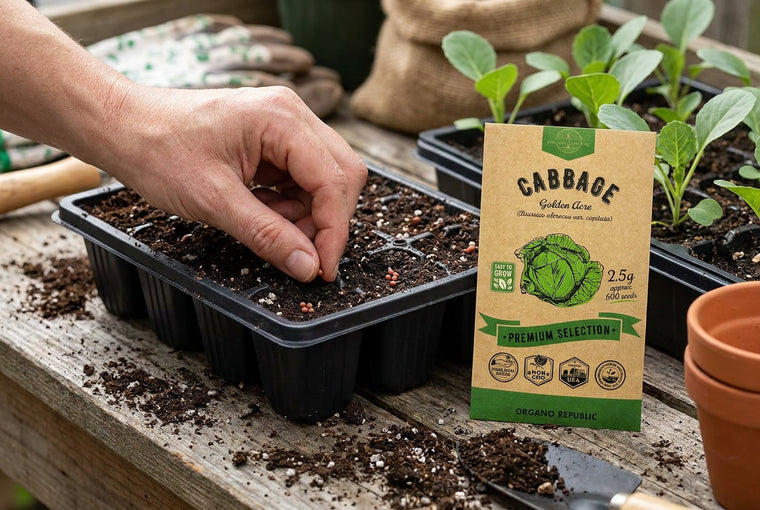
Sow cabbage seeds a quarter inch deep in cell trays of moist seed-starting mix, two seeds per cell, and keep them around 70 to 75F. Seedlings appear in 5 to 10 days; thin to the strongest. Harden them off, then transplant into rich, firm soil in full sun. Space plants by type: compact early cabbages go 12 to 18 inches apart, while large midseason and storage types want 18 to 24 inches, with rows 24 to 36 inches apart. Firm the soil around each plant and water in well. In mild climates you can also direct-sow and thin.

Start cabbage in cell trays, sowing a quarter inch deep, then transplant.

Growing and care

Cabbage wants steady moisture and steady feeding across every type. Give it about 1.5 inches of water a week and a nitrogen-rich feed early on to build big frame leaves, then let each plant form its head. Even watering matters: a sudden soaking of a mature head makes it split, and this is more of a risk with tight-heading early types than with slow storage varieties. Watch for cabbage worms, loopers, and aphids, and use row cover or hand-picking. In hot regions like the South, grow cabbage in fall and winter, since summer heat makes plants bolt; in the North, both spring and fall crops do well, and light frost actually sweetens the heads.

The best companion plants

Cabbage grows well next to plants that pull pests away and bring in helpful insects. These four make especially good neighbors in a brassica bed, and you can add any of them in one click:

SaleNasturtium Seeds
Nasturtium SeedsHeirloom, non-GMOA brassica trap crop: cabbage worms and flea beetles head for nasturtium instead of your cabbage.
Price$14.99Starting at$6.99
View product
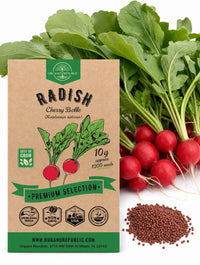
SaleCherry Belle Radish Seeds
Cherry Belle Radish SeedsHeirloom, non-GMOFast radishes lure flea beetles off young cabbage and are pulled long before heads form.
Price$4.99Starting at$3.99
View product
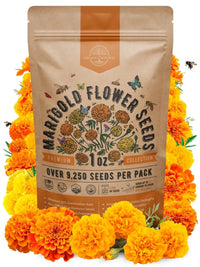
SaleMarigold Seeds Pack
Marigold Seeds PackHeirloom, non-GMOMarigolds deter pests and draw the hoverflies and wasps that hunt cabbage worms.
Price$12.99Starting at$8.99
View product
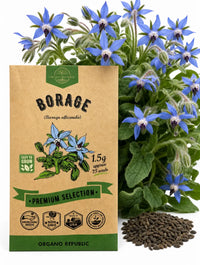
SaleBorage Seeds
Borage SeedsHeirloom, non-GMOBorage flowers bring in bees and beneficial insects and make a useful living mulch by brassicas.
Price$5.99 Sale Price$4.99
View product

Watch for splitting and heat. A mature head that suddenly drinks a lot of water after rain will crack open, and summer heat makes cabbage bolt before it heads. Water evenly, harvest firm heads promptly, and grow cabbage in cool weather, leaning on a fall crop in warm climates.

Harvest

Cut cabbage when the head feels firm and solid when you squeeze it, slicing through the stem at the base and leaving the outer wrapper leaves in the garden. Early types are ready sooner and should be cut promptly so they do not split, while dense storage varieties can hold longer in the field and cure for winter keeping. If you leave the rooted stump and its lower leaves, many plants form a cluster of small secondary heads for a second, smaller cutting.

Uses

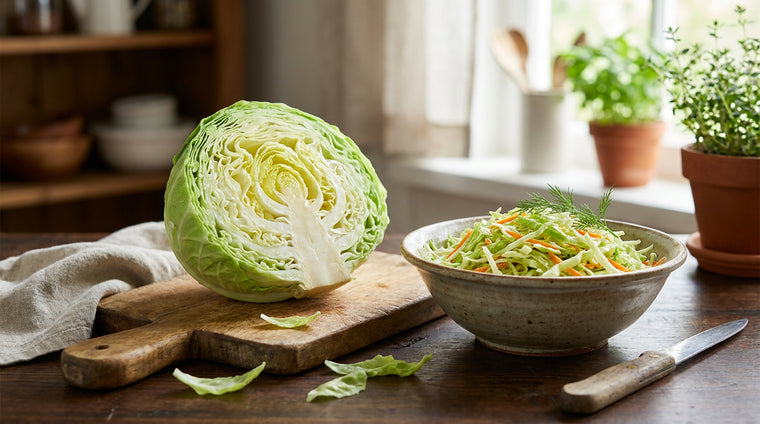
Cabbage is endlessly useful, and each type brings something different to the kitchen. Shred tender green or crisp red heads raw for coleslaw and tacos, saute or braise wedges, drop them into soups and stir-fries, or ferment them into sauerkraut and kimchi. Savoy types, with their crinkled leaves, are prized for wraps and slow-cooked dishes, and red cabbage adds color to any plate. A firm head stores for weeks in the fridge, and dense storage varieties keep for months, so one harvest feeds many meals.

Homegrown cabbage, sliced and shredded for slaw.

Common problems

  • Splitting heads: from uneven watering or leaving mature heads too long, most common in fast early types. Water evenly, harvest promptly, or root-prune with a quarter turn.
  • Cabbage worms: green caterpillars from white moths. Use row cover, pick them off, and plant nasturtium and marigold nearby.
  • Bolting: heat makes cabbage flower instead of heading. Time the crop for cool weather and favor a fall planting in warm regions.
  • Clubroot: swollen, distorted roots in acidic soil. Rotate brassicas to a new bed each year and lime the soil to raise the pH.

Frequently asked questions

How long does cabbage take to grow from seed?

Early types like Golden Acre mature in about 60 to 70 days from transplant. Add 4 to 6 weeks in the seed tray if you start indoors, so plan on roughly three months from sowing to a firm, cuttable head.

Why did my cabbage heads split?

Splitting usually happens when a mature head takes up water fast after rain or heavy watering. Harvest heads as soon as they feel firm, water evenly rather than in big gluts, and if a head is ready but you are not, give it a quarter turn to snap some roots and slow its uptake.

Does cabbage grow back after you cut the head?

The main head does not regrow, but if you leave the plant and its outer leaves in place, many cabbages push out several small secondary heads around the cut stem. Cut a shallow cross in the stump to encourage them for a bonus mini-harvest.

Can you grow cabbage in containers?

Yes. Use a pot at least 12 inches wide and deep for one plant, filled with rich mix, in full sun. Compact early varieties like Golden Acre suit containers well. Water often, since pots dry out quickly, and feed regularly.

When should I plant cabbage?

For a spring crop, start seeds indoors 4 to 6 weeks before your last frost and transplant a couple of weeks before it, since young cabbage tolerates light frost. For a fall crop, sow in mid to late summer so heads mature in cool weather, which often gives the sweetest cabbage.

How do I keep cabbage worms off my cabbage?

The green worms come from small white and gray moths. Float a lightweight row cover over the plants to keep the moths from laying eggs, check the undersides of leaves and pick off any worms, and plant nasturtium and marigold nearby to distract pests and draw in their predators.

Ready to grow your own? Pick the cabbage type that fits your garden, from compact early green heads to red and savoy types, and start with a packet of heirloom, non-GMO cabbage seeds.

Want more than cabbage? These value sets all include cabbage seeds, plus many more vegetables:

Sale75 Herb & Vegetable Seeds Variety Pack
75 Herb & Vegetable Seeds Variety Pack75 varieties, cabbage includedOur biggest all-in-one: 75 herb and vegetable varieties, cabbage included.
Price$63.99 Sale Price$59.99
View product
SaleWinter Vegetable Seeds Variety Pack
Winter Vegetable Seeds Variety Pack25 varieties, cabbage included25 cold-hardy vegetables for cool weather, cabbage included.
Price$27.99Starting at$24.99
View product
Maxim Kaufman, Founder and CEO of Organo Republic

By Maxim Kaufman — Founder & CEO, Organo Republic

Maxim founded Organo Republic in 2017 and personally selects, tests, and grows the heirloom, non-GMO varieties the company offers. Under his leadership, Organo Republic was named Agri Business Review’s Top Non-GMO Seed Variety Solution 2026.

Stay Connected

Join Our Garden Community

Daily garden inspiration, how-to videos & behind-the-seeds stories.