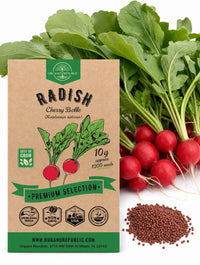
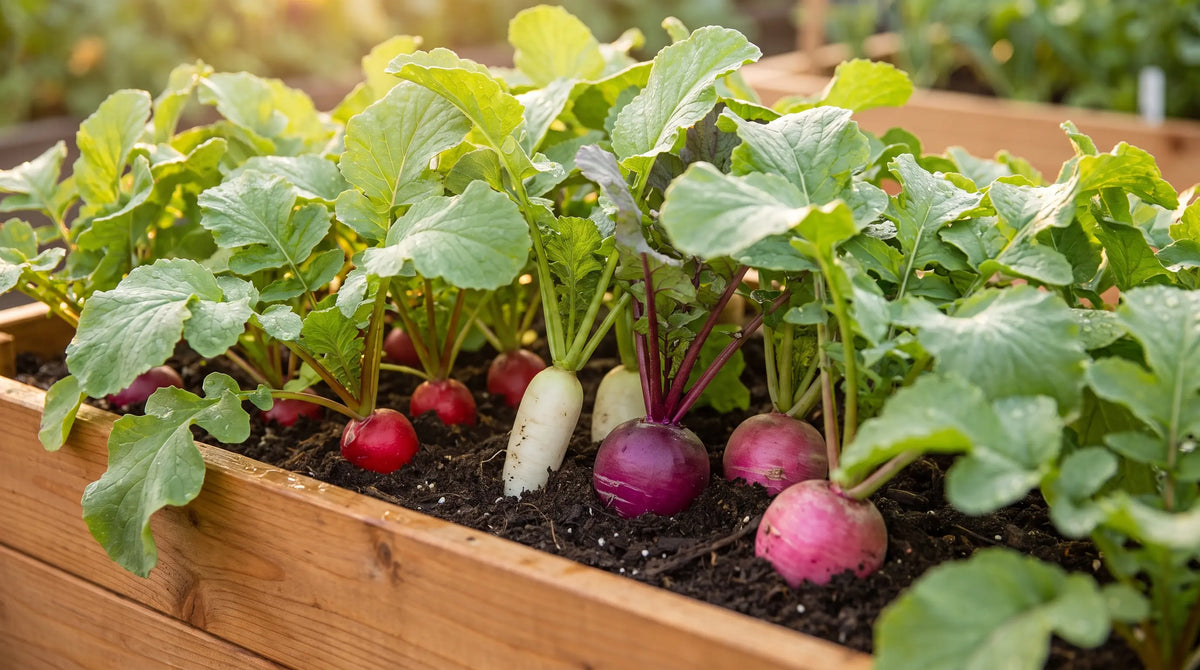
Home garden bed of radishes in red, white, purple and pink

How to Grow Radishes From Seed

Updated July 2026

Radishes are the fastest, easiest crop in the garden, going from seed to harvest in as little as three to four weeks. Direct-sow them straight into cool, moist soil, keep them growing quickly, and you get crisp, peppery roots in every color and shape, from little red globes to long white icicles and giant daikon. This complete guide covers every step from seed to harvest, and it works for every radish we grow.

Best tip

The secret to great radishes is speed. Sow them in the cool weather of spring and fall, keep the soil evenly moist, and never let them dry out or stall, or the roots turn woody and hot. Thin the seedlings early so each root has room, and harvest small salad radishes the moment they size up. Gardeners in hot-summer regions like the South should skip midsummer sowings and grow radishes as a spring and fall crop, and lean on large daikon and winter types for the fall garden.

At a glance

Botanical nameRaphanus sativus
Plant typeCool-season root vegetable (annual)
USDA zones2 to 11 (grown as a cool-season annual)
SunFull sun to part shade (6+ hours)
Days to maturity22 to 30 days (spring); 50 to 65 days (winter/daikon)
Height6 to 12 inches (tops)
Spacing1 inch, then thin to 2 to 6 inches apart
WaterEven and consistent; keep soil evenly moist

When to plant

Radishes are a cool-season crop, so sow them in the mild weather of spring and fall. Start small salad radishes as soon as the soil can be worked in spring, then sow a fresh short row every one to two weeks for a steady supply. Radishes bolt and turn hot in summer heat, so pause sowing once days get warm and resume in late summer. Large winter and daikon types are a fall crop: sow them in mid to late summer so they mature in the cooling days of autumn, about two months before your first hard frost.

How to plant

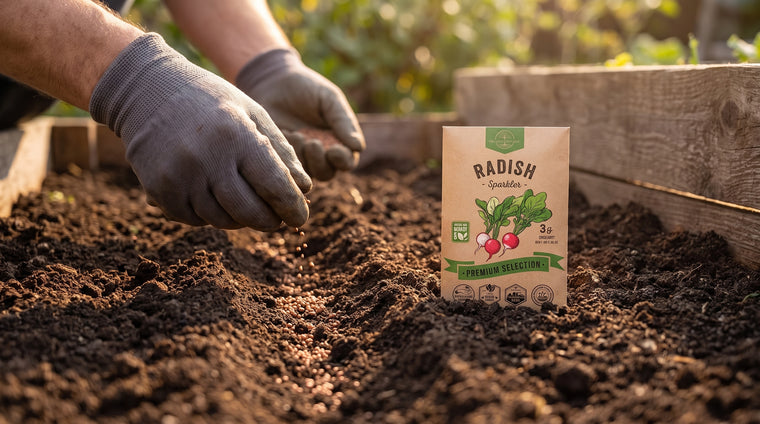
Radishes are direct-sown; they grow too fast to bother starting indoors. Loosen the soil, remove stones so roots grow straight, and sow seeds about half an inch deep and one inch apart in rows or wide bands. Water gently and keep the bed consistently moist, and seedlings appear in just 3 to 7 days. Once the first true leaves show, thin small salad radishes to about 2 inches apart and large winter or daikon types to 4 to 6 inches, because crowded radishes make leaves instead of roots.

Direct-sow radish seeds into cool, moist soil; they sprout in days and grow fast.

Growing and care

Radishes are easy as long as they never stop growing. Keep the soil evenly moist so the roots stay crisp and mild, since dry spells make them woody and fiery and uneven watering can split them. Avoid high-nitrogen fertilizer, which pushes lush tops at the expense of roots; a soil with modest, balanced fertility is ideal. Keep the bed weeded, give full sun, and simply harvest small radishes promptly, as most salad types are ready in just three to four weeks.

The best companion plants

Radishes are quick, friendly neighbors that fit almost anywhere. They mark slow rows, loosen soil, and grow well beside many crops. Marigolds, nasturtiums, and basil all help by deterring or trapping the pests that bother radishes, and they are easy to add in one click:

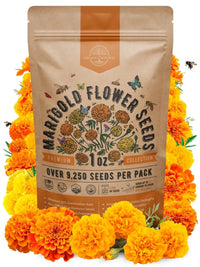
SaleMarigold Seeds Pack
Marigold Seeds PackPest deterrentMarigolds repel root maggots and flea beetles that bother radishes.
Price$12.99Starting at$8.99
View product
SaleNasturtium Seeds for Sale – Non-GMO Heirloom
Nasturtium Seeds for Sale – Non-GMO HeirloomTrap cropNasturtiums lure aphids and flea beetles away from your radish rows.
Price$14.99Starting at$6.99
View product
SaleHoly Basil Seeds – Tulsi, Non-GMO Heirloom
Holy Basil Seeds – Tulsi, Non-GMO HeirloomGood neighborBasil grows well beside radishes and helps confuse pests with its scent.
Price$4.99Starting at$3.99
View product

Radishes turn woody, hot, and bitter when stressed. Slow growth, drought, crowding, and summer heat all push roots to become fibrous and pungent or bolt straight to flower. Grow them fast in cool weather, thin them early, keep the soil moist, and harvest small salad types on time; a radish left too long in the ground quickly becomes pithy and inedible.

Harvest

Radishes are best picked young and never left to linger. Pull small salad radishes as soon as the roots reach full size, usually about half an inch to one inch across and just three to four weeks from sowing, since holding them longer makes them woody and hot. Simply grasp the leafy top and lift. Large winter and daikon radishes are pulled in fall once full-sized but still tender, and these bigger roots store for weeks in the fridge or a cool cellar.

Uses

Crisp, peppery radishes are one of the most versatile quick crops. Slice small salad types raw into salads, tacos, and sandwiches, or serve them whole with butter and salt in the classic French style. Roasting mellows and sweetens them, and the leafy tops are edible in soups and sautes. Large daikon and winter radishes shine grated into slaws, pickled, or simmered in soups and stews, and every type delivers vitamin C and a fresh, lively crunch.

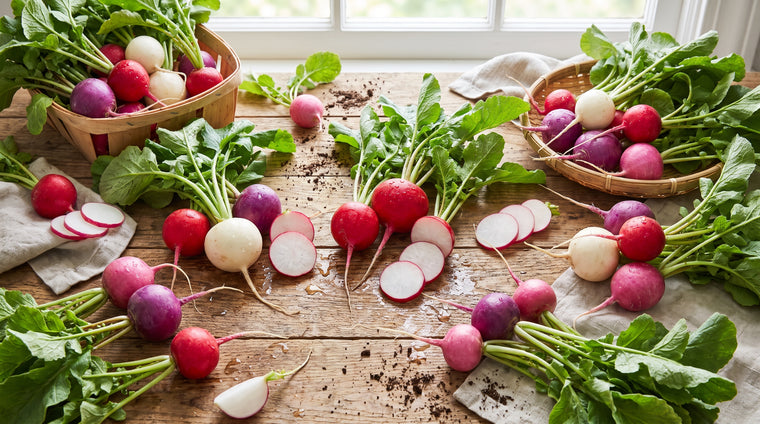
Crisp, colorful radishes, freshly pulled and ready for the kitchen.

Common problems

  • All leaves, no root: too much nitrogen, crowding, or heat. Thin seedlings, skip nitrogen-rich feed, and grow in cool weather.
  • Woody, hot, or pithy roots: growth stalled or the radish sat too long. Keep soil moist, grow fast, and harvest small salad types on time.
  • Bolting (flower stalks): warm days or long daylight in summer. Sow in spring and fall and choose bolt-resistant varieties for late sowings.
  • Split roots: uneven watering after a dry spell. Keep the soil consistently moist rather than swinging from dry to soaked.
  • Flea beetles and root maggots: tiny holes in leaves or tunneled roots. Use row cover, rotate beds, and plant trap crops like nasturtiums nearby.

Frequently asked questions

How long do radishes take to grow?

Spring salad radishes are one of the fastest crops in the garden, going from seed to harvest in just 3 to 4 weeks. Larger winter and daikon types are a fall crop and need 50 to 65 days.

Do I start radishes indoors or direct sow?

Always direct sow radishes. They grow so fast and dislike being transplanted, so plant seeds right into the garden about half an inch deep and an inch apart, then thin the seedlings.

Why are my radishes all leaves and no root?

Too much nitrogen, crowding, or hot weather pushes leafy top growth over root formation. Thin seedlings to give each room, avoid high-nitrogen feed, and sow in the cool weather of spring and fall.

Why are my radishes woody, hot, or split?

Radishes turn woody and fiery when they grow too slowly, sit past maturity, or dry out. Keep the soil evenly moist, harvest promptly, and grow them quickly in cool weather for mild, crisp roots.

When should I plant radishes?

Sow spring radishes as soon as the soil can be worked, every two weeks through spring and again in early fall. Plant large winter and daikon radishes in late summer for a fall harvest; radishes bolt in summer heat.

How deep and far apart do I plant radish seeds?

Sow seeds about half an inch deep and one inch apart, then thin small salad radishes to 2 inches and large winter types to 4 to 6 inches so the roots have room to size up.

Ready to grow your own? A multi-variety vegetable pack gives you crisp, colorful radishes plus a whole garden of easy crops from a single order.

Want a whole row of radishes? These value packs bundle radishes with other easy vegetables in one order:

Maxim Kaufman, Founder and CEO of Organo Republic

By Maxim Kaufman — Founder & CEO, Organo Republic

Maxim founded Organo Republic in 2017 and personally selects, tests, and grows the heirloom, non-GMO varieties the company offers. Under his leadership, Organo Republic was named Agri Business Review’s Top Non-GMO Seed Variety Solution 2026.

Stay Connected

Join Our Garden Community

Daily garden inspiration, how-to videos & behind-the-seeds stories.