



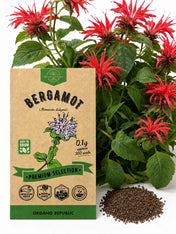




What is Bergamot and what does it taste like?
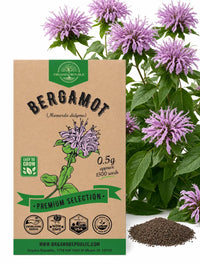
This is wild bergamot (Monarda), also called bee balm. Its leaves and flowers have a citrusy, minty, lightly spicy flavor often used to brew a tea reminiscent of Earl Grey, and the blooms are edible as a garnish.
When and how do I sow Bergamot seeds?
Sow in early spring, barely covering the tiny seeds since they need some light to germinate. A period of cold-moist stratification of a few weeks in the fridge improves germination, or sow outdoors in late fall to let winter do it naturally.
Is Bergamot a perennial and which zones suit it?
Yes, wild bergamot is a hardy perennial that thrives in USDA zones 3 through 9. It dies back in winter and returns each spring, spreading slowly into a clump.
How far apart should I space Bergamot plants?
Space plants 18 to 24 inches apart in full sun to part shade. Good spacing and airflow help keep the foliage healthy on this 2 to 4 foot tall plant.
Does Bergamot attract pollinators?
Very much so. Its lavender flowers are a magnet for bees, butterflies, and hummingbirds, which is why it earned the name bee balm. It is an excellent choice for a pollinator or cottage garden.
How many seeds are in a Bergamot packet?
Each packet contains approximately 300 heirloom, non-GMO seeds. Since the seeds are very small, sow thinly and thin the seedlings once they are established.
Is this the bergamot used in Earl Grey tea?
No. That flavoring comes from a citrus tree; this is bee balm, an herb with its own citrusy, minty aroma popular in homemade teas.
Does it come back every year?
Yes. It is a hardy perennial in zones 3–9 and will spread into a fuller clump over the seasons.









 Easy Returns 30-day guarantee