







What is a Cape Gooseberry and how does it differ from a tomatillo?
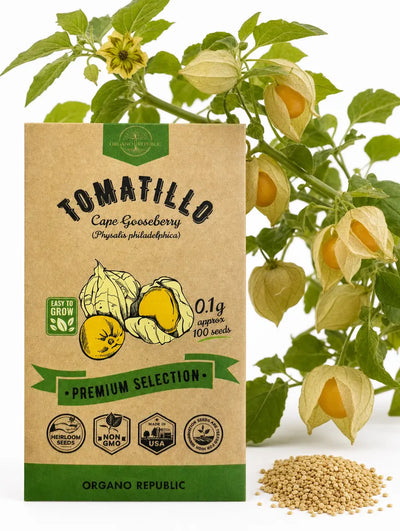
Cape Gooseberry is a husk-wrapped relative of the tomatillo that produces small, golden, sweet-tart fruit. Unlike the tart green tomatillo used in salsa, its ripe berries are sweet enough to eat fresh or make into jam.
When should I start Cape Gooseberry seeds?
Start seeds indoors 6 to 8 weeks before your last frost, sowing about 1/4 inch deep. Transplant outdoors after all frost danger has passed and the soil is warm.
How long until Cape Gooseberry fruit is ready?
Fruit is usually ready about 70 to 75 days from transplant. The berries are ripe when the papery husk turns tan and dry and the fruit inside is golden; ripe fruit often drops to the ground.
How much space and sun do Cape Gooseberry plants need?
Give plants full sun and space them 24 to 36 inches apart, as they spread into bushy plants. They grow well in the ground or in large containers.
How are Cape Gooseberries used in the kitchen?
Eat the sweet-tart berries fresh, add them to fruit salads, or cook them into jams, pies, and sauces. They also make an attractive dipped garnish for desserts.
How many seeds are in a packet and are they non-GMO?
Each packet contains about 100 heirloom, non-GMO seeds. Store the extras in a cool, dry place to keep them viable for years.
Is this the same as a tomatillo?
It's a close relative in the same family, but sweeter and eaten more like a fruit than a tomatillo.
How long do the seeds last?
Stored cool, dry, and sealed in the original packet, the seeds stay viable for a couple of years or more, with the best germination in the first year or two.






















 Easy Returns 30-day guarantee