


Dill Companion Plants: What to Grow Next to Dill (and What Not To)
Updated November 2026
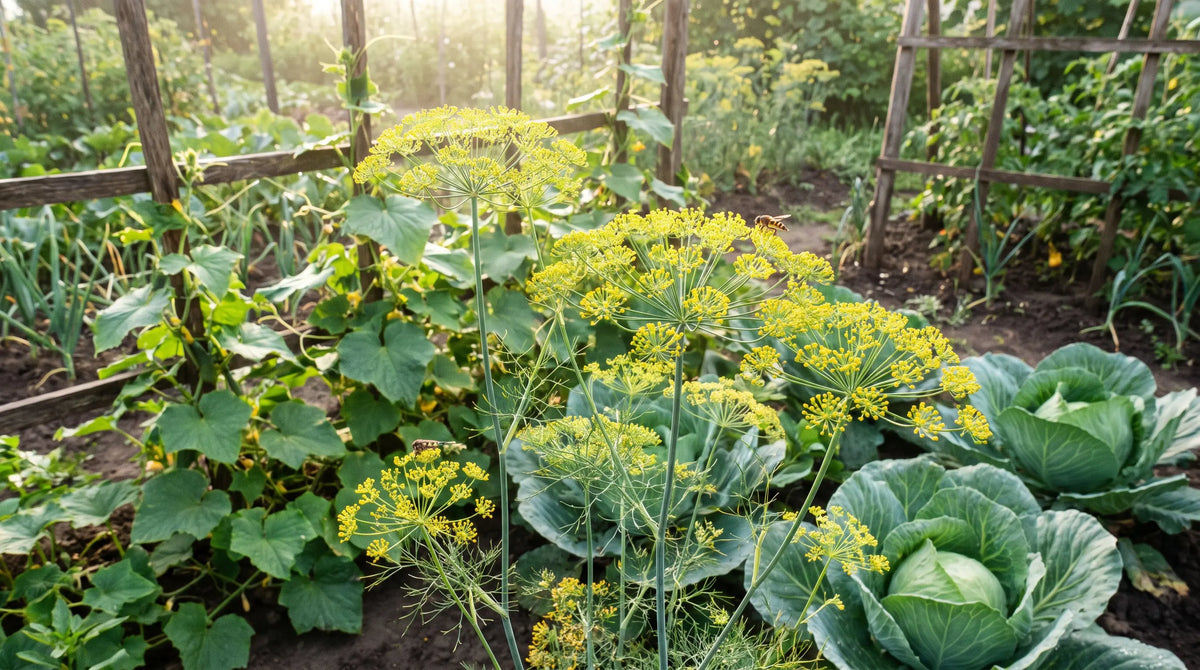
Let a dill plant flower and you'll see the flat yellow heads crawling with tiny wasps and flies. Those visitors are why dill belongs in a vegetable bed. Put it beside the right crops and it feeds the insects that hunt aphids and cabbage caterpillars. Put it in the wrong spot and you'll be pulling dill seedlings out of your carrot rows next spring. The short version: the best dill companion plants are cabbage and its relatives, cucumbers, lettuce, and onions. Keep dill away from carrots and fennel, and give it some room around tomatoes.
| Plant | Next to dill? | Why |
|---|---|---|
| Cabbage, broccoli, kale | Yes | Feeds the wasps that parasitize cabbageworms |
| Cucumbers | Yes | Draws aphid hunters and bees |
| Lettuce and salad greens | Yes | Hoverfly larvae hunt aphids in the hearts |
| Onions and garlic | Yes | Slim tops, shallow roots, no crowding |
| Tomatoes | With care | Keep flowering dill at the bed's edge |
| Carrots | No | Shared pests, and lookalike volunteers |
| Fennel | No | Same pests, and it reseeds freely |
Why dill makes such a good neighbor
Dill's value isn't scaring pests off. It feeds the insects that eat them, and only once it blooms. Each flat head holds hundreds of tiny flowers with exposed nectar, easy pickings for hoverflies and parasitic wasps (tiny, and harmless to you). Female hoverflies also need pollen to mature their eggs, which they lay beside aphid colonies.

Learn the helpers on sight. Hoverfly larvae look like tiny translucent slugs among the aphids, and parasitized aphids turn into puffy tan mummies. Leave both, and skip insecticide near flowering dill. Aphids bounce back from a spray faster than their hunters. Dill you keep cutting is slow to bloom, and blooming dill makes few leaves, so grow two patches, one to harvest and one to flower.
The best companion plants for dill
Cucumbers
Dill and cucumbers share the pickle jar and the bed. Flowering dill pulls hoverflies and lacewings to the aphids under cucumber leaves, plus bees for the blossoms. Spring dill is slow to flower, so give it a head start: sow around your last frost, usually weeks before the soil warms to the 65°F cucumbers want. Sow a second round with the cucumbers for fresh pickling heads, on the sunny side of the trellis.

Marketmore 76 Cucumber Seeds – Non-GMO HeirloomClassic dill partnerDependable heirloom slicer with straight, dark green fruit and resistance to several common cucumber diseases. Trellis the vines and sow dill along the sunny side.
Price$4.99
Cabbage, broccoli, and kale
The cabbage family gets the biggest payoff. Those velvety green caterpillars are cabbageworms, the young of the white butterflies over the bed, and dill nectar fuels the tiny wasps that lay eggs inside them. A limp caterpillar beside a clump of yellow cocoons is their work, so leave the cocoons to hatch. Hoverflies go after the waxy gray aphids in the folds.
Long days and heat push dill to flower, so spring dill stays leafy for weeks. Pair it with kale and broccoli, which are still standing when it blooms. Summer dill bolts fast, a good match for fall transplants. Compact Golden Acre, at 12 to 18 inches apart, leaves room for a row of dill.
Sale

Golden Acre Cabbage Seeds – Non-GMO HeirloomBiggest payoffEarly cabbage with compact, round heads. Space plants 12 to 18 inches apart, and it's quick enough for a fall crop beside a summer sowing of dill.
Price$4.99Starting at$3.99
Lettuce and salad greens
Aphids love tender lettuce and tuck into the heart, where the hose can't reach but a hoverfly larva can. Flowering dill keeps adult hoverflies laying eggs right there. Later sowings gain the most, since they're still growing when spring dill blooms. Arugula and kale in a salad mix are cabbage cousins, so they get the wasp help too.
Sale

Lettuce & Greens Seeds Variety Pack – Non-GMO HeirloomSalad bed partnerLettuces and salad greens to sow in succession. A few flowering dill plants in the bed bring in hoverflies, whose larvae eat aphids.
Price$12.99Starting at$7.99
Dill and tomatoes
Tomatoes sit in the middle. The warning that mature dill stunts tomatoes is more lore than science, but tall dill in the row crowds the lower leaves and keeps them damp longer, which invites early blight. Let it bloom at the bed's edge, where it still feeds aphid hunters and the wasps that parasitize hornworms. A hornworm studded with white cocoons like rice grains is doomed. Leave it for the wasps.
And those plump, striped caterpillars on your dill aren't hornworms. They're swallowtails (young ones look like bird droppings), which eat dill, parsley, fennel, and carrots, never tomatoes. Let them have a plant.
What not to plant with dill
Carrots
Dill and carrots share a family and pests, aphids and swallowtails among them. The bigger headache is seed. Dill drops plenty, and next spring its volunteers come up in your carrot rows looking a lot like carrot seedlings. When in doubt, pinch a leaf and sniff. Keep the two in separate beds, and cut dill heads as the seeds turn from green to tan, before they drop.
Fennel
Fennel is the garden's classic loner, and next to dill the reasons are practical: same family, same aphids and caterpillars in one spot, and it reseeds just as freely. Give it its own corner.
Planting tips
Sow dill where it will grow, because its long taproot sulks after transplanting. Barely cover the seed, since dill likes a little light to germinate, and keep the soil damp for the week or two it takes to sprout. Thin to 10 to 12 inches apart. Compact Bouquet, about 2 to 3 feet tall, tucks in easily among vegetables.
Frequently asked questions
What is dill a good companion plant for?
Cabbage, broccoli, kale, cucumbers, lettuce, and onions. Dill helps by feeding the hunters, not by repelling pests: its flowers fuel hoverflies and tiny parasitic wasps that attack aphids and cabbageworms. That only happens in bloom, so let a few plants flower near those crops.
What are bad companion plants for dill?
Carrots and fennel. Both share dill's plant family and its pests, including aphids and swallowtail caterpillars, and dill reseeds into carrot rows, where its seedlings are easy to mistake for carrots. Keep tall, flowering dill out of the tomato row too, so the tomato leaves get airflow.
Is dill a good companion plant for tomatoes?
Yes, if you place it well. Sow dill along the edge of the tomato bed rather than in the row, because tall, flowering dill crowds the lower tomato leaves and keeps them damp. From the edge, its flowers still feed hoverflies and the tiny wasps that parasitize aphids and hornworms.
Can you plant dill and cucumbers together?
Yes, they're a classic pair in the garden and the pickle jar. Spring dill is slow to bloom, so plant it around your last frost, weeks before the soil is warm enough for cucumbers. Then sow a second round alongside the cucumbers so fresh dill heads are ready for pickling.
What can you plant with dill in a pot?
Use a pot at least a foot deep, since dill grows a long taproot, and give it full sun. Lettuce and other salad greens make good partners because their roots stay shallow and you can harvest them while the dill fills in. Skip carrots and fennel, and choose a compact dill like Bouquet.

- Choosing a selection results in a full page refresh.









 Easy Returns 30-day guarantee