


Best Flowers for Hanging Baskets: 18 Easy Bloomers From Seed
Updated October 2026
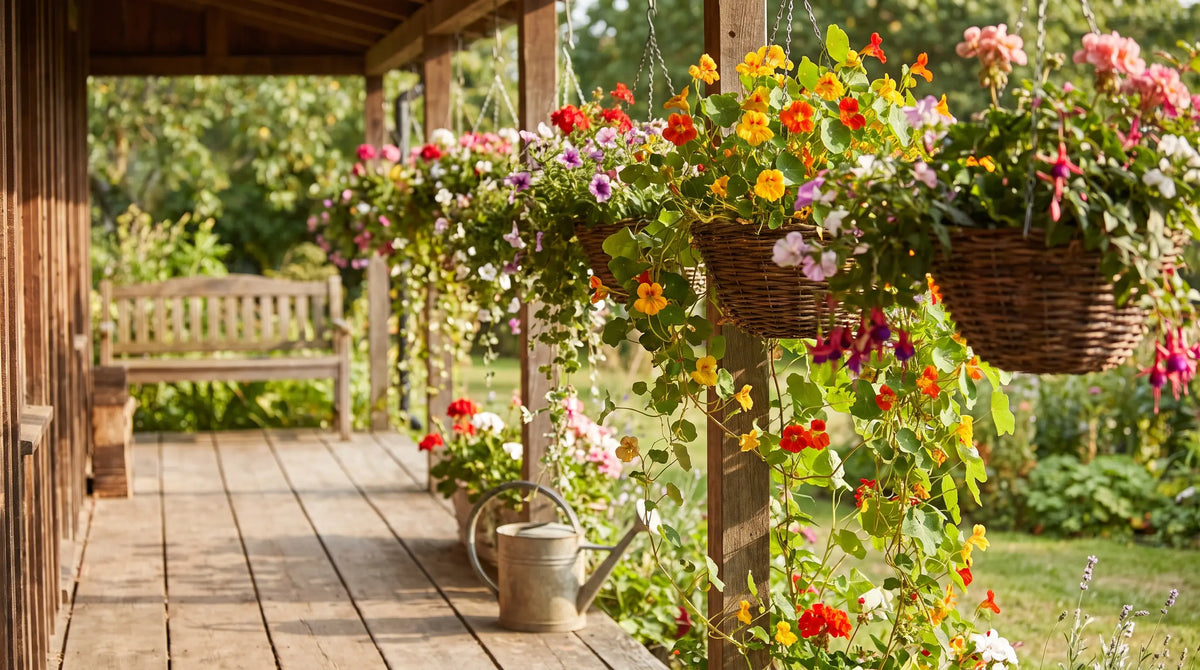
You hung the basket by the door in May, and by the middle of June it already looks tired. Sound familiar? A hanging basket lives one of the hardest lives in the whole garden. Lifted into the air, it catches sun and wind on every side, so it dries out far faster than the same plants would in a bed. The wall behind it soaks up afternoon heat and radiates it back long after the sun moves on, and the whole planting has to feed a crowd of roots from one small pocket of soil. None of that means you need a greenhouse or a cart full of nursery starts to fill one beautifully.
A packet of seed and a bright windowsill will get you there for the price of a coffee. Starting from seed also opens up colors, forms, and scents you will never find on a garden center bench, and you get to choose heirloom, non-GMO varieties from the very first true leaf. Almost every flower here is forgiving enough for a first-time grower, and most will bloom from early summer right through to your first hard frost.
What makes a flower happy in a basket
A basket is not a flower bed, and the plants that thrive in one know it. The best candidates share a handful of traits. They either trail over the rim or stay compact and mounded, so the shape still reads well when you are looking up at it from below. They have fibrous, shallow roots that settle happily into a shallow container. They keep flowering for months instead of putting on one short show, and the very best are self-cleaning, dropping their own spent blooms rather than sulking until you deadhead. Above all, they forgive a missed watering on a scorching afternoon. If a plant demands constant fussing or quits the moment it dries out, it will never look good hanging in the sun.

The 18 best flowers for hanging baskets at a glance
Match a flower to the light your spot actually gets and you are halfway to a basket that lasts. Sun means six or more hours of direct light. Part shade means morning sun with afternoon relief.
| Flower | Light | Habit | Bloom season |
|---|---|---|---|
| Nasturtium | Sun to part shade | Trailing | Early summer to frost |
| Marigold | Full sun | Mounding | Summer to frost |
| Cosmos | Full sun | Mounding, airy | Summer to frost |
| Petunia | Full sun | Trailing | Late spring to frost |
| Sweet alyssum | Sun to part shade | Low, trailing | Spring to fall |
| Lobelia | Sun to part shade | Trailing | Spring to fall |
| Portulaca (moss rose) | Full sun | Low, spreading | Summer |
| Verbena | Full sun | Trailing | Summer to frost |
| Zinnia (dwarf) | Full sun | Mounding | Summer to frost |
| Calendula | Sun to part shade | Mounding | Spring to fall |
| Nemesia | Sun to part shade | Mounding | Spring and fall |
| Nicotiana (dwarf) | Sun to part shade | Mounding | Summer to frost |
| Torenia | Part shade to shade | Mounding, trailing | Summer to fall |
| Pansy and viola | Sun to part shade | Mounding | Cool seasons |
| Sweet pea | Sun to part shade | Climbing, trailing | Spring to early summer |
| Morning glory | Full sun | Climbing, trailing | Summer to frost |
| Black-eyed Susan vine | Sun to part shade | Climbing, trailing | Summer to frost |
| Trailing snapdragon | Sun to part shade | Trailing | Spring to fall |
Trailing bloomers that spill over the rim
These are the flowers that give a basket its waterfall. Nasturtium is the one I hand to every beginner. The seeds are the size of a pea, so you can push them in with a finger, and they come up within a week or two of warm soil. Two tricks speed them along: soak the seed overnight, or nick the hard coat with a nail file so water can get in. Sow them right where they will grow, because the roots resent being disturbed, and go easy on the feeding. Rich soil and heavy nitrogen give you a jungle of leaves and almost no flowers, which is the single most common nasturtium mistake. Lean soil gives you bloom. The trailing types tumble a foot or more over the edge in warm orange, red, and gold, and the leaves and flowers are edible, with a gentle peppery bite that is lovely in a summer salad.
Sale

Nasturtium Seeds for Sale – Non-GMO HeirloomBest for beginnersBig, easy seeds that trail a foot over the rim. Grow them lean for the most flowers, and enjoy the peppery, edible leaves and blooms all summer.
Price$14.99Starting at$6.99
Fill in around it with sweet alyssum, which lays down a soft, honey-scented carpet and reblooms if you shear it back by half when it stalls in midsummer heat. Trailing lobelia adds a haze of deep blue or white, though it does its best work where the afternoons stay cool. Verbena throws out flat clusters that butterflies will work all day, so give it full sun and good airflow to keep mildew off the foliage. And portulaca, which many gardeners call moss rose, stores water in its fat little leaves and shrugs off blazing sun and skipped waterings better than almost anything you can grow. Just know that it keeps its flowers shut on gray days, so it earns its keep only in a genuinely sunny spot.
Mounding flowers for color at the center
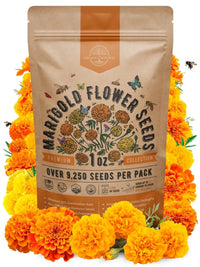
Every basket wants a little height in the middle to balance the trailers. Marigold is the workhorse. It germinates in a matter of days, blooms in warm gold and rust for months, and pinching out the first set of tips makes it branch into a fuller, stockier plant. Keep snapping off the faded heads and it will not quit until frost.
Sale

Marigold Seeds PackFast from seedThe fast, foolproof filler for the center of a basket. Pinch it once and it branches into months of gold and rust, right up to frost.
Price$12.99Starting at$8.99
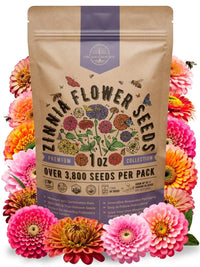
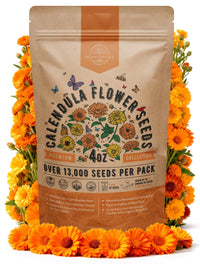
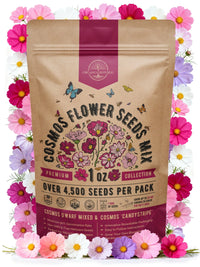
Cosmos brings an airy, cottage-garden softness on ferny foliage, and like nasturtium it flowers best in lean soil; feed it too well and you get tall, floppy greenery and few blooms. Reach for the dwarf strains so it stays in scale with the basket. Dwarf zinnia gives you bold, saturated color that pollinators adore, but water it at the roots rather than over the top, since wet leaves and crowding invite powdery mildew. Calendula and nemesia come into their own once the nights turn cool, and a dwarf nicotiana tucked in near where you sit will pour scent across the porch after sundown.
Sale

Cosmos Flower Seeds – Non-GMO HeirloomCottage classicAiry, ferny plants that soften a basket with cottage-garden color. Give them lean soil and they bloom from summer to frost.
Price$14.99Starting at$12.99
Best picks for a shady porch
Not every doorway gets full sun, and that is no reason to go without color. Torenia, the wishbone flower, is built for exactly this spot: it blooms in violet and blue right through summer, takes heat and humidity in stride, and cleans up after itself. Pair it with pansies and violas for the cool shoulders of the season, and let sweet alyssum and lobelia knit the gaps together, since both keep flowering on nothing more than a few hours of morning sun.
A few more worth a spot
A few classics earn their place for good reason. Petunia cascades in nearly every color, but the seed is as fine as dust, so press it onto the surface of a moist mix and leave it uncovered, because it needs light to germinate. Sweet pea rewards an early, cool-weather start with a fragrance no bought plant can match; soak the seed first, give it something to grip, and keep cutting the flowers to keep it blooming. For a basket that climbs as well as spills, morning glory and black-eyed Susan vine will scramble up the chains and pour back down, though both are tender and want warm soil to get going. Trailing snapdragons round things out with cascades of bloom from spring into fall.
Starting your seeds
You can sow most of these straight into the basket once the weather settles, but you will gain weeks of bloom by starting indoors. Sow six to eight weeks before your last frost, keep the mix warm, since most of these are warm-season flowers that sprout best around room temperature or a touch above, and keep it lightly moist rather than wet. Give the seedlings a bright south-facing window or a shop light held close, or they will stretch into weak, floppy stems reaching for the light. Pinch the growing tips once they have a few sets of leaves to force branching. One word of caution: nasturtium, sweet pea, and morning glory hate having their roots disturbed, so start those in deep cells or sow them in place. Harden everything off over a week outdoors before the basket goes up, and never rush tender flowers out while frost is still on the table.
How to keep a basket blooming all season
Water and food are what make or break a basket. That small volume of soil dries fast, so check it every day in summer, sometimes twice when it is hot and windy, and water until it runs freely from the base. If the mix ever dries to a hard, light brick, peat-based soil turns water-repellent and the water sheets down the sides without ever wetting the roots; take the basket down and soak it in a tub for half an hour to bring it back. Because that daily watering flushes nutrients straight out the bottom, feed every week or two with a diluted liquid fertilizer, or work a slow-release feed into the soil at planting and top it up with liquid. Deadhead the spent blooms to steer energy into new buds, and when a plant turns leggy and bare at the base by midsummer, cut it back by a third; it will flush again within a couple of weeks and look far better for it.
One basket, plenty of pollinators
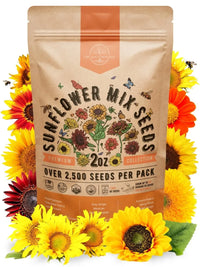
If you want your baskets to do more than look pretty, plant with bees and butterflies in mind. Single, open-faced flowers let pollinators reach the nectar, while the frilly double forms often hide it or lack it entirely, so lean toward the simpler blooms. Mix a range of flower shapes and stagger the bloom times so the buffet stays open from spring to frost, and skip the systemic bug sprays, which can end up in the very nectar and pollen you are trying to offer. A ready-made wildflower blend is the simplest way to turn a plain basket into a small, humming habitat right beside your door.
Frequently asked questions
What are the easiest flowers to grow in a hanging basket from seed?
Nasturtium, marigold, and cosmos are the most forgiving. Their seeds are large and easy to handle, they sprout within a week or two of warm soil, and all three bloom for months. Grow them on the lean side, though, because too much rich food gives you leafy plants and very few flowers.
How many plants should I put in one hanging basket?
A rough rule is one small plant for every couple of inches of basket width. A standard basket looks full with roughly five plants: one upright in the center for height, and a few trailers spaced around the rim to spill over. Do not cram in more, or the crowded roots dry out fast.
How often do hanging baskets need watering?
In summer, most baskets need water every day, and sometimes twice on hot, windy afternoons. That small pocket of soil dries out fast, so water in the morning until it runs from the base. To check, lift the basket: a light one is thirsty, a heavy one still has plenty to give.
Which hanging basket flowers do best in shade?
Torenia, the wishbone flower, is the top pick for a shady porch and blooms right through summer, even in heat and humidity. Pansies, violas, sweet alyssum, and trailing lobelia also flower well on a few hours of morning sun. Deep, all-day shade is the one place none of them will bloom.
When should I start hanging basket flowers from seed?
Start most of them indoors six to eight weeks before your last spring frost for the earliest blooms. Keep the seedlings warm and under bright light, and pinch their tips for bushy plants. Sow the fussy ones, nasturtium, sweet pea, and morning glory, in deep cells to spare their roots.

- Choosing a selection results in a full page refresh.









 Easy Returns 30-day guarantee