


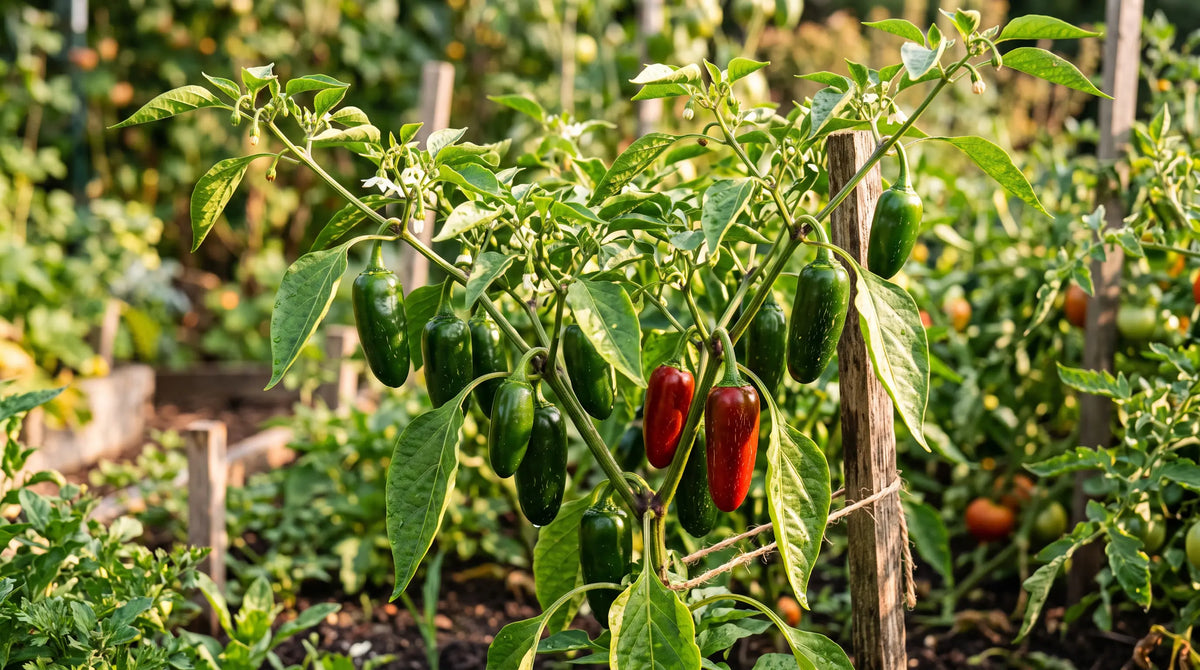
When to Harvest Jalapeños for Green vs Red Heat
Updated September 2026
You walk out to the garden, the plant is loaded with glossy green pods, and you freeze. Pick now, or wait? That one decision changes everything about the pepper you end up with, from the crunch to the color to how much fire lands on your tongue. The good news is that jalapenos are forgiving, and once you know what to look for, you can harvest exactly the pepper you want.
Green vs red: what actually changes
Every jalapeno starts green and, if you leave it on the plant long enough, ripens through yellow and orange to a deep red. Green is the stage most people know from the store. It gives you that firm, grassy snap and a clean, bright heat. As the pod ripens it converts stored starches to sugars, so red fruit turns sweeter, a little softer, and usually hotter, because capsaicin keeps concentrating over those extra days on the vine. That ripening is also where smoky depth comes from: a red jalapeno dried over wood smoke is what becomes a chipotle.

Neither one is more correct. Green jalapenos are the workhorse for pickling, poppers, and salsa, where you want structure and a crisp bite that holds up to heat and vinegar. Red ones shine in hot sauces and anything where you want a round sweetness sitting behind the burn. Here is the part new growers miss: you do not have to choose. Every plant hands you both stages if you pick some green and let the rest run red.
Sale

Jalapeno Pepper Seeds – Non-GMO HeirloomNon-GMO HeirloomThe classic pod for green snap or ripe red heat, easy to grow from seed and reliable in most gardens.
Price$4.99Starting at$3.99
Timing by the calendar
Most jalapenos reach harvestable green size around 65 to 75 days after transplanting. To get red fruit, add roughly two to four more weeks on the plant. Warm nights speed things up, cool spells stall them, and a plant carrying a heavy load of pods will ripen each one slower than a plant with just a few. Treat these numbers as guideposts, not a stopwatch.
| Stage | Days after transplant | Flavor and heat |
|---|---|---|
| Firm green | 65 to 75 | Crisp, grassy, bright heat |
| Corking (light lines) | 75 to 85 | Mature green, deeper flavor |
| Turning red | 85 to 95 | Sweeter, hotter, softer |
Reading the pepper, not just the calendar
The plant tells you more than any date. A ready green jalapeno feels firm and heavy for its size, usually 2 to 4 inches long, with tight, glossy skin. Give it a gentle squeeze: it should feel dense and solid, not spongy or hollow, which is the tell that the walls have filled out. Some pods develop fine tan lines called corking, which are stretch marks in the skin as the flesh expands faster than the surface. Contrary to what a lot of people assume, corking is not damage. It marks a mature, fully flavored pepper with plenty of heat built up inside, and many growers who chase spice pick specifically for it.
When you want red, patience is the whole game, and the pod will make you wait through a long orange stage before it deepens. Resist picking at the first blush. Watch for one pepper to color, then give it several more days as the red saturates fully. Once one turns, the rest usually follow within a week or so, so check every couple of days during that window and pick each pod when it is evenly colored rather than harvesting the batch all at once.
How to pick without hurting the plant
Jalapeno stems are woodier and more stubborn than they look, and the joint where the pod meets the branch does not release with a simple tug. Yank one and you will often tear off a whole side branch, or lever a young plant halfway out of the ground. Use scissors or pruners and cut the stem about a quarter inch above the pepper, leaving a short stub on the fruit. Harvest in the cool of the morning when the fruit is firmest and fullest of water, and pick often. Peppers are annuals racing to set seed, so every pod you remove signals the plant to flower and fruit again. Regular picking of green pods genuinely raises your season total.
If you like comparing heat levels across your beds, grow a few relatives alongside your jalapenos. A serrano brings a brighter, sharper, more upfront burn at a smaller size, while a cayenne has thin walls that dry down cleanly into flakes and powder once the pods run red.
Sale

Serrano Pepper Seeds – Non-GMO HeirloomNon-GMO HeirloomA brighter, sharper burn than jalapeno, great fresh in salsas and worth growing side by side.
Price$4.99Starting at$3.99
Sale

Cayenne Pepper Seeds – Non-GMO HeirloomNon-GMO HeirloomThin walled and perfect for drying into flakes and powder once the pods run red.
Price$4.99Starting at$3.99
Beating the first frost
Peppers are warm season plants with no frost tolerance at all, and a single hard freeze ends the show overnight. As the season winds down and nights cool below the low 50s, ripening slows to a crawl, so be realistic about which pods still have time to turn. When frost lands in the forecast, pick everything that has reached full size, red or green. Green jalapenos will keep a week or two in the fridge, and mature red ones can be dried, smoked into chipotles, or blended into sauce. If a light frost is coming and the plant is loaded, you can also pull the entire plant and hang it upside down somewhere cool, and many of the near ripe pods will finish coloring on the stem.
Storing your harvest
Fresh green jalapenos hold best unwashed in a paper bag or loose in the crisper drawer, where a little airflow keeps them from sweating and going slimy. Wash them right before you use them, not before storing. Red ones ripen and soften fast, so use them within a few days or preserve them. Whichever color you picked, wear gloves when you cut large batches. Capsaicin oil clings to your skin, shrugs off a quick rinse, and will find its way to your eyes or lips hours later.
Frequently asked questions
How long do jalapenos take to turn red?
After a jalapeno reaches full green size, it usually needs another two to four weeks on the plant to ripen red, moving through yellow and orange along the way. Warm weather speeds the change and cool weather stalls it. Watch for one pod to color, then check every couple of days as the red deepens.
Are red jalapenos hotter than green ones?
Usually, yes. As a jalapeno ripens it keeps building and concentrating capsaicin, so red fruit tends to carry more heat along with a sweetness from starches converting to sugar. Green pods stay crisp with a brighter, grassier burn. Both stages have their fans, green for pickling and poppers, red for sauces.
What are the tan lines on my jalapenos?
Those fine tan lines are called corking, natural stretch marks in the skin as the flesh expands during ripening. Corking is not a flaw or a sign of stress. It marks a mature, well flavored pod with heat fully developed inside. Many growers who want the most spice treat heavy corking as their cue to pick.
Can I pick jalapenos green and let others turn red?
Absolutely, and it is the smart way to grow them. A single healthy plant supplies both stages. Harvest some pods firm and green for pickling or poppers, and leave others on the vine to ripen red for sauces and drying. Picking green fruit regularly also pushes the plant to keep flowering and setting more peppers.
How do I harvest jalapenos without damaging the plant?
Use scissors or pruners and cut the stem about a quarter inch above the pepper rather than pulling. The stems are woody and the joint will not release cleanly, so yanking tears off branches or uproots young plants. Pick in the cool morning when pods are firmest, and harvest regularly to keep it producing.

- Choosing a selection results in a full page refresh.














 Easy Returns 30-day guarantee