


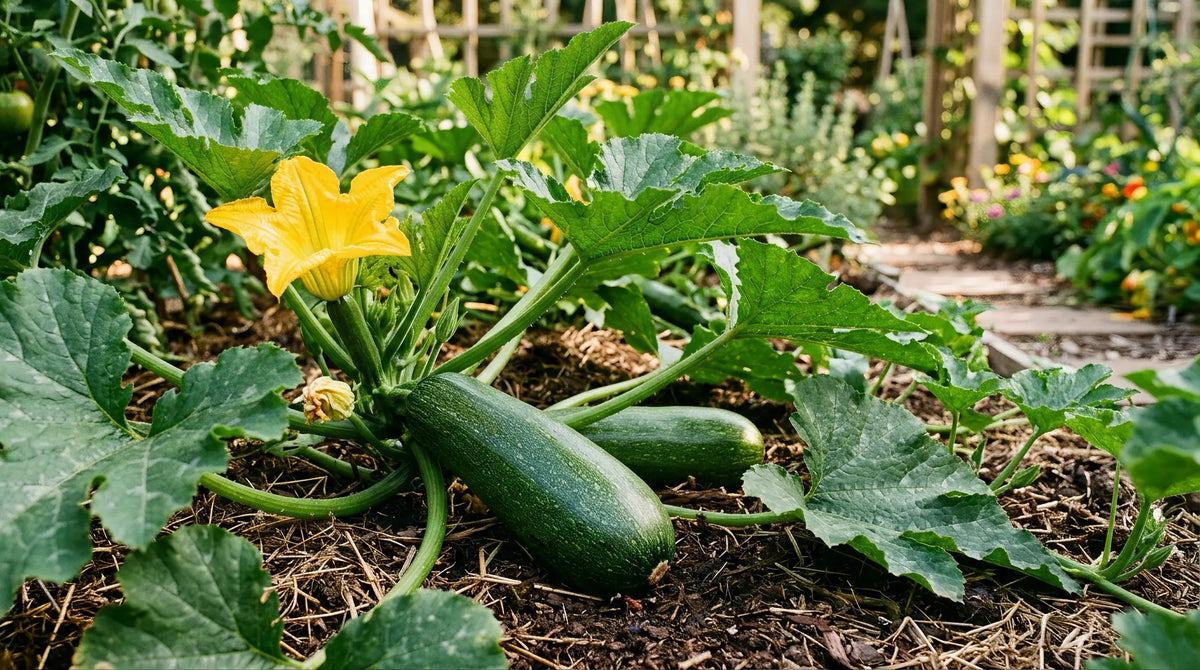
When to Harvest Zucchini (Before It Turns Into a Baseball Bat)
Updated August 2026
You turn your back for two days, and suddenly there is a zucchini the size of your forearm hiding under a leaf. If you have grown this plant even once, you know the feeling. The good news is that timing your harvest is easy once you know what to look for, and getting it right means tender, flavorful fruit instead of a seedy, watery giant nobody wants to eat.
The short answer: pick them small
Most zucchini taste best when they are 6 to 8 inches long and about as thick as your thumb or a little more. At that size the skin is glossy and thin, the seeds inside are barely there, and the flesh is dense and sweet. This is the window you are aiming for, and it comes up fast in warm weather.

If you like tiny, tender fruit for grilling or roasting whole, you can pick them even younger at 4 to 6 inches. There is no rule that says you have to wait. A smaller zucchini is almost always a better zucchini.
Sale

Black Beauty Zucchini Seeds – Non-GMO HeirloomReader FavoriteA classic dark green heirloom that produces heavily and hits that ideal 6 to 8 inch size fast. Non-GMO and dependable for first time growers.
Price$4.99Starting at$3.99
How to tell a zucchini is ready
Size is your first clue, but a few other signs help you decide when to harvest zucchini at its peak.
- Glossy skin. Ripe, tender fruit has a shine to it. Dull skin means it is getting old.
- Firm feel. Give it a gentle squeeze. It should feel solid, not spongy.
- Thumbnail test. Press the skin with your nail. If it pierces easily, the skin is still thin and the fruit is prime.
Once the skin turns tough and you cannot dent it, the seeds inside have started to harden and the texture goes stringy. That is the point where a zucchini has quietly become a baseball bat.
How often to check
In the heat of summer, a zucchini can go from perfect to oversized in just two or three days. During peak season, check your plants every day. This sounds like a lot, but a two minute walk through the garden each morning saves you from a pile of woody giants and keeps the plant working for you.
Sale
Black Beauty Zucchini Seeds – Non-GMO HeirloomHeirloomTender skin and mild, sweet flavor when picked young. One or two plants keep a family in zucchini all summer.
Price$4.99Starting at$3.99
Sale
Black Beauty Zucchini Seeds – Non-GMO HeirloomEasy to GrowFast to fruit and easy to grow in beds or large containers. Great choice if you want a steady summer supply.
Price$4.99Starting at$3.99
How to actually pick it
Do not twist or yank the fruit off. Zucchini stems are thick and can tear the plant if you pull. Use a sharp knife or garden snips and cut the stem about an inch above the fruit. Handle the fruit gently, since the skin bruises easily when it is young and tender.
Watch out for the spines. Many zucchini plants have small prickly hairs on the stems and leaves, so a pair of gloves and a long sleeve makes the job more comfortable.
The secret to a longer harvest
Here is the part most people miss. The more you pick, the more your plant produces. When you leave a big zucchini on the vine, the plant pours its energy into maturing those seeds and slows down on new fruit. Pick regularly and you send the opposite signal, keep making more. A single healthy plant can hand you fruit for weeks if you stay on top of it.
This is why gardeners often end up with a surplus. Two or three plants is plenty for most families, and honestly one well tended plant can be enough.
What if one gets away from you
It happens to everyone. If you find a monster hiding in the leaves, do not throw it out. Large zucchini are still great grated into bread, muffins, or fritters, or hollowed out and stuffed. Just scoop out the tough seeds first. And take it as a reminder to check under those big leaves tomorrow.
A quick size guide
| Length | Best for |
|---|---|
| 4 to 6 inches | Grilling or roasting whole, tender and sweet |
| 6 to 8 inches | All purpose, the ideal harvest size |
| 8 to 10 inches | Still good, best sliced or diced |
| Over 10 inches | Shred for baking, remove tough seeds |
Get the timing right and zucchini becomes one of the most rewarding things in the garden. Plant it, check it daily, and pick it young.
Frequently asked questions
What size should zucchini be when I pick it?
Aim for 6 to 8 inches long and about as thick as your thumb or a little more. At that size the skin is glossy and thin, the seeds are minimal, and the flesh is dense and sweet. You can also pick them younger at 4 to 6 inches for tender whole fruit.
How often should I check my zucchini plants?
In the heat of summer, check every day. Zucchini can go from perfect to oversized in just two or three days when it is warm. A quick daily walk through the garden keeps you from finding woody giants and helps the plant keep on producing new fruit.
Can you eat zucchini that got too big?
Yes. Large zucchini get seedy and stringy but are still useful. Grate them into bread, muffins, or fritters, or hollow them out and stuff them. Just scoop out the tough seeds first before cooking, and the flesh works fine in baked dishes.
How do I pick zucchini without hurting the plant?
Do not twist or pull the fruit, since that can tear the plant. Use a sharp knife or garden snips and cut the stem about an inch above the fruit. Wear gloves, because many zucchini plants have small prickly hairs on the stems and leaves that can irritate skin.
Does picking zucchini make the plant produce more?
Yes. Harvesting regularly signals the plant to keep making new fruit instead of maturing seeds in an old one. Leaving a large zucchini on the vine slows production, so frequent picking keeps a healthy plant productive for weeks on end.

- Choosing a selection results in a full page refresh.













 Easy Returns 30-day guarantee