


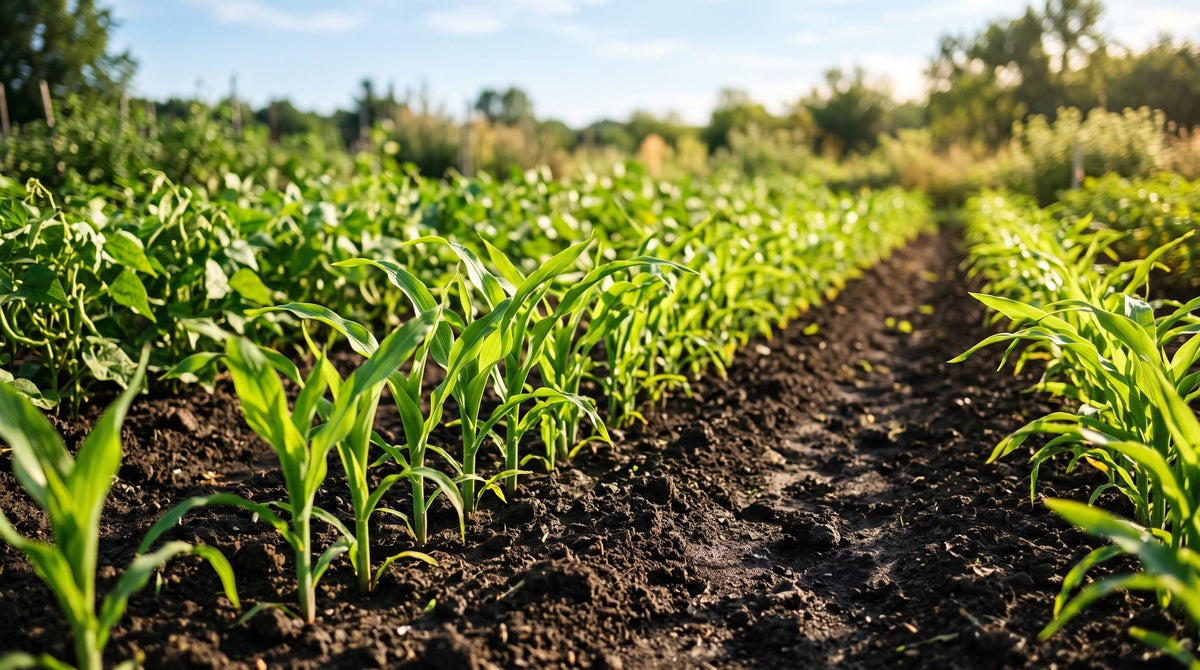
When to Plant Corn for Sweet, Tender Ears
Updated October 2026
Soil temperature beats the calendar
Here is the part most planting charts skip: corn does not read the calendar, it reads the thermometer in the ground. Drop seed into cold, wet soil and it takes up water but cannot fire up growth, so it just sits there and rots before the first root ever breaks. Those frustrating gaps down the row almost always trace back to planting a week or two too early.

Wait until the top couple inches of soil hold steady at 60°F before you sow standard sweet corn. The shrunken, extra-sweet supersweet types want it warmer, closer to 65°F, because their seed carries less starch to fuel emergence and soaks up cold water fast, which is exactly when it rots. Push a cheap soil thermometer down to seed depth and read it first thing in the morning, when the ground sits at its coldest, for several days running. One warm afternoon reading fools a lot of gardeners. You are looking for a steady floor, not a lucky peak.
Finding your planting window
Corn is frost tender, so your starting line is the last spring frost. Once that date passes and the nights stop dipping cold, most gardeners wait another week or two for the soil to catch up, because soil warms slower than air and a heavy, wet bed lags a light sandy one by days. In warm regions that can mean April. Across the middle of the country it usually lands in May, and cool northern gardens may not reach the right soil warmth until early June.
Want a rough anchor while you wait? Read the landscape. When the oak leaves are about the size of a squirrel's ear and the lilacs are in full bloom, your soil is usually knocking on the door. Confirm it with the thermometer, then do the squeeze test before you plant: grab a handful of soil, and if it packs into a muddy ball it is still too wet and cold, but if it crumbles apart, you are clear to sow.
Impatient for an early start? You can steal a little warmth. Lay black plastic or a dark tarp over the bed for a week or two ahead of planting to pull the sun in and hold weeds down while it heats, or grow in a raised bed, which drains and warms faster than flat ground. It buys you a small head start without gambling good seed on cold, soggy soil.
Match the variety to your season
Days to maturity decides whether you are pulling back husks in July or racing the first fall frost in October. Early varieties sprint to the finish on shorter, quicker stalks. Main season types take longer but tend to pay you back with fuller, heavier ears. Keep in mind that the number on the packet assumes warm, steady weather, so a cold spring can stretch it by a week or more.
| Corn type | Plant when soil reaches | Days to maturity |
|---|---|---|
| Early sweet corn | 60°F | 60 to 70 days |
| Standard sweet corn | 60°F | 75 to 85 days |
| Supersweet | 65°F | 75 to 90 days |
Golden Bantam is the open-pollinated standard a lot of growers still measure others against: sturdy stalks and honest, old-fashioned corn flavor. It is a sugary type whose sweetness slides toward starch quickly after picking, so it rewards you for carrying it straight from the stalk to the pot. To find your last safe sowing date, count the days to maturity back from your average first fall frost, then add about two weeks of cushion for the slower growth that comes as the days shorten.
Plant in blocks, not long single rows
Corn is wind pollinated, and that one fact shapes how you lay it out. Pollen sheds from the tassels up top and has to drift down onto the silks below, and every single silk that goes unpollinated becomes one missing kernel on the cob. A lone row lets most of that pollen blow off into the grass. Plant short rows shoulder to shoulder in a block at least four rows across, so the pollen always has neighbors to land on. Set seeds about an inch deep in cool ground, a touch deeper in sandy or dry soil, spaced eight to twelve inches apart, with rows two to three feet apart. If you are only growing a handful of plants, help them along by giving the tassels a gentle shake over the silks on a still, dry morning, which is when pollen sheds best.
Keep the ears coming
A single planting tends to ripen all at once, a glorious problem for one weekend and a chore by the next. To stretch the harvest, sow a fresh block every two to three weeks, or plant a fast early variety and a slower main season one on the same day and let their maturity dates do the spacing for you. Just keep the supersweet types well away from other corn. Because the pollen that lands on the silks shapes the kernels that same season, a cross with standard sweet, popcorn, or field corn can turn those tender supersweet kernels tough and starchy right on the cob. Isolate them by as much distance as your garden allows, or stagger the plantings a couple of weeks apart so they tassel at different times.
Give your corn good neighbors
Corn is a hungry, fast-growing plant, and it thrives beside a few classic partners that go in on the same warm-season schedule. Beans are the traditional match because they fix their own nitrogen from the air, so they feed themselves instead of competing with your corn for it and leave the soil a little richer once they are done. Bush beans stay low and tidy, giving you that soil benefit without vining up and dragging on your stalks.

Contender Bush Bean Seeds – Non-GMO HeirloomNitrogen fixerCorn is a heavy feeder, and these compact heirloom beans fix their own nitrogen and leave the bed richer right beside it. Fast, forgiving, and non-GMO.
Price$4.99
Squash rounds out the old three-part trio. Its broad leaves sprawl across the ground as a living mulch, shading the soil, holding in moisture through the heat of July, and smothering the weeds that would otherwise crowd the base of your stalks. A dependable green zucchini settles in happily at the foot of the block and keeps producing all summer.
Sale

Black Beauty Zucchini Seeds – Non-GMO HeirloomGround coverBroad leaves fan out as a living mulch, shading the soil, holding moisture, and smothering weeds at the base of your corn block. Heirloom, non-GMO, and generous all summer long.
Price$4.99Starting at$3.99
If you would rather plant the whole warm-season bed in one afternoon, a summer vegetable variety pack gathers corn's companions into a single set on matching timing, so everything goes in the ground together.
Sale

Summer Vegetable Seeds Variety Pack – Non-GMO HeirloomPlant it allCorn's warm-season companions in one non-GMO, heirloom set, so you can plant the whole summer bed on the same day.
Price$27.99
Sale Price$24.99
Frequently asked questions
What month should I plant corn?
There is no universal month, because soil temperature, not the calendar, calls the shot. Corn goes in about one to two weeks after your last spring frost, once the top couple inches hold near 60 degrees. That often means April in the South, May across the middle, and early June up north.
What soil temperature does corn need to germinate?
Standard sweet corn sprouts reliably once the top couple inches of soil reach 60 degrees, and it comes up faster the warmer the ground gets. The shrunken supersweet types are fussier and want closer to 65. Below that, seed sits in cold, wet ground and often rots instead of sprouting.
Can I plant corn in a single row?
You can, but you will regret it. Corn is wind pollinated, so a lone row lets most of the pollen blow away and leaves you with cobs full of missing kernels. Plant short rows in a block at least four rows across instead, so the pollen has plenty of nearby silks to land on.
How do I get corn all summer instead of all at once?
Sow a fresh block every two to three weeks, or plant a fast early variety and a slower main season one on the same day so they ripen in turn. Keep supersweet types apart from other corn, since a cross with a different type can turn sweet kernels starchy and tough that same season.
When is it too late to plant corn?
Find your average first fall frost, count back the days to maturity on the packet, then add about two weeks of cushion because growth slows as the days shorten. If today is past that date, it is too late for that variety. A fast early corn buys you more room late on.

- Choosing a selection results in a full page refresh.

















 Easy Returns 30-day guarantee