


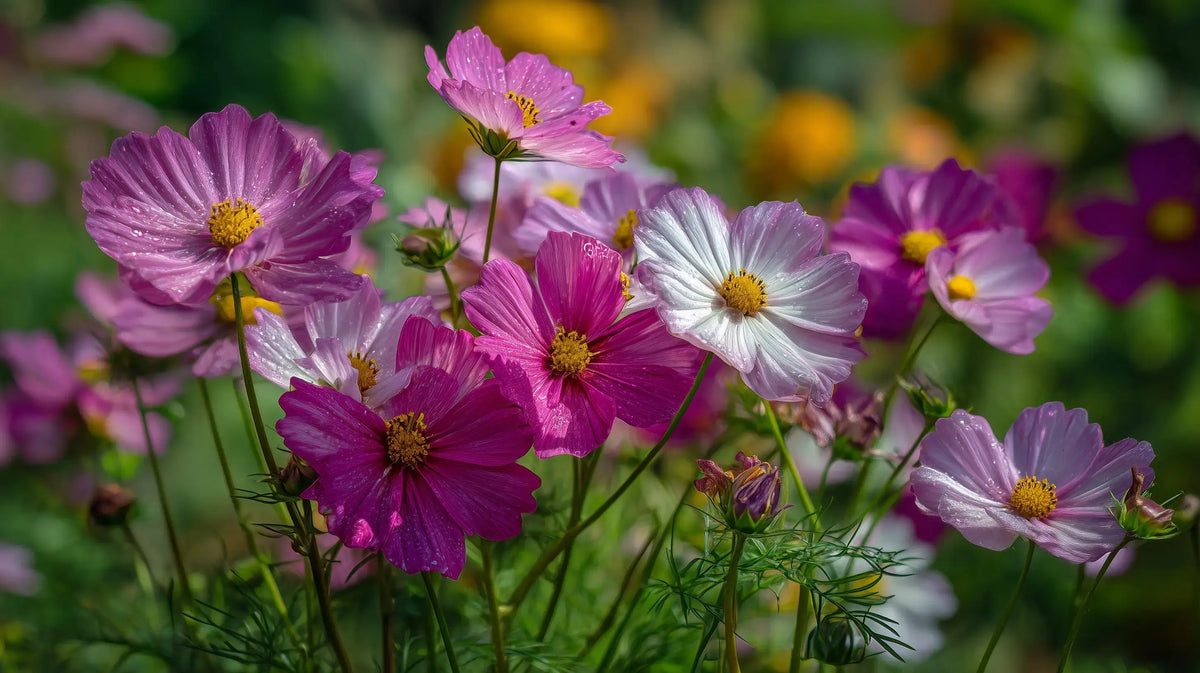
How to Grow Cosmos From Seed
Updated July 2026
Few flowers reward a little seed and a lot of sunshine like cosmos does. These airy, daisy-like blooms rise on tall, feathery stems and float above the garden in shades of pink, white, magenta, and gold, drawing in bees and butterflies all season long. Cosmos are famously easy to grow from seed, thrive in poor soil, shrug off drought, and bloom for months once they start. Whether you want a low-effort cutting garden or a pollinator magnet along the fence, cosmos are one of the most generous annuals you can plant.
Best tip
At a glance
 Botanical name Botanical name | Cosmos bipinnatus and Cosmos sulphureus |
|---|---|
 Plant type Plant type | Annual flower |
 USDA zones USDA zones | Grown as an annual in zones 2 to 11 |
 Sun Sun | Full sun (6+ hours) |
 Days to maturity Days to maturity | About 75 to 90 days from seed to first bloom |
 Height Height | 2 to 4 ft |
 Spacing Spacing | 12 to 18 in apart |
 Water Water | Low; drought tolerant once established |
When to plant
How to plant
Growing and care
The best companion plants

Zinnia Flower Seeds – Non-GMO HeirloomHeirloom, non-GMOBold, butterfly-loved blooms that thrive in the same sunny, lean soil.
Starting at$4.99
Sale

Marigold Seeds PackHeirloom, non-GMOCheerful, tough annuals that pair beautifully in borders and bouquets.
Price$12.99Starting at$8.99
Sale

Nasturtium Seeds for Sale – Non-GMO HeirloomHeirloom, non-GMOEdible, jewel-toned flowers that ramble happily among cosmos.
Price$14.99Starting at$6.99
Harvest
Uses
Common problems
Frequently asked questions
Are cosmos annuals or perennials?
Cosmos are tender annuals in most climates, completing their whole life cycle in one growing season. They are not winter-hardy, but they self-seed so freely that they often return on their own the following spring, giving the impression of a perennial.
How long do cosmos take to bloom from seed?
Cosmos typically bloom about 75 to 90 days after sowing. Sulphur cosmos (Cosmos sulphureus) tends to flower a little sooner than the taller Cosmos bipinnatus, but both reward you with months of blooms once they start.
Do cosmos need full sun?
Yes. Cosmos flower best in full sun, meaning at least 6 hours of direct light a day. In too much shade they grow leggy and produce few flowers, so give them the sunniest spot you have.
Why is my cosmos all leaves and no flowers?
This is almost always caused by soil that is too rich or by fertilizing. Cosmos bloom best in lean, poor soil. Stop feeding them, and they will shift their energy from leaves to flowers.
Should I deadhead cosmos?
Yes, deadheading is the single best thing you can do for a cosmos patch. Snipping off faded blooms stops the plant from setting seed and pushes it to keep producing new flowers right up until the first frost.
Sale

Cosmos Flower Seeds – Non-GMO HeirloomBest for cosmosAiry, easy-to-grow blooms that flower from summer to frost.
Price$14.99Starting at$12.99
Want a whole meadow of easy color? Pair your cosmos with these non-GMO wildflower mixes:
Sale

Wildflower Seed Mix – Non-GMO Heirloom21 easy annual wildflowers for fast, season-long color.
Price$24.99
Sale Price$22.99
Sale

Butterfly Garden Wildflower Seeds Mix – Non-GMO HeirloomA pollinator blend that draws in birds and butterflies.
Price$14.99Starting at$12.99
Sale

Pollinator Garden Wildflower Seeds Mix – Non-GMO Heirloom19 varieties chosen to feed bees and pollinators.
Price$24.99
Sale Price$22.99

- Choosing a selection results in a full page refresh.






















 Easy Returns 30-day guarantee