Home / Growing Guides / How to Grow Larkspur from Seed
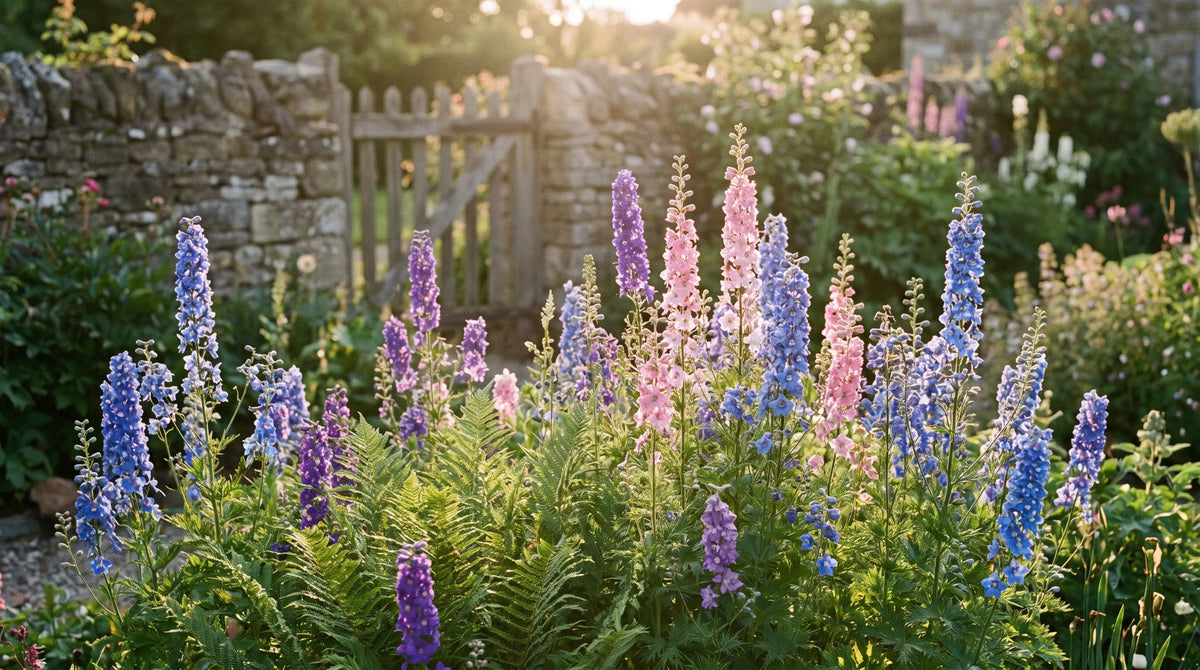
Tall blue, purple, and pink larkspur in full bloom in a sunny garden.

How to Grow Larkspur from Seed

Updated October 2026

Larkspur (Consolida ajacis) is a hardy annual that sends up tall spikes of blue, purple, pink, and white flowers in late spring and early summer, right when the garden needs the color most. It is one of the easiest cottage-garden flowers to start outdoors, and once you learn how to grow larkspur from seed you will likely have volunteers returning on their own for years. It suits beginner and family gardeners who want a dependable cut flower and do not mind a plant that prefers to be sown where it will grow.

Best tip

Sow it in fall and forget it. Larkspur seed scattered on bare ground in late autumn gets all the cold it needs over winter and comes up early and strong in spring, well ahead of anything you would fuss over indoors.

At a glance

How to Grow Larkspur from Seed — growing specifications at a glance
Botanical nameConsolida ajacis (sometimes sold as Delphinium ajacis)
Plant typeHardy annual flower
USDA zones2 to 11 (grown as an annual)
SunFull sun
Days to maturity85 to 110 days to bloom
Height1 to 4 feet
Spacing8 to 12 inches
WaterAbout 1 inch a week

When to plant

Larkspur is a cool-season hardy annual, which means it does its best work in the chilly shoulders of the year and fades once summer heat arrives. Sow the seeds directly in the garden rather than starting them indoors, because larkspur grows a taproot and resents being moved.

In mild-winter regions like the Southeast, Texas, and the Pacific Coast (roughly USDA zones 7 and warmer), scatter seed in fall so it germinates over winter and blooms early. In colder areas such as the Upper Midwest and New England, sow as soon as the soil can be worked in late winter or very early spring, a good 4 to 6 weeks before your last frost date, since the seeds actually prefer cold ground to sprout.

How to plant

Pick a spot in full sun with loose, well-drained soil. Larkspur is not fussy about fertility, but it will rot in ground that stays soggy.

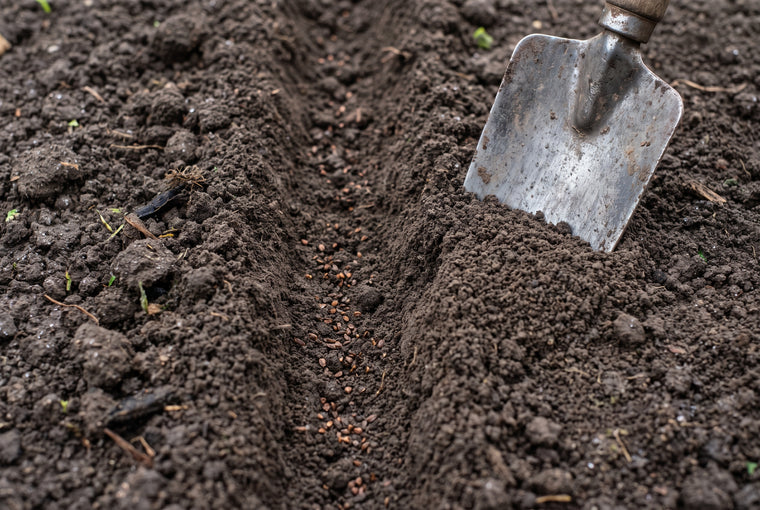
Rake the bed smooth, then sow the seeds about 1/8 inch deep and cover them fully, since larkspur needs darkness to sprout. Water gently to settle the seed and keep the surface evenly moist until seedlings appear. Once the little plants are a couple of inches tall, thin them to stand 8 to 12 inches apart so each one has room for a strong stem.

Germination usually takes 14 to 21 days and runs faster in cool soil, around 50 to 55 degrees F. If you are sowing in spring in a warm area, tuck the seed packet in the refrigerator for a week or two first. The chill mimics winter and wakes the seeds up for better, more even sprouting.

Sowing larkspur seeds directly into a prepared garden bed in cool early-season soil.

Growing and care

Water larkspur about 1 inch a week when rain is short, aiming at the base of the plant to keep the foliage dry and discourage mildew. The plants are light feeders, so a single dose of balanced fertilizer or a scattering of compost as they start to grow is plenty. Too much nitrogen gives you leaves instead of flowers.

Taller varieties can get top-heavy, especially after rain or in a windy spot, so either grow them in a sheltered block where they lean on each other or add a few stakes or a grow-through grid while the plants are still short. Larkspur grows fast and flowers hard for several weeks in late spring and early summer, then naturally winds down as the heat climbs.

The best companion plants

Larkspur mixes happily with other cool-season, direct-sown cottage flowers that share its timing and taste for a sunny bed.

  • Bachelor's buttons (cornflower): Sows and blooms on the same cool-season schedule and echoes the blue tones.
  • Snapdragons: Add a different flower shape at a lower height while larkspur rises behind them.
  • Sweet peas: Climb nearby for a fragrant, old-fashioned pairing that enjoys the same early start.
  • Nigella (love-in-a-mist): Self-sows alongside larkspur and fills the gaps with airy foliage and seed pods.
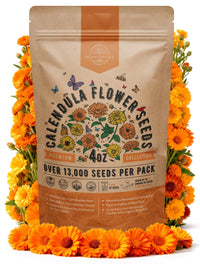
  • Calendula: Brings warm orange and yellow that plays off larkspur's cool spires and feeds pollinators.

Keep larkspur out of vegetable beds and any area where children, pets, or livestock graze, since every part of the plant is toxic if eaten.

Larkspur is poisonous. Every part of the plant, including the seeds, contains alkaloids that are harmful if eaten, so grow it as an ornamental only. Keep the plants and seed packets away from children, pets, and livestock, and wash your hands after handling or deadheading.

Harvest

Larkspur blooms from the bottom of the spike upward over a couple of weeks, which makes it a generous cut flower. Snip stems in the early morning when about a third to half of the florets on the spike have opened, and they will keep opening in the vase.

Deadhead spent spikes to push the plant toward side shoots and a longer show. If you want volunteers next year, leave a few of the last spikes to form seed and drop it. The flowers also dry well: hang small bunches upside down in a dark, airy spot and they hold their color for months.

Uses

Larkspur earns its keep as a cut flower, both fresh in the vase and dried for wreaths and arrangements that last into winter. In the garden its tall spires add vertical lines to borders and cottage plantings, and it looks especially good woven among rounder, bushier flowers. Bees and butterflies work the blooms steadily, so a patch doubles as a pollinator stop in late spring.

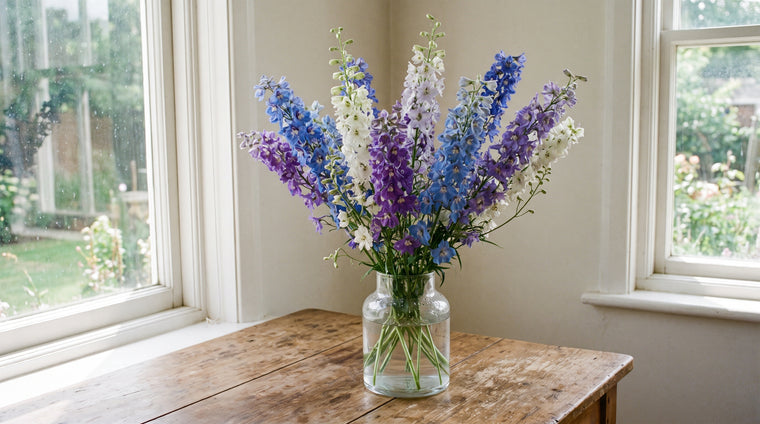
A just-cut bouquet of blue and purple larkspur spikes arranged in a vase.

Common problems

  • Slow or patchy germination: Larkspur needs cool soil and darkness. Sow early while the ground is still cold, cover the seed completely, and chill the seed in the fridge for one to two weeks before a spring sowing.
  • Powdery mildew: A white, dusty film shows up in crowded, humid plantings. Give plants room, water at the base rather than overhead, and keep air moving between them.
  • Floppy, bent stems: Tall spikes lodge in wind and heavy rain. Plant in a sheltered block or set stakes or a grow-through grid early, before the plants need them.
  • Aphids on buds and stems: Blast them off with a sharp spray of water and let ladybugs and lacewings mop up the rest.

Frequently asked questions

When should you plant larkspur seeds?

Larkspur is a cool-season flower, so sow it in fall in mild-winter regions or in late winter to very early spring in colder areas. The seeds germinate best in cold soil, often 4 to 6 weeks before your last frost.

Do larkspur seeds need cold to germinate?

They germinate best in cold soil, around 50 to 55 degrees, which is why fall and very early spring sowings work so well. For a spring sowing in a warm area, chill the seed in the refrigerator for a week or two first to mimic winter and wake it up.

What is the difference between larkspur and delphinium?

Garden larkspur (Consolida ajacis) is a quick hardy annual started fresh from seed each year, while delphinium is a taller, longer-lived perennial. They look similar, with the same spires of blue and purple, but larkspur is the easier, faster one to grow from seed.

Is larkspur poisonous?

Yes. Every part of larkspur, including the seeds, contains alkaloids that are harmful if eaten, so grow it as an ornamental only. Keep the plants and seed packets away from children, pets, and livestock, and wash your hands after handling or deadheading.

How tall does larkspur get?

Larkspur ranges from about 1 to 4 feet tall depending on the variety, with the flowers carried on tall spikes. Space plants 8 to 12 inches apart, and support the taller types with stakes or a grow-through grid before they lean in wind or rain.

Does larkspur reseed itself?

Yes, it self-sows readily. Leave a few of the last spikes to form and drop seed, and you will likely see volunteers come up on their own the next season, often earlier and stronger than anything started indoors.

Ready to fill your beds with tall, easy color? Explore our heirloom, non-GMO flower seeds.

Maxim Kaufman, Founder and CEO of Organo Republic

By Maxim Kaufman — Founder & CEO, Organo Republic

Maxim founded Organo Republic in 2017 and personally selects and supervises the quality control of the heirloom, non-GMO varieties the company offers. Under his leadership, Organo Republic was named Agri Business Review’s Top Non-GMO Seed Variety Solution 2026.

Stay Connected

Join Our Garden Community

Daily garden inspiration, how-to videos & behind-the-seeds stories.