


How to Grow Tomatoes in Pots: A Complete Container Guide
Updated August 2026
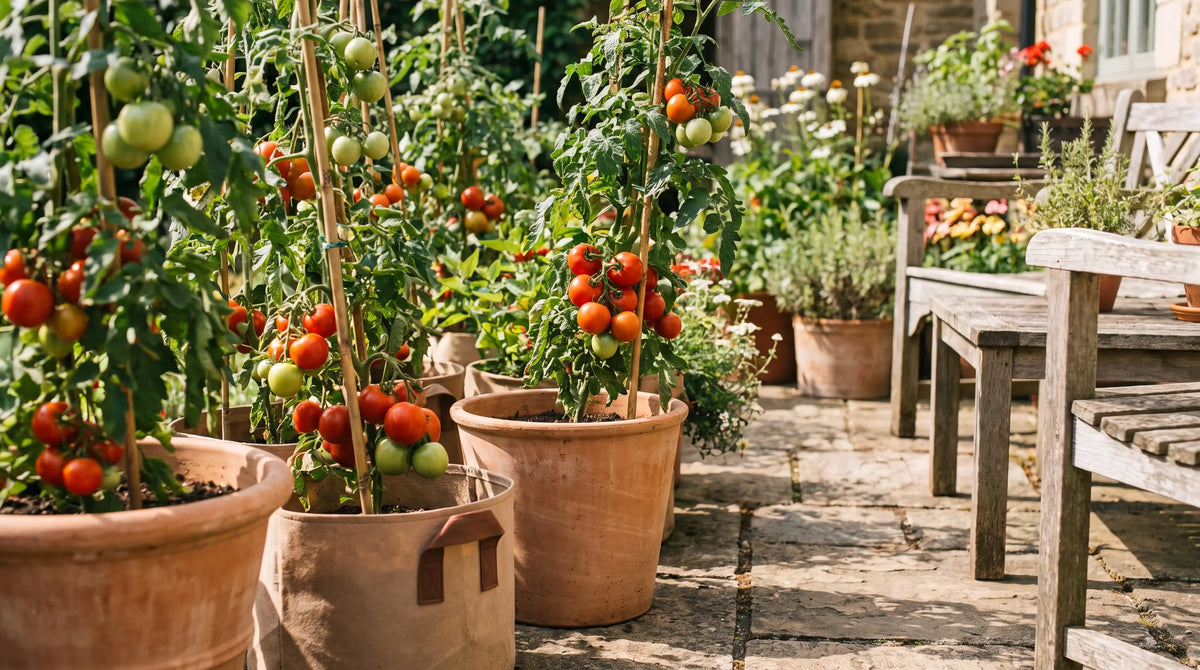
No garden bed? No problem. If you have a sunny spot on a patio, a balcony rail, or even a bright back step, you can grow a real crop of tomatoes in pots. The trade off is easy to understand. A container gives you total control over soil, drainage, and where the plant sits, but it also holds a small reservoir of water and food compared to open ground, so the plant leans on you to keep it topped up. Get that rhythm right and a single well fed plant will hand you tomatoes for weeks.
Pick the right variety first
Variety matters more in a pot than almost anything else, because the plant's habit has to match the volume of soil you can give it. Determinate types grow to a set height, set most of their fruit in one concentrated flush, then wind down. That predictability makes them a natural fit for containers. They are easy to cage, easy to keep upright, and done before the pot exhausts itself. Indeterminate types are vines that keep growing and fruiting until frost, so they want a bigger reservoir of soil and a support you can keep tying to all season. Cherry and patio tomatoes are the friendliest place to start, since they flower early and ripen fast.

If you want a steady supply of snacking tomatoes off a small footprint, a productive cherry is hard to beat.
Sale

Cherry Tomato Seeds – Large, Non-GMO HeirloomBest for potsCompact and prolific, the easiest tomato to keep happy in a pot or hanging basket.
Price$4.99Starting at$3.99
For slicing tomatoes on the deck, a determinate paste type or a reliable slicer works well, as long as you match it to a deep container and get a sturdy cage in early.
Sale

Roma Tomato Seeds – VF, Non-GMO HeirloomDeterminateA determinate paste tomato that stays bushy and manageable in a large container.
Price$4.99Starting at$3.99
Sale

Beefsteak Tomato Seeds – Red, Non-GMO HeirloomSlicerBig slicers for a big pot; give it a deep container and a sturdy stake.
Price$4.99Starting at$3.99
Choose a big enough container
The most common mistake, by a wide margin, is going too small. A cramped root zone heats up and dries out fast, and once a tomato hits water stress it stalls, drops flowers, and gets far more prone to blossom end rot. More soil is more buffer, so err large. For a single plant, treat 5 gallons as a floor and move up to 10 gallons or more for full size indeterminate varieties. Fabric grow bags, plastic pots, and half barrels all work. Fabric bags air prune the roots and drain freely, while glazed or plastic pots hold moisture longer in a heat wave. Whatever you use, it needs real drainage holes. And skip the old trick of putting gravel in the bottom for drainage, because it actually raises the waterlogged zone up into the root ball. Just use good mix all the way down.
| Tomato type | Minimum pot size | Support |
|---|---|---|
| Cherry or patio | 3 to 5 gallons | Small cage or stake |
| Determinate slicer | 5 to 7 gallons | Cage |
| Indeterminate | 10 gallons or more | Tall stake or trellis |
Use the right soil mix
Skip the garden dirt. It compacts into a dense brick in a pot, drains poorly, and can bring soil borne disease up close to your plant. Fill your container with a quality potting mix, ideally one cut with compost for a slow background feed and a little perlite to keep it open and draining. Mix a handful of a balanced organic fertilizer through the top third at planting so the roots grow into it. What you are after is a mix that stays evenly damp like a wrung out sponge, never soggy and never dust dry, because that steadiness is what keeps fruit from cracking later.
Plant deep and give sun
Tomatoes are one of the few crops that root along a buried stem, so use that to your advantage. Strip the lower leaves and set the seedling deep, burying up to two thirds of the stem, or lay a leggy transplant sideways in a trench and let the top curve up. Those buried hairs turn into roots within days, giving you a bigger, more drought resistant plant. Then chase the light. Tomatoes want six to eight hours of direct sun, and less light is the quiet reason many patio plants sulk and set little fruit. Put the pot in your brightest spot, and if it starts leaning toward the sun, rotate it a quarter turn every few days so it grows evenly.
Water consistently
Pots dry out far faster than open ground, especially once summer heat and a full canopy of leaves get going. Check daily by pushing a finger in, and water when the top inch feels dry, soaking slowly until it runs from the drainage holes so the whole root ball wets through, not just the surface. In peak season a large plant in full sun can want water once or even twice a day. The thing to understand is that erratic watering, not a lack of water, is what drives cracked skins and blossom end rot. When a dry plant suddenly gets flooded, the fruit swells faster than its skin can stretch. Aim for steady, not feast and famine. A layer of mulch on the surface buys you real breathing room by slowing evaporation. Water in the morning where you can, so the foliage dries off and you are not inviting fungal problems overnight.
Feed for a heavy crop
Container tomatoes burn through nutrients quickly, because every thorough watering leaches a little food out the bottom. Start feeding once the first flowers appear, every week or two, with a tomato fertilizer or a diluted liquid feed. Watch the nitrogen. A high nitrogen feed gives you a lush green jungle and stubbornly few tomatoes, so once fruit begins to set, shift to a formula weighted toward phosphorus and potassium to push flowering and ripening rather than more leaves. Feed a moist pot, never a bone dry one, or you risk scorching the roots.
Support, prune, and pollinate
Get a cage or stake in at planting time, not later. Driving a stake into an established root ball tears the very roots you spent weeks building. For indeterminate vines, pinch out the suckers, those shoots that sprout in the crook where a leaf meets the main stem, while they are small. This keeps the plant's energy on fruit and opens up airflow, which matters a lot on a still balcony where humidity lingers. Skip the pruning on determinate types, though, since cutting them back just removes fruit they were going to set. One more thing balconies steal from you is wind and bees, so give each flowering truss a gentle daily flick or tap to shake the pollen loose and set fruit.
Common problems to watch
Yellowing lower leaves usually mean the plant is hungry, thirsty, or just shedding old growth near the base, which is normal. A sunken brown, leathery patch on the blossom end of the fruit is blossom end rot, and it traces back to uneven watering more often than a lack of calcium in the soil, so fix the watering and mulch before you reach for any additive. Leaves that curl or roll during a heat wave are usually just the plant conserving moisture, and they flatten out again by evening. Stay on top of steady water and a light regular feed, and most container troubles sort themselves out before they cost you a crop.
Frequently asked questions
How big does a pot need to be for tomatoes?
Give each plant at least a 5 gallon container, and 10 gallons or more for tall indeterminate types. Compact cherry and patio varieties can manage in 3 to 5 gallons. More soil buffers against drying out and stress, so err on the larger side, and always pick a pot with real drainage holes.
How often should I water tomatoes in pots?
Check daily by pushing a finger into the soil, and water when the top inch feels dry. Soak slowly until it drains out the bottom so the whole root ball wets through. In peak summer heat a large plant may want water once or twice a day. Steady moisture, rather than a flood and drought cycle, prevents cracking and rot.
What are the best tomatoes to grow in containers?
Cherry and patio tomatoes are the easiest and most productive for pots since they flower early and forgive the odd missed watering. Determinate slicers also do well in 5 to 7 gallon pots because they stay a set size. Indeterminate vines work too, but only with a bigger pot and a tall support you keep tying to.
Do container tomatoes need fertilizer?
Yes. Frequent watering leaches nutrients out of pots quickly, so a container plant runs short sooner than one in the ground. Once flowers appear, feed every week or two, shifting toward phosphorus and potassium once fruit sets. Too much nitrogen just grows leaves, and always feed a moist pot rather than a dry one.
How much sun do potted tomatoes need?
Aim for six to eight hours of direct sun each day. Too little light is the most common reason patio tomatoes grow leggy and set little fruit. Place the pot in your brightest spot and rotate it a quarter turn every few days if it starts leaning toward the light, so it grows evenly and ripens well.

- Choosing a selection results in a full page refresh.










 Easy Returns 30-day guarantee