


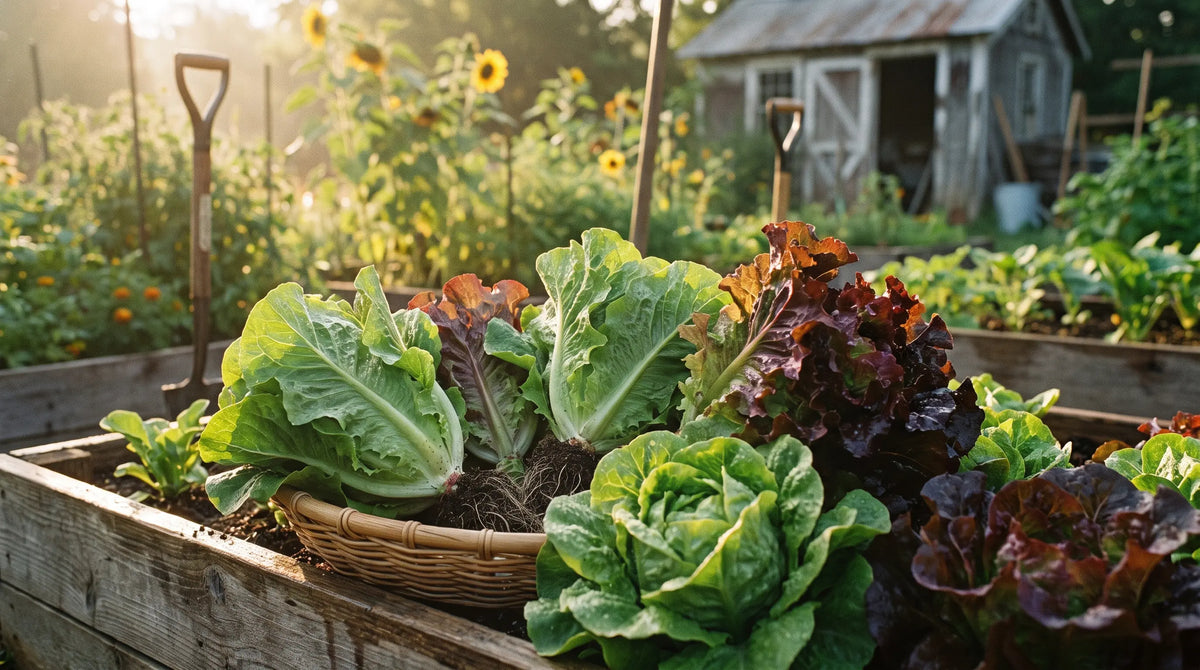
How to Harvest Lettuce So It Keeps Growing (Cut-and-Come-Again)
Updated September 2026
If you have ever pulled a whole lettuce plant, rinsed off way more than you needed, and watched the rest go slimy in the crisper drawer, there is a better way. You can pick a handful of leaves at a time and let the same plant keep pushing out more. Done right, a single row of loose-leaf lettuce will feed your salads for weeks instead of one dinner.
This is called cut-and-come-again, and it is one of the most forgiving techniques in the whole garden. Lettuce grows from a central growing point at the base, so as long as you leave that point alone, the plant keeps replacing what you take.
Why Lettuce Keeps Growing After You Cut It
Lettuce builds new leaves from a compact crown right at soil level. The oldest, largest leaves ride on the outside of the rosette, and the youngest ones unfurl from the middle. When you take the outer leaves and leave the crown untouched, the plant carries on producing. Cut into that crown or yank the whole plant, and you have removed the engine that makes new growth.

Loose-leaf and romaine types are the standouts here. Because they never form a tight, dense head, there is always an exposed growing point ready to bounce back. A mixed pack is a smart way to start, since you get several leaf shapes and colors regrowing side by side, and you learn which ones you actually reach for in the kitchen.
Sale

Lettuce & Greens Seeds Variety Pack – Non-GMO HeirloomBest for BeginnersA mix of leaf types that all regrow well, so you get several colors and textures from one cut-and-come-again patch.
Price$12.99Starting at$9.99
When to Start Harvesting
You can begin picking baby leaves once they reach about 3 to 4 inches tall, usually a few weeks after the seedlings emerge. There is no reason to wait for a full-sized plant. Picking early and often keeps the leaves tender and mild, and it signals the plant to keep filling in rather than racing to maturity.
Harvest in the cool of the morning if you can. Overnight the leaves refill with water, so they are crisp and hold in the fridge far longer. Leaves picked in the afternoon heat go limp fast because the plant has already lost moisture to the sun. If you must pick warm leaves, dunk them in cold water for a few minutes and they will firm right back up.
The Cut-and-Come-Again Method, Step by Step
Here is the routine that keeps a plant producing week after week.
| Step | What to do |
|---|---|
| 1. Pick the outside | Take the largest outer leaves first, snapping or snipping them close to the base. |
| 2. Leave the center | Never cut into the small pale leaves clustered at the crown. That is where all new growth comes from. |
| 3. Take about a third | Harvest roughly one third of the plant at a time so it keeps enough leaf area to feed the roots and recover quickly. |
| 4. Water after | Give the row a drink to help it push the next flush and to keep it from stalling in warm weather. |
| 5. Come back | Return in 7 to 10 days for the next round, working the same plants in rotation. |
Clean scissors or a sharp snap of the fingers both work. Take the leaf low on its stalk, close to the base, but always stay above that central crown. The most common mistake is getting greedy and shearing the whole rosette to the ground in one go, which starves the roots and slows regrowth. If you would rather cut a whole young plant at once, take it about an inch above the soil and leave the stub in place. A healthy loose-leaf crown will often send up a second flush of leaves.
Which Varieties Regrow Best
Buttercrunch is a soft, buttery bibb type that takes repeat picking in stride and holds out against warm weather better than most, which buys you a longer harvest window before it bolts. It is a great choice if you want tender leaves that keep coming without turning coarse.
Sale

Buttercrunch Lettuce Seeds – Non-GMO HeirloomReader FavoriteSoft, buttery bibb leaves that take repeat picking in stride and hold out against heat before bolting.
Price$4.99Starting at$3.99
Romaine is another dependable regrower. Cimarron Red Romaine gives you upright, deep-red leaves with a genuine crunch, and you can strip the outer ribs while the heart keeps building in the center. The red pigment deepens in cool weather, so a spring or fall crop looks especially good in the bowl.

Cimarron Red Romaine Lettuce Seeds – Non-GMO HeirloomBest ColorUpright deep-red romaine with real crunch. Strip the outer ribs while the heart keeps building.
Price$4.99
What About Iceberg and Heading Types
Heading lettuce plays by different rules. A crisphead like iceberg pulls its leaves inward to form one tight ball, so there is no open growing point to pick from. You harvest the whole head at once by cutting it at the base once it feels firm when you press it. It will not regrow leaf by leaf the way loose-leaf does, though a stump left in the ground will sometimes throw a few small, looser leaves worth adding to a salad.
The real trick with heading types is succession sowing. Start a short row every couple of weeks so a new head is always maturing while you eat the last one. That gives you the same steady supply, just through timing rather than regrowth. Heading types also need their spacing, usually about a foot apart, or they will refuse to form a solid center.
Keep the Plants Producing Longer
Lettuce dislikes two things above all: drought and heat. Let the soil dry out or let the plant bake, and it bolts, sending up a flower stalk and turning the leaves bitter almost overnight. To stretch your harvest, keep the soil evenly moist rather than swinging between bone dry and soaked, mulch to steady the temperature at the roots, and offer a bit of afternoon shade once the days turn hot. A neighboring row of taller plants or a length of shade cloth does the job.
Feed lightly with a diluted liquid fertilizer every couple of weeks, since all that fresh regrowth draws steadily on the plant. And keep picking. A plant that is harvested regularly stays in leaf-producing mode and delays bolting far longer than one you leave to size up untouched. Once the center begins to elongate and stretch upward, bolting has started and no amount of picking will reverse it.
When a plant finally does bolt and go bitter, pull it and tuck a fresh seed into the gap. With that simple rotation, and a fresh sowing every couple of weeks in the wings, you can keep tender leaves coming from spring straight through fall.
Frequently asked questions
How many times can you harvest the same lettuce plant?
A healthy loose-leaf or romaine plant can be picked several times over a few weeks. As long as you take only the outer leaves and leave the center crown intact, it keeps pushing new growth until warm weather finally triggers bolting and the leaves turn bitter.
Should I cut lettuce with scissors or pull the leaves?
Either works. Clean scissors give a tidy cut, and a quick snap of the leaf stem near the base is just as good. The one rule that matters is to harvest above the small central leaves so you never nick the growing crown the plant regrows from.
How long does lettuce take before you can start picking?
Baby leaves are usually ready a few weeks after the seedlings emerge, once they reach about 3 to 4 inches tall. Full-size leaves take a bit longer. Picking early and often keeps the leaves tender and mild and pushes the plant to refill faster.
Why is my lettuce bitter after cutting?
Bitterness almost always means heat or drought stress, which pushes the plant to bolt. Keep the soil evenly moist, mulch the roots, and give afternoon shade in hot spells. Harvest in the cool of the morning, and pull any plant whose center has started stretching up.
Can iceberg lettuce be harvested cut-and-come-again?
Not really. Iceberg pulls its leaves into one tight head with no open growing point, so you cut the whole thing at once and it does not reliably regrow. For a steady supply from heading types, sow a short new row every couple of weeks so a fresh head is always maturing.

- Choosing a selection results in a full page refresh.
















 Easy Returns 30-day guarantee