


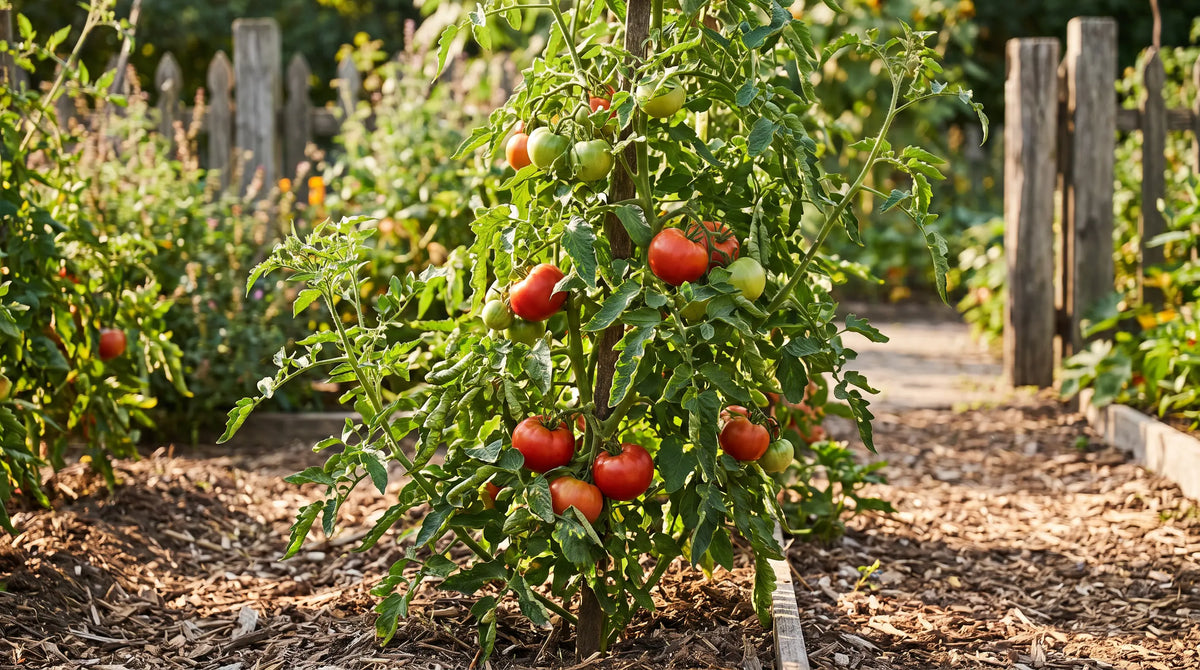
How to Prune Tomato Plants for More Fruit and Less Disease
Updated October 2026
If your tomato plants have become a shoulder-high wall of leaves while the fruit stays small and slow to color up, the plant is pouring its sugars into foliage instead of tomatoes. Pruning fixes that. Ten minutes of pinching a week steers that energy back into the fruit you actually want, and it opens the canopy so the leaves dry off fast after a morning dew instead of staying damp all day. That damp, still air is exactly what early blight and Septoria leaf spot need to get started.
First, know which kind of tomato you have
Before you cut anything, find out whether your plant is determinate or indeterminate. That one label decides everything that follows, and it is usually printed on the seed packet or in the catalog as det. or indet.

Determinate tomatoes grow to a fixed height, set nearly all their fruit in one concentrated flush, then quit. The tell is that each stem ends in a flower cluster, which caps its growth. These are the bush and paste types, and they need almost no pruning. Strip their suckers and you are cutting off the very branches meant to carry your crop, so limit yourself to clearing the leaves that touch the soil.
Indeterminate tomatoes never cap themselves. The main stem keeps a soft, leafy growing tip that climbs and sets fruit along the way until frost stops it. Most heirlooms and nearly all cherry types grow this way, and they are the plants that pay you back for regular pruning. A tall slicer such as the red one in
Sale
runs for months, so it needs steady guidance to stay upright and productive rather than collapsing into a tangle.

Beefsteak Tomato Seeds – Red, Non-GMO HeirloomBig slicerA classic indeterminate beefsteak that climbs all season; train it to one or two stems and clear the lower leaves, and it answers steady pruning with large, meaty fruit.
Price$4.99Starting at$3.99
Learn to spot a sucker
A sucker is the shoot that pushes out of the axil, the crotch where a leaf branch meets the main stem. Leave it and it grows into a full second stem with its own leaves, flowers, and suckers of its own. That is how one tidy seedling becomes a shapeless thicket by July.
Here is the mistake nearly everyone makes at first, pinching off a flower cluster by accident. A fruit truss comes straight off the main stem between two leaves and carries buds, not leaves. A sucker always sits in the axil above a leaf and starts as a small leafy shoot. When you are not sure, wait two days and look again, since a real sucker will have visibly lengthened.
Pinch suckers while they are small, no thicker than a pencil. Hold the base between thumb and finger and bend it sharply to one side until it snaps clean, which leaves a smaller, faster-sealing wound than a cut. Do it in the morning when the stems are turgid and the wound dries over within hours. If a sucker has already gone woody, do not wrench it and tear the bark. Take it off with a clean blade instead.
Decide how many stems to keep
Training to a single main stem gives you fewer but noticeably larger tomatoes on an upright plant that stakes easily and dries fast after rain. It suits big slicers where size is the point, and it ripens earliest, which matters where the season is short. A sprawling cherry like
Sale
also becomes far easier to keep in bounds on one or two leaders instead of a dozen.

Cherry Tomato Seeds – Large, Non-GMO HeirloomProlificA fast, vigorous cherry vine that turns into a tangle if left alone but stays neat and heavy-bearing trained to one or two clean stems.
Price$4.99Starting at$3.99
Two stems is the sweet spot for most gardens. Let the strong sucker directly below the lowest flower cluster grow on as a second leader, since that one is always the most vigorous, then rub out every sucker above it as it appears. You get more total fruit than a single stem while keeping the plant open to light and moving air.
One caution from experience: do not strip a plant bare in a hot, sunny climate. The leaves shade the fruit, and tomatoes suddenly thrown into full sun develop sunscald, pale papery patches on the shoulders that go on to rot. Keep enough canopy to cover the fruit, and prune for airflow, not for a naked stem.
Clear the lower leaves to stop disease
Nearly all tomato trouble starts on the lowest leaves, splashed up from the soil every time it rains or you water. Early blight and Septoria leaf spot travel this way. Once the first cluster has set fruit, strip every leaf below it so nothing green is left within reach of the ground, then lay down a straw or shredded-leaf mulch to stop the splash at its source.
Keep after it all season. Any leaf that is yellowing, spotted, or buried in dead shade deep inside the plant is drawing more sugar than it returns, so take it off. Work from the bottom up and remove a few at a time rather than defoliating in one go, which shocks the plant. Aim to hold a clear gap of a hand's width or more between the soil and the lowest leaves. That moving air is your cheapest disease control, and it matters just as much on a dense heirloom. A leafy, heavy-setting orange beefsteak like the one in

Amana Orange Tomato Seeds – Non-GMO HeirloomHeirloomA big, leafy orange beefsteak heirloom that sets a heavy crop; keep its center open and its lower leaves cleared so the dense canopy dries fast.
Price$4.99
Top the plant near the end of the season
About a month before your average first frost, cut the growing tip off each main stem just above the highest cluster you believe can still ripen in time. Growers call this topping. Taking off that tip stops the plant from starting flowers and fruit it can never finish and drives every remaining sugar into the tomatoes already hanging. Pinch off any new flowers at the same time, since they are only competition now. The same cut works earlier in summer too, when a vine has outrun its stake.
A quick guide by tomato type
| Task | Determinate (bush) | Indeterminate (vining) |
|---|---|---|
| Remove suckers | No | Yes |
| Strip lower leaves | Yes | Yes |
| Top late in season | Rarely | Yes |
Keep your cuts clean
Clean tools matter more than sharp ones. Bacteria and fungal spores move plant to plant on your fingers and blades, so wipe your snips with rubbing alcohol between plants, and save any vine you suspect is sick for last so you do not seed the whole row. Never prune when the foliage is wet, because that is when disease spreads fastest and fresh wounds soak it up. One more from long habit: if you use tobacco, wash your hands well before touching a tomato, since the plants can pick up tobacco mosaic virus from your fingers. Pick a dry, sunny morning, make your cuts, and let every wound heal before evening. Do that much and your plants will pay you back with a longer, cleaner, heavier harvest.
Frequently asked questions
Should I prune determinate tomatoes?
No, not beyond the basics. Determinate, or bush, types set almost all their fruit in one flush on a plant that caps its height, so pinching suckers only removes branches that would have carried tomatoes. The one job worth doing is stripping the leaves that touch the soil, then mulching underneath.
What exactly is a tomato sucker?
A sucker is the new shoot that grows in the axil, the crotch where a leaf branch meets the main stem. Left alone it becomes a second stem with its own leaves and fruit. Do not confuse it with a flower cluster, which comes off the main stem and carries buds. Pinch a true sucker while it is small.
How many main stems should I leave?
For most indeterminate tomatoes, one or two. A single stem gives fewer but larger fruit on a tidy, early plant. Two stems balance yield with airflow and suit most gardens. In hot, sunny spots, leave enough leaf cover to shade the fruit, since a bare stem invites sunscald on the exposed tomatoes.
When should I stop pruning tomatoes?
About four weeks before your average first frost, cut the growing tip off each main stem just above the last cluster that can realistically ripen. This topping stops fruit that will never finish and pushes the plant's energy into the tomatoes already on the vine. Pinch off late flowers too.
Can pruning cause disease to spread?
Yes, if your tools or timing are off. Each cut is an open wound, so prune only on a dry morning when the leaves are not wet, wipe your snips with rubbing alcohol between plants, and handle any sick-looking vine last. That keeps early blight or a virus from traveling down the row.

- Choosing a selection results in a full page refresh.






















 Easy Returns 30-day guarantee