


Leaf Miners: How to Identify the Damage & Get Rid of Them Organically
Updated October 2026
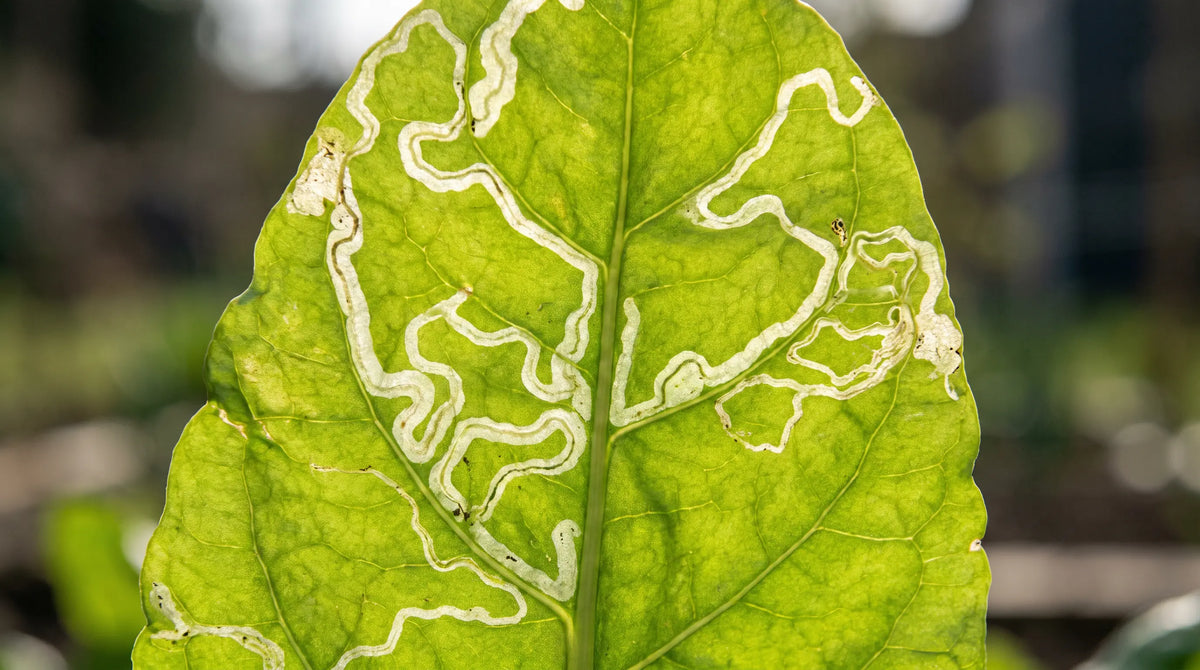
You spot a pale, winding trail across a spinach leaf, almost as if someone doodled on it with a white marker. That squiggle is the calling card of a leaf miner, and once you know what you are looking at, you start seeing it everywhere. The good news is that this is one of the easiest pests in the garden to read, and one of the most manageable, without ever reaching for anything harsh.
A leaf miner is not one single bug. The name covers the larvae of several small flies and moths that lay their eggs on your leaves. On spinach, chard, and beets the culprit is almost always the spinach leaf miner, the maggot of a small gray fly. When the eggs hatch, the larvae tunnel straight into the leaf and feed on the soft green layer sandwiched between the upper and lower skin. That hidden feeding, safe from birds and sprays alike, is what leaves the trails behind.
What a leaf miner actually is
The adult you rarely notice is a small grayish fly, easy to walk right past. She lays her eggs in neat little rows on the underside of a leaf, where they show up as white specks. Within a few days the larvae hatch and immediately cut their way inside, out of reach of predators and any spray you might apply. They feed for a week or two, then drop to the soil to pupate. In warm weather you can see three or more overlapping generations in a season, and the last one overwinters as pupae in the top inch or two of soil, waiting for spring. That life cycle is the whole key to control, because every method that works targets a moment when the insect is actually exposed: the adult, the egg, or the overwintering pupa.

How to identify the damage
Leaf miner damage is some of the easiest in the garden to read. Look for these signs:
- Winding tan tunnels that get wider as they go, called serpentine mines, since the larva eats more as it grows.
- Pale, papery blotches where several tunnels run together into one dead blister. On spinach and chard this blotch is often what you notice first, because a whole cluster of larvae from one batch of eggs feed side by side and merge their mines.
- Thin dark threads of frass, the polite word for larva droppings, trapped inside the tunnel.
- Small clusters of white, cylindrical eggs lined up on the underside of a leaf, usually along a vein.
Hold a damaged leaf up to the light and you can often make out the larva itself, a pale grain creeping slowly inside the mine. That is your confirmation. Unlike a fungal leaf spot, which sits on the surface with soft, fuzzy edges, a mine has a clear starting point and a track that widens as the larva grows.
The crops they love most
Some plants are simply magnets. On the home garden's leafy greens, one pest does most of the damage, and despite the name the spinach leaf miner works a whole family of related crops.
Spinach takes the worst of it, since the miners tunnel straight through the very leaves you were planning to eat. A vigorous, savoyed type like Bloomsdale Long Standing gives you thick, crinkled leaves and enough of them that pulling a few during scouting is no real loss. Its habit of holding off on bolting also buys you a longer window to pick outer leaves young, before any mines have a chance to establish.
Sale

Bloomsdale Long Standing Spinach Seeds – Non-GMO HeirloomSlow to boltThick, savoyed leaves and a slow-to-bolt habit, so you can pick outer leaves young before mines set in and still keep the plant cropping.
Price$4.99Starting at$3.99
Swiss chard is the next favorite, and the damage shows up boldly against the colored stems, which honestly makes scouting easier. A steady producer like Ruby Red keeps pushing fresh growth from the center all season, so it shrugs off a hard strip of mined outer leaves and comes right back.
Sale

Ruby Red Swiss Chard Seeds – Non-GMO HeirloomCut and come againBright ruby stems that make mines easy to spot, plus steady regrowth from the center, so plants bounce back fast after you strip the odd mined leaf.
Price$5.99
Sale Price$4.99
Beets sit in the same crop family, so the same fly works the tops, and if you grow beets for greens, your harvest. A dependable dual-purpose standard like Detroit Dark Red gives you sweet roots below and a generous flush of leaves above, which means a few sacrificed leaves barely dent the crop.
Sale

Detroit Dark Red Beet Seeds – Non-GMO HeirloomRoots and greensSweet, dependable roots below and a generous flush of greens above, a forgiving dual-purpose pick for beds where leaf miners tend to visit.
Price$4.99Starting at$3.99
How to get rid of leaf miners organically
Here is the catch that trips up most gardeners. Once a larva is inside the leaf, a contact spray cannot reach it. The leaf is its armor, and this is exactly why people spray again and again and see nothing change. The real work is stopping the adults and eggs before the larvae dig in, and physically pulling out the ones that already have.
Scout and squash the eggs
Two or three times a week through spring, turn a few leaves over and look for those white egg rows on the undersides, often tucked along a vein. Crush them with your thumb, ideally in the cool of the morning when the flies are sluggish and less likely to be laying more. Five minutes of this at the start of the season heads off most of the damage you would otherwise chase for months. A yellow sticky trap set at leaf height near the bed tells you the moment the first adults appear, which is your cue to start scouting in earnest.
Pick and destroy mined leaves
The instant you find a tunneled leaf, pick it and get it out of the garden, and do it before the larva finishes feeding and drops to pupate. Do not leave it on the ground or toss it on an open compost pile, because the larva will simply finish its meal and pupate in your soil, seeding next month's generation right where you garden. Bag it for the trash or bury it deep instead. Catching mines while they are still small is what actually breaks the cycle.
Bring in the good bugs
Tiny parasitic wasps are the leaf miner's natural enemy and will hunt the larvae right inside the leaf, something no spray does cleanly. You invite them in by keeping small-flowered plants like sweet alyssum and dill nearby for nectar, and by skipping broad-spectrum sprays that wipe out these helpers along with the pest. Left alone, those wasps often keep the later generations in check on their own.
Try neem as a deterrent
A neem oil spray on the leaf surface will not reliably kill a larva that is already tunneling, but a regular coat makes the leaves less inviting for adults to lay on and can slow a young generation. If a flush gets ahead of you and you want something that actually reaches the larva, spinosad is the organic option to know, since it moves a short way into the leaf tissue where the miner is feeding. Spray it in the evening to spare the bees, and treat either product as backup to covers and scouting, never as your main line of defense.
Keeping them out next season
Prevention beats treatment every time with this pest. A floating row cover laid over your greens right after sowing or transplanting is the single most effective move, since it physically blocks the adult flies from ever reaching the leaves to lay. Seal the edges down with soil or boards so nothing sneaks under the hem. One catch worth knowing: only cover a bed that did not grow an infested crop last year, or you will trap the emerging pupae underneath the fabric with your fresh planting. That is where rotation earns its keep.
Clear out goosefoot weeds like lambsquarters and its wild cousins, which host the same miner between your crops. In fall, rake up spent leaves and lightly turn the top inch of soil to expose overwintering pupae to hard cold and hungry birds. Then rotate your leafy greens to a fresh bed each year, as far from last season's as you can manage, so the pupae that do survive wake up to find nothing to eat where they emerge.
Frequently asked questions
What causes those white squiggly lines on my spinach leaves?
Those winding trails are leaf miner tunnels, almost always the spinach leaf miner. A small fly lays eggs under the leaf, the larvae hatch and burrow into the soft tissue between the surfaces, and they eat as they go, leaving pale mines and dark frass. Hold the leaf to the light to spot the larva.
Can I still eat leaves with leaf miner damage?
Yes. Lightly mined leaves are fine once you cut away the tunneled parts and any larvae inside. The damage is cosmetic, not toxic, so wash well and trim generously. If a leaf is heavily blistered or streaked with frass, it is not worth the fuss, so bag or compost that one.
Do sprays actually kill leaf miners?
Most do not, since the larva feeds safely inside the leaf where contact sprays never reach, which is why repeat spraying fails. Neem can deter adults from laying and spinosad moves into the leaf to reach the larva, but scouting, crushing eggs, and pulling mined leaves early do the real work.
How do I stop leaf miners from coming back next year?
Cover new plantings with a floating row cover so the flies cannot reach the leaves, but only over a bed that was clean last season. Pull goosefoot weeds like lambsquarters, rake up old leaves in fall, cultivate the topsoil to expose pupae, and rotate greens to a fresh bed each year.
Which vegetables do leaf miners attack most?
Spinach, Swiss chard, and beets take the heaviest hits, since they share one crop family the spinach leaf miner targets, and their tender leaves are just what you meant to harvest. Tomatoes, peppers, and some herbs get their own leaf miner species, but these greens lose the most.

- Choosing a selection results in a full page refresh.


























 Easy Returns 30-day guarantee