


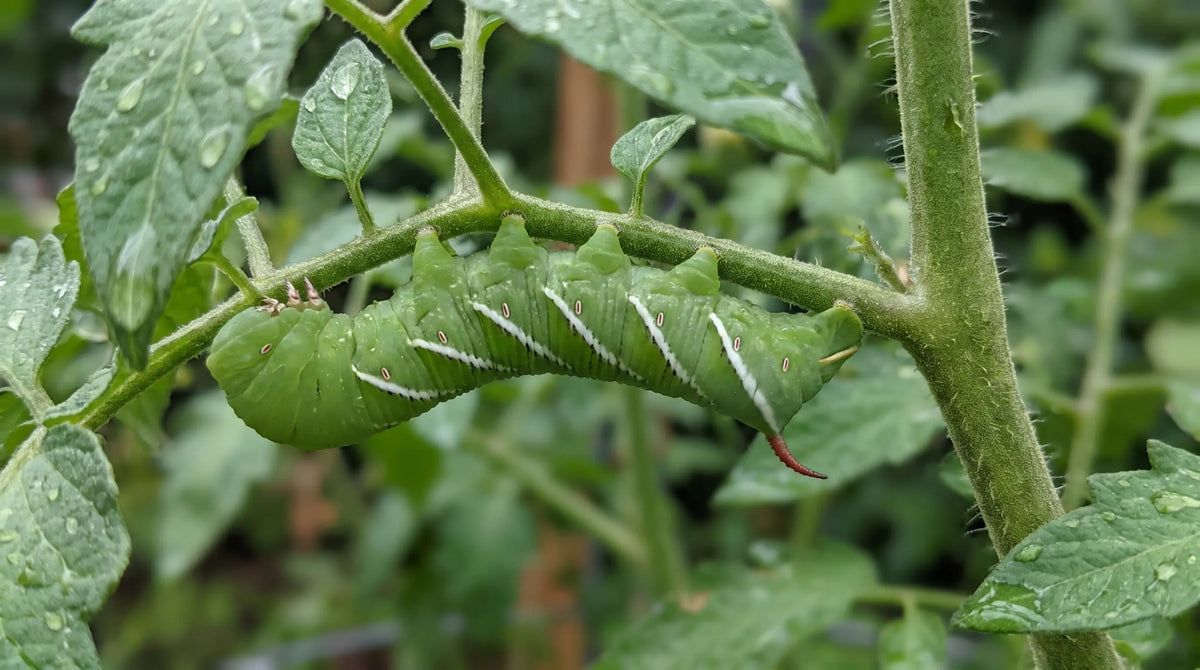
Tomato Hornworm: How to Identify and Get Rid of Them
Updated September 2026
You walked out to check your tomatoes yesterday and everything looked fine. Today the top of a plant is stripped to bare green stems, with a scatter of dark pellets on the leaves below. That is the calling card of a tomato hornworm, and the maddening part is how a caterpillar this large can vanish in plain sight while it does that much damage overnight.
Here is the reassuring truth: hornworms are one of the easiest pests in the garden to beat once you know the two clues that give them away. Catch them early and you will never need a spray. Here is how to find them, remove them, and keep your vines producing right through the season.
How to identify a tomato hornworm
A full grown hornworm is a plump green caterpillar around three to four inches long, about as thick as your finger. The name comes from the soft, curved horn on its tail end. It looks like a stinger, but it is completely harmless and purely for show. The body is a bright, almost translucent green with a row of pale, V-shaped diagonal stripes down each side and small dark eyespots along them. That coloring is exactly why you can stare straight at one from a couple feet away and miss it against the foliage.

Nine times out of ten you will find the damage before you find the worm. Look for these signs:
- Whole leaves and tender stem tips chewed down to bare midribs, almost always starting at the top of the plant where the new growth is
- Dark green or black droppings (frass) about the size of a match head, sitting on lower leaves and the soil directly beneath the feeding
- Gouged, scarred patches eaten into green tomatoes
- One branch stripped clean while the leaves right next to it are untouched, a telltale sign a single worm has been parked there working outward
The frass is your best friend here. When you spot a pile of droppings, tilt your head and look straight up from it. The worm is nearly always clinging to the underside of a stem a few inches above, chewing away. Hunt in the low light of early morning or dusk when the worms sit out more openly and the flat light throws their shadows. If you want to be thorough, a cheap handheld UV blacklight after dark makes their bodies glow a ghostly greenish white, and they light up like little lanterns against the dark plant.
Where they come from
Those caterpillars pupate into big grayish brown hawk moths (also called sphinx moths) with a wide wingspan. At dusk they hover at flowers like hummingbirds, and it is easy to mistake one for a bird at first glance. The females lay single, round, pale green eggs on the undersides of leaves from late spring into midsummer. Those eggs hatch in about a week, and the tiny worms start feeding immediately, growing fast. Late in the season the mature worms drop to the ground, burrow a few inches down, and overwinter as hard brown pupae, waiting to emerge the following spring. That soil connection is the key to breaking the cycle, and it comes up again under prevention.
How to get rid of tomato hornworms
Hand-picking (the fastest fix)
For a home garden, nothing beats picking them off by hand, and honestly nothing else is even necessary. Grip the worm and peel it off the stem with a steady pull. Their false legs hold on with real determination, so expect a little resistance, and never yank so hard you snap the branch. Drop each one into a jar of soapy water rather than tossing it over the fence, since a hornworm flicked into the grass will simply crawl back. Wear gloves if the horn puts you off, though you truly do not need them. Do a slow, deliberate walk-through once a day for a week or two and you will clear an infestation completely, because hornworms barely travel between plants and you are removing them faster than the eggs can replace them.
Keeping your plants vigorous and heavy-setting makes the loss of a few leaves easy to shrug off. Reliable, productive varieties push out enough new growth to bounce back from a hornworm scare within days.
Sale

Tomato & Tomatillo Seeds Variety Pack – Non-GMO HeirloomBest VarietyA mix of tomato and tomatillo types so one damaged branch never costs you the whole harvest.
Price$19.99
Sale Price$16.99
Sale

Beefsteak Tomato Seeds – Red, Non-GMO HeirloomHeavy YieldBig, vigorous plants that shrug off the loss of a few leaves and keep setting heavy fruit.
Price$4.99Starting at$3.99
Leave the ones with white cocoons
If you find a hornworm studded with what look like tiny white grains of rice standing upright on its back, walk away and leave it right where it is. Those are the silk cocoons of parasitic braconid wasps. The wasp laid her eggs inside the worm, the larvae fed on it from within, and they have now chewed their way out to pupate on its skin. That hornworm is already finished and has all but stopped eating. Leave it in place and a fresh brood of wasps will hatch out and go hunting the rest of your hornworms for free. Squashing that one worm throws away your best allies, which is exactly why it pays to look closely before you reach for any spray.
Bt for heavy outbreaks
If a big planting gets truly overrun and you cannot keep up by hand, Bt is a targeted option. It is a naturally occurring soil bacterium that only harms caterpillars that actually eat treated leaf tissue, so it leaves bees, ladybugs, and those braconid wasps unharmed. Spray in the evening (sunlight breaks Bt down quickly) and coat both the upper and lower leaf surfaces, since the worms feed all over. Reapply after rain or heavy dew washes it off. Bt works far better on small, young worms than on the fat late-stage ones, so it rewards catching an outbreak early rather than waiting until the plants are already stripped.
How to prevent them next season
Because hornworms spend the winter as pupae a few inches down in the soil, a shallow cultivation of your tomato beds in late fall and again in early spring turns up those pupae and exposes them to killing cold and to birds, who pick them off readily. Rotating tomatoes (and their relatives like peppers, eggplant, and potatoes) to a different bed each year means any pupae that do survive emerge next to a crop they cannot use. Interplanting with basil, dill, and flowering herbs invites in the very braconid wasps and other predators that keep hornworm numbers down, and those small nectar flowers are what the adult wasps feed on.
Floating row covers over young transplants physically block the moths from laying eggs at all, which is the cleanest prevention there is. Just remember to pull the covers off once the first flowers open so pollinators can reach the blooms, or you will trade a pest problem for poor fruit set. Beyond that, a quick scan of the leaf undersides every few days through early summer lets you rub out the eggs before a single one hatches.
Growing a mix of colors and sizes also spreads out your harvest window and your risk, so one chewed branch never sinks the whole crop.
Sale

Cherry Tomato Seeds – Large, Non-GMO HeirloomProlificFast, prolific vines that produce all season, so early hornworm damage barely slows them down.
Price$4.99Starting at$3.99
The bottom line
Tomato hornworms look intimidating and eat fast, but they are slow-moving, easy to spot once you follow the frass to the worm above it, and simple to pull off by hand. Check your plants every day or two through early summer, leave the wasp-covered worms to do your work for you, and you will keep your vines loaded with fruit clear into fall.
Frequently asked questions
Are tomato hornworms dangerous to humans?
No. The horn on the tail looks threatening but cannot sting, bite, or inject anything. Hornworms are completely harmless to handle, so you can pick them off with your bare hands. Wear gloves only if the feel of them bothers you while you work through your plants.
What do tomato hornworms turn into?
They pupate into large grayish brown hawk moths, also called sphinx moths, that hover at flowers like hummingbirds at dusk. The moths lay single green eggs on leaf undersides, which hatch into new hornworms within about a week during the warm months of the growing season.
Should I kill a hornworm with white cocoons on it?
No, leave it alone. Those white rice-like cocoons belong to parasitic braconid wasps that have already fed on the worm from inside and killed it. Letting them hatch releases more wasps that hunt other hornworms in your garden, giving you free, natural pest control that keeps paying off all season.
What is the fastest way to get rid of tomato hornworms?
Hand-picking. Peel each worm off the stem with a steady pull and drop it in soapy water. The trick is to find them fast: look for dark droppings on the lower leaves, then look straight up, since the worm is almost always clinging just overhead. A daily check for a week or two clears out most infestations.
How do I stop hornworms from coming back next year?
They overwinter as pupae a few inches down in the soil, so cultivate your tomato beds in fall and spring to turn those pupae up for cold and birds. Rotate your tomatoes to a new spot each year, and plant basil, marigolds, or dill nearby to attract the parasitic wasps that keep numbers low.

- Choosing a selection results in a full page refresh.































 Easy Returns 30-day guarantee