


Tomato Hornworm Life Cycle: How to Break It & Save Your Tomatoes
Updated September 2026
You walk out to check your tomatoes and the top of a branch is just gone. Bare stems, a scatter of dark green pellets on the leaves below (that frass is often the first clue you spot, before the culprit), and if you look really hard, a fat green caterpillar the size of your finger blending in like it owns the place. That is a tomato hornworm, and the reason it feels like it showed up overnight is that it nearly did. A young hornworm hides in the interior of the plant and eats almost nothing you would notice, then explodes in size in its last few days and strips foliage fast. Once you understand how these things live and breed, you can catch them in that quiet early window instead of after they have wrecked a plant.
Sale

Tomato & Tomatillo Seeds Variety Pack – Non-GMO HeirloomBest VarietyA wide mix of heirloom tomatoes so a little hornworm damage never ends your harvest.
Price$19.99
Sale Price$16.99
What a hornworm actually is
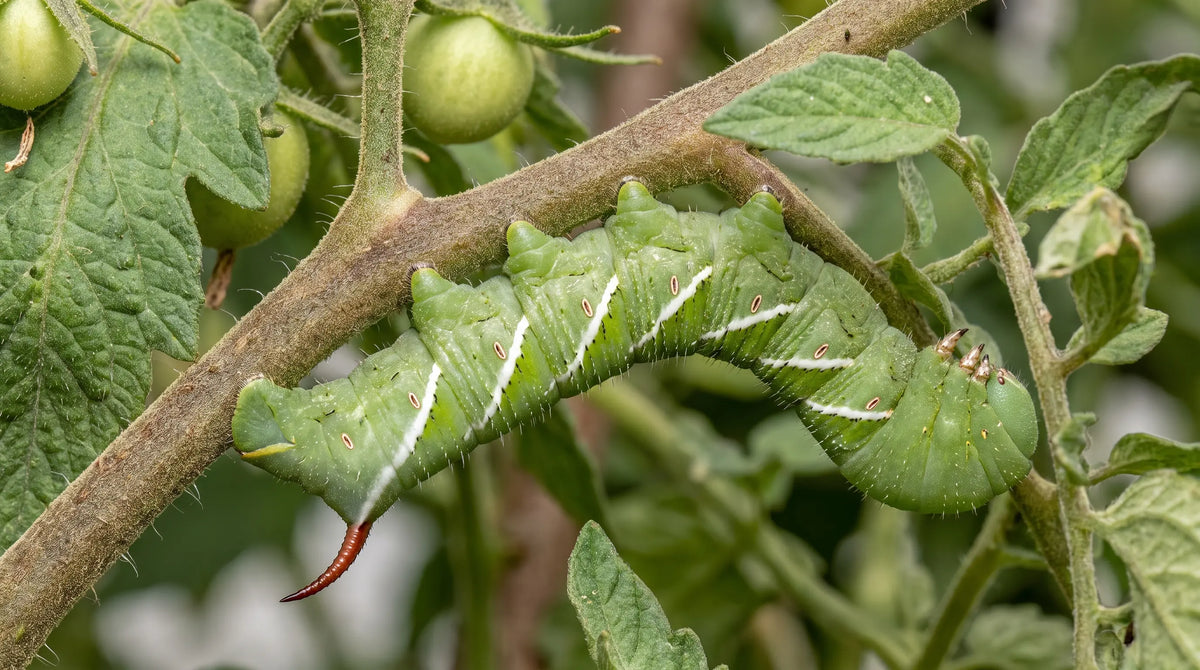
The green caterpillar chewing your plants is the larval stage of a large moth. The adults are heavy-bodied gray and brown fliers, sometimes called hawk moths or sphinx moths, and they hover at flowers at dusk a lot like hummingbirds do. The moths themselves do no harm to your plants, they only sip nectar. It is their offspring that do the damage. A single female can lay a large batch of eggs across her short life, spreading them out one at a time over many plants, so one moth working your garden at night translates into a lot of hungry caterpillars a week later. Worth knowing: there are two close cousins, the tomato hornworm and the tobacco hornworm, and the one most gardeners actually find is often the tobacco hornworm (diagonal white stripes, a red horn). It does not change a thing about how you deal with them, so do not get hung up on the ID.

The tomato hornworm life cycle, stage by stage
The whole thing moves through four stages, and knowing where you are in the cycle tells you exactly what to do. In warm regions you can get two generations in a single season, sometimes more, so missing the first wave in early summer sets you up for a much bigger, more damaging second wave in late summer when your fruit is ripening.
| Stage | Roughly how long | Where to look |
|---|---|---|
| Egg | 3 to 5 days | Underside of leaves, single pale green spheres |
| Larva (caterpillar) | 3 to 4 weeks | Feeding on upper foliage and green fruit |
| Pupa | 2 to 4 weeks, or all winter | Buried a few inches in the soil |
| Adult moth | 1 to 2 weeks | Flying at dusk, laying the next round of eggs |
Eggs
The moth lays smooth, round, pale green eggs about the size of a pinhead, almost always singly and almost always on the underside of a leaf where birds and heat will not reach them. They are easy to miss and they hatch in three to five days in summer heat, faster than most people check. If you flip the lower and interior leaves every few days through July and August and wipe off what you find, you cut the whole cycle before a single caterpillar takes a bite. This is the cheapest, quietest win in the whole fight, and almost nobody bothers to do it.
Larva
This is the damage stage, and it is heavily back-loaded. A newly hatched hornworm is barely a quarter inch of pale thread and eats almost nothing. Over three to four weeks it molts several times and can reach three to four inches, and that final stretch is where the real destruction happens. A single big one can defoliate a branch overnight and start scarring green fruit. The green body with white markings and a soft horn on the tail is superb camouflage against a tomato stem, which is why you scan and re-scan a plant and see nothing. Two tricks beat the camouflage. First, hunt at dawn or dusk when they climb out to feed on the outer foliage. Second, walk the rows after dark with a cheap UV blacklight, because hornworms fluoresce a bright glowing green and light up like markers you cannot miss. Also learn to read the frass: the darker and larger the pellets under a plant, the bigger the caterpillar above them, so follow the droppings straight up.
Pupa
When a full-grown caterpillar is done eating it drops off the plant and burrows two to four inches into loose soil, where it hardens into a shiny reddish-brown pupa with a curved, handle-like case. In midsummer it emerges as a moth in two to four weeks and keeps the season rolling. The last generation of the year stays down there through winter and waits for spring warmth to emerge. That overwintering pupa is the reason the pest comes back on schedule every year, and it is also the single most vulnerable target you have, because it cannot run.
Sale

Beefsteak Tomato Seeds – Red, Non-GMO HeirloomCustomer FavoriteBig, vigorous slicers that bounce back well from light pest feeding.
Price$4.99Starting at$3.99
Adult moth
The moth emerges from the soil, dries its wings, flies at dusk, mates, and starts laying eggs on tomato foliage within a day or two. That closes the loop. The adults are powerful, fast fliers with a wide wingspan, and they range a long way, so they will arrive from a neighbor's plot, a nearby field, or a wild nightshade patch even if you cleaned out every pupa in your own beds. That is exactly why no single tactic finishes the job, and why the leaf-flipping habit earns its keep no matter how tidy your garden is.
How to break the cycle
Here is the good news: you do not have to win at every stage. This is a chain, and snapping any one link stops the whole thing. The two links you can hit hardest with the least effort are the caterpillar (visible and slow) and the overwintering pupa (buried and helpless).
Handpick the caterpillars
Nothing beats picking them off by hand, and no spray is faster or more targeted. Walk the plants two or three times a week, follow the frass up the stem, and drop what you find into a jar of soapy water (do not just toss them over the fence, they crawl right back). Ten focused minutes on a Saturday morning keeps a population from ever building to the point where it matters. If handling them makes you squeamish, snip the leaf they are on and drop the whole thing.
Turn the soil in fall and spring
Cultivating your tomato beds four to six inches deep after you pull the plants in fall drags overwintering pupae up to the surface, where cold, birds, and drying air finish them off before spring. A second shallow pass as you prep beds in spring catches any that made it through. Growers who do this one thing consistently see far fewer hornworms the following year, because you are hitting the pest while it is asleep and defenseless instead of chasing it once it is armed and hungry.
Let the good bugs work
This is the one that trips people up, so read it twice. If you find a hornworm studded with what look like little white grains of rice standing up off its back, do not kill it. Those are the cocoons of a braconid parasitic wasp whose larvae fed inside the caterpillar and are now pupating on its skin. That hornworm is already doomed and has essentially stopped eating. Leave it right where it is so the next generation of wasps can hatch, and you get a supply of free, self-renewing pest control that hunts down more hornworms all season. Green lacewing and ladybug larvae also help by eating the eggs and the youngest larvae before they do damage.
Sale

Cherry Tomato Seeds – Large, Non-GMO HeirloomEasy to GrowProductive plants that keep fruiting even during a rough hornworm week.
Price$4.99Starting at$3.99
Interplant and rotate
Basil, dill, and flowering marigolds tucked among your tomatoes give nectar to the tiny parasitic wasps and other beneficials, which makes them far more likely to stick around and find their prey. Rotating tomatoes to a different bed each year adds a real hurdle too, because moths that emerge from last year's soil surface at the old spot and have to go searching for the new one, buying your young plants time.
Plan next season around it
Vigorous, well-fed plants take hornworm damage in stride, while a stressed or root-bound plant can be set back hard by the same feeding, so the real defense starts with strong varieties, deep planting, steady water, and enough spacing (at least two feet) that you can actually see into each plant to scout. Grow more plants than you strictly need and mix your types: a couple of beefsteaks for slicing and a cherry or two for snacking means a chewed branch never ends your harvest. Stagger your sowings by two to three weeks as well, so a rough hornworm week on one planting still leaves you with fruit coming from the next.
Frequently asked questions
How long does the tomato hornworm life cycle take?
In warm weather one full cycle runs roughly six to eight weeks from egg to adult moth. Eggs hatch in three to five days, the caterpillar feeds and molts for three to four weeks, then it pupates in the soil for two to four weeks before the moth emerges. In hot regions you can see two or more generations.
Where do hornworms go when they leave the plant?
Full-grown caterpillars drop off and burrow two to four inches into the soil to pupate. In summer they emerge as moths in a few weeks. The last generation stays underground all winter, which is why turning your beds four to six inches deep in fall and again in spring knocks down next year's numbers.
What do tomato hornworm eggs look like?
They are small, smooth, pale green spheres about the size of a pinhead, laid one at a time on the undersides of leaves. They blend in and hatch in three to five days, so flipping the lower and interior leaves and wiping eggs off every few days stops caterpillars before they ever start feeding.
Should I kill a hornworm covered in white cocoons?
No, leave it exactly where it is. Those white rice-like bundles are the cocoons of a braconid parasitic wasp that has already fed inside the caterpillar, which by then has stopped eating. Letting the wasps hatch out gives you free, self-renewing hornworm control that keeps hunting for the rest of the season.
Will hornworms come back every year?
They can, because overwintered pupae emerge in spring and strong-flying adult moths also arrive from nearby gardens and wild nightshade. You will not eradicate them, but turning your soil in fall and spring, handpicking caterpillars twice a week, and protecting parasitic wasps keeps their numbers low.

- Choosing a selection results in a full page refresh.































 Easy Returns 30-day guarantee