


When to Harvest Onions (and How to Cure Them for Storage)
Updated August 2026
If your onion tops are starting to yellow and flop over, they're telling you something: harvest time is close. Onions grown from seed are usually ready 100 to 120 days after sowing (about 80 to 100 days from sets), which for most of the U.S. lands in mid-to-late summer. But the calendar is only a rough guide. The plant itself gives you the real signal. Here's how to read it, and how to cure and store the crop so it lasts.
The signs your onions are ready to harvest
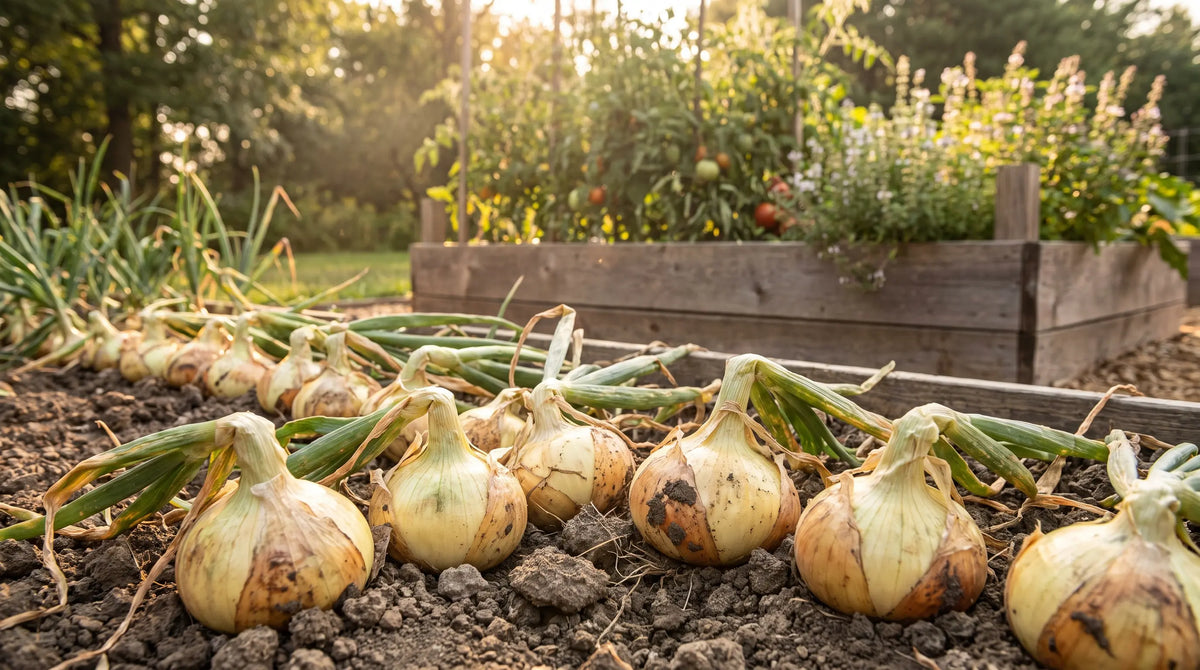
Watch the necks and the tops. As a bulb onion finishes sizing up, it stops pushing new leaves and the neck, the join between bulb and foliage, goes soft. Soon after, the tops bend and fall over on their own. When roughly half to three-quarters of the tops have flopped, stop watering and let the crop stand for about a week to firm up the outer skins. Don't snap the tops down by hand to rush it; that old trick bruises the neck and invites rot in storage. Let them fall naturally, then lift.
When to harvest by onion type
Not every onion comes off at the same time, and the type decides how you'll use it. Storage onions like the pungent Spanish types are the ones you cure and keep for months; sweet onions come out a little earlier and go straight to the kitchen because they won't last. Both are bulb onions, so both wait for the tops to fall.

Utah Yellow Sweet Spanish Onion Seeds – Non-GMO HeirloomBest for storageClassic yellow storage onion — firm, pungent, and cures beautifully for months of keeping.
Price$4.99
Sale

Walla Walla Onion Seeds – Non-GMO HeirloomSweet varietyBig, mild sweet onion — harvest as tops fall and eat fresh; too juicy to store long.
Price$5.99
Sale Price$4.99
A storage onion such as Utah Yellow Sweet Spanish should feel firm with a tight, dry neck before you pull it, and that's what lets it keep. A sweet onion like Walla Walla is high in water and sugar, so it bruises easily and only holds a few weeks; harvest it as the tops go over and eat it fresh. If you're unsure which you have, the rule of thumb is simple: the milder and juicier the onion, the sooner it needs to be used.
Green (bunching) onions are different. You don't wait for a bulb at all. Pull them young, once the stalks are about pencil-thick, roughly 60 days from sowing. There's no curing and no flopped tops to watch for; harvest a few whenever you need them and leave the rest to keep growing.
Sale

Green Onion Seeds – Tokyo Long White, Non-GMO HeirloomHarvest youngTokyo Long White bunching onion — no bulb to wait for; pull young at pencil thickness.
Price$4.99Starting at$3.99
How to harvest onions the right way
Pick a dry day, because lifting into wet soil spreads rot. Slide a fork under the row and loosen the bulbs rather than yanking the tops, which can tear the neck. Ease each onion out with its roots and papery skin intact, and brush off loose soil by hand. Don't wash them; moisture is the enemy from here on. Handle them gently, because every bruise is a spot that can spoil in the bin.
Curing onions for storage

Curing is what turns a fresh-pulled onion into one that keeps. Lay the onions in a single layer (on a screen, a slatted bench, or hung in bunches) somewhere warm, dry, shaded, and well ventilated, out of direct sun. Give them two to four weeks. They're cured when the necks are completely dry and papery, the outer skins rustle, and the tops have shriveled. Then trim the roots and cut the tops to about an inch above the bulb. Skip curing and the open necks let moisture and rot straight in, so don't shortcut it, especially for storage types.
How to store onions after curing
Keep cured onions somewhere cool, dark, dry, and airy. A mesh bag, an open basket, or a braid all work because air moves around them. Storage onions held near 35 to 40°F will last three to six months or more; sweet onions won't, so use those first. Don't bag onions in plastic or store them next to potatoes, which give off moisture and gas that make onions sprout. Check the bin now and then and pull any that soften before one spoils its neighbors.
Grow a mix of storage, sweet, and bunching types and you'll have onions coming out of the garden from mid-summer straight through winter. Start your next crop from our full range of non-GMO, heirloom onion seed.
Frequently asked questions
How do you know when onions are ready to harvest?
The tops tell you. When about half to three-quarters of the leaves yellow, soften at the neck, and flop over on their own, the bulbs have finished sizing. Stop watering, wait roughly a week for the skins to firm, then lift on a dry day.
What happens if you harvest onions too early or too late?
Pulled too early, bulbs are small and the necks stay thick and won't cure or keep. Left too long, they can restart growth, split, or rot from the neck down in storage. Harvest once the tops flop but before they collapse into wet soil.
Do you have to cure onions after harvesting?
Yes, if you want them to keep. Curing dries the neck and outer skins so moisture and rot can't get in. Lay them in a single layer somewhere warm, dry, and airy for two to four weeks, until the necks are papery, then trim and store.
Should you bend over onion tops before harvesting?
No. Snapping the tops down by hand to speed ripening bruises the neck and opens the bulb to rot. Let the tops fall over naturally, which is the plant's own signal that the bulb has matured, then harvest a week or so later.
When are green onions ready to harvest?
Green or bunching onions don't need a bulb, so harvest them young once the stalks are about pencil-thick, roughly 60 days from sowing. There's no flopping or curing to wait for; pull what you need and leave the rest to keep growing.
How long do harvested onions last in storage?
It depends on type. Cured storage onions kept cool, dark, and dry last three to six months or longer. Sweet onions are high in water and only hold a few weeks, so eat those first. Keep them in mesh or a braid, never sealed in plastic.

- Choosing a selection results in a full page refresh.











 Easy Returns 30-day guarantee