


When to Harvest Watermelon: 4 Ripeness Signs That Actually Work
Updated September 2026
You have babied that vine all summer, and now the fruit is fat and heavy and you are terrified of cutting it open a week too early. That fear is well founded, because a watermelon does not keep sweetening once it leaves the vine the way a tomato or a peach will. What you pick is exactly what you get. So the whole game is reading the plant well enough to catch the moment the sugar has peaked, and the good news is the melon tells you in four clear ways.
Why Timing Matters So Much With Watermelon
Most fruit keeps working after harvest. A tomato picked at the first blush of color will finish red and taste nearly as good on the windowsill. Watermelon does not play that way. The plant pumps sugar into the fruit right up until the vine stops feeding it, and once you cut that supply line the sugar is locked in for good. Pick early and you get a pale, crunchy, watery slice nobody finishes. Wait too long and the flesh turns mealy and dull, going almost cottony near the heart as it breaks down.

That narrow window is why the days-to-maturity number on your seed packet is a starting point, not a verdict. It assumes ideal warmth and steady growth, which almost no real season delivers. A hot, sunny stretch can push a melon in early, while a cool cloudy spell can hold it back a week or more. Cooler nights in particular slow sugar loading right at the finish. Use the calendar to know roughly when to start looking, then let the four signs below make the final call.
Sign 1: The Curly Tendril Near the Stem Dries Out
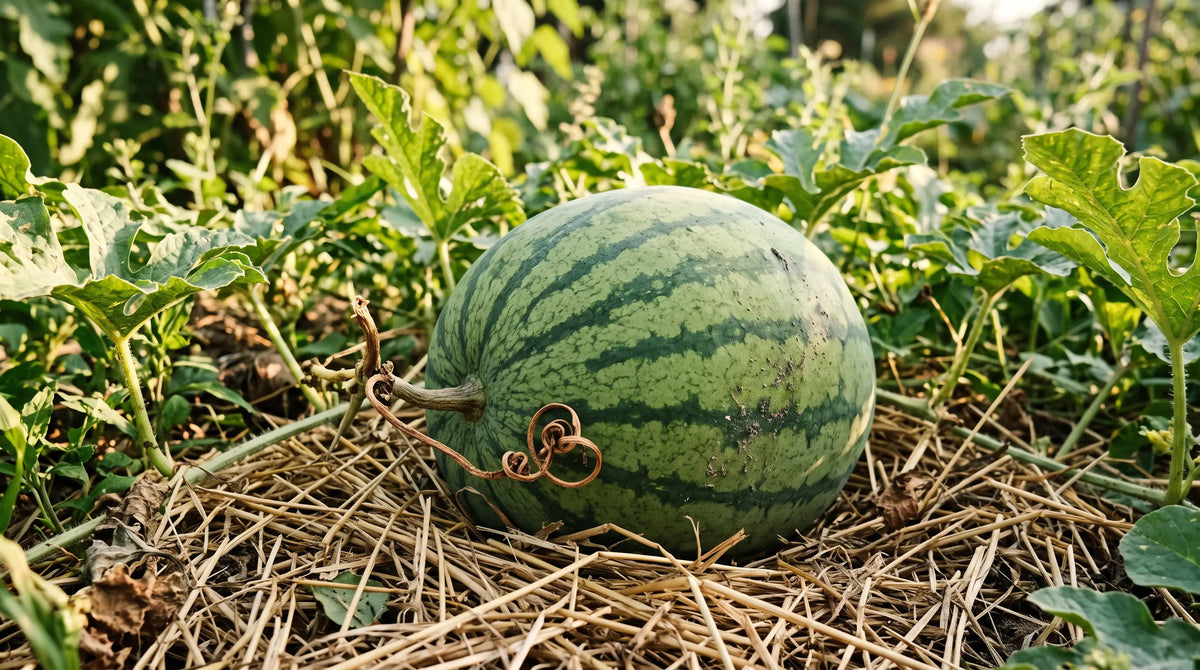
Find the little curly tendril, that green pigtail growing off the vine at the same node where the fruit's stem attaches. This is not the closest tendril in general, it is specifically the one paired with your melon. While the fruit is still filling, that tendril stays green and springy because the plant is still moving water and sugar past that point. As the melon finishes, the tendril dries from the tip back, turning brown and crisp.
This is the sign experienced growers trust most, and for good reason. It reflects what the plant itself is doing rather than what the surface looks like. That said, it works best paired with the ground spot. A single browned tendril after a windy, dry afternoon is not proof, and the tendril can dry a few days before the flesh is truly at its sweetest. Look at the one right at the fruit's stem, confirm it has genuinely dried and not just wilted, then check the belly before you cut.
Sign 2: The Ground Spot Turns Creamy Yellow
Roll the melon gently and look at the belly, the flat patch that has been resting on the soil out of the sun. This is the ground spot, and it is one of the most honest tells you have because the sun never bleaches it. On an unripe melon it reads white or pale green. As the fruit matures on the vine, that spot deepens to a warm buttery yellow, sometimes nearly gold.
If the ground spot is still white or greenish, give it more time no matter what the calendar says. A creamy yellow to golden belly means the melon has sat on the vine long enough to load up on sugar. This tell holds across nearly every type, from little icebox melons to the big picnic sorts, which is exactly why it pairs so well with the tendril. One quiet warning: if you have been irrigating heavily and the ground spot sits in a wet, dark depression, get a board or a shingle under the fruit early in the season to keep that belly dry and readable, and to head off rot.
Sale

Melon & Watermelon Seeds Variety Pack – Non-GMO HeirloomBest valueOne packet, several types, so you can practice reading the same signs across icebox and picnic melons in a single season.
Price$12.99
Sale Price$9.99
Sign 3: The Skin Dulls and Toughens
A young watermelon wears a bright, slick, almost waxy coat. As the fruit ripens, that shine fades to a dull matte finish and the rind toughens up. The old field test is the thumbnail: on a ripe melon your nail will not easily scratch or pierce the skin, and it resists with a firm, leathery feel. If your nail slides right in, the rind is still young and the melon wants more time on the vine. Do not gouge it, a light drag near the stem end is all you need.
On striped varieties, the stripes also sharpen and the contrast between light and dark deepens as the fruit finishes. On its own this sign is subtle and easy to talk yourself into, so treat it as a tiebreaker when the tendril and ground spot leave you genuinely unsure rather than as a first look.

Crimson Sweet Watermelon Seeds – Non-GMO HeirloomCustomer favoriteA classic striped picnic melon whose sharpening stripes and clear ground spot make the ripeness signs easy to learn on.
Price$4.99

Sugar Baby Watermelon Seeds – Non-GMO HeirloomShort seasonA compact icebox melon that finishes fast, making it a forgiving choice for shorter or cooler growing seasons.
Price$4.99
Sign 4: The Thump Test (Use It Last)
Everybody knows the thump, and everybody swears their grandmother could do it blindfolded. Give the melon a firm knock with your knuckles, or a flat-hand slap. An unripe one rings high and tight, almost like tapping a solid tabletop, because the flesh is still dense and firm. A ripe one answers lower and looser, a deeper hollow plunk you can actually feel vibrate through the fruit if you rest your other hand on the far side.
Here is the honest truth about the thump: it takes real practice, it is thrown off by overripe or hollow-hearted fruit that also sounds dull, and it fools plenty of confident people. That is why it sits at the bottom of this list. The way to actually learn it is to thump melons you have already confirmed ripe by the first three signs, so your ear links the sound to a known result. After a season or two it becomes a fast confirmation rather than a guess.
Reading the Signs Together
No single clue is bulletproof, so line them up and let them vote. The safest harvest is a melon showing a brown, dried tendril, a creamy yellow belly, a dull tough rind, and a low hollow thump all at once. In practice, two or three strong signs, led by the tendril and ground spot, are enough to cut with confidence.
| Sign | Not ready | Ready to pick |
|---|---|---|
| Curly tendril | Green and springy | Brown and dried |
| Ground spot | White or pale green | Creamy yellow to gold |
| Skin | Shiny and waxy | Dull and tough |
| Thump | High and tight | Deep and hollow |
When you do cut, use a sharp knife or pruners and leave two to three inches of stem on the fruit rather than twisting or yanking it off. Twisting tears the rind at the stem and opens a wound where rot starts fast. A clean cut with a bit of stem left on keeps a whole, uncut melon sound in a cool spot or the fridge for a week or two.
A Quick Word on Variety and Season
Small icebox melons like Sugar Baby finish faster and forgive a shorter, cooler season. Classic picnic types such as Crimson Sweet and Jubilee want more heat and time, and they pay you back with bigger fruit for the wait. Those day counts always assume good warmth, so treat them as guideposts. Count forward from your transplant date, start checking the signs a bit before the packet's maturity number, and let the vine, not the calendar, have the final word.
Frequently asked questions
Does watermelon ripen after you pick it?
No. A watermelon does not keep sweetening off the plant the way a tomato or banana does, so the sugar is locked in the moment you cut the vine. That is why reading the ripeness signs before you harvest matters so much. A melon picked early stays pale and watery no matter how long it sits on your counter.
What is the most reliable sign a watermelon is ripe?
The curly tendril at the same node as the fruit's stem is the sign most growers trust, because it reflects what the plant is doing rather than how the surface looks. When it has dried and turned fully brown, the melon is usually ready. Pair it with a creamy yellow ground spot on the belly, since no single clue is perfect on its own.
Why is the bottom of my watermelon still white?
A white or pale green ground spot means the melon has not been on the vine long enough to finish loading sugar. As it ripens, that belly patch deepens to a warm creamy yellow or gold, and because it sits out of the sun it never bleaches. If it is still white, give the fruit more time regardless of what the packet's day count suggests.
How does the thump test actually work?
Knock the melon firmly with your knuckles. An unripe one rings high and tight because the flesh is dense, while a ripe one gives a deeper, lower, hollow note you can feel vibrate through the fruit. It also sounds dull on overripe melons, so learn it by thumping melons you have already confirmed ripe with the tendril and ground spot signs.
Should I twist or cut a watermelon off the vine?
Cut it. Use a sharp knife or pruners and leave two to three inches of stem attached rather than twisting or yanking. Twisting tears the rind at the stem and opens a wound where rot sets in quickly. A clean cut protects the fruit and helps a whole, uncut melon keep in a cool spot or the fridge for a week or two.

- Choosing a selection results in a full page refresh.



















 Easy Returns 30-day guarantee