


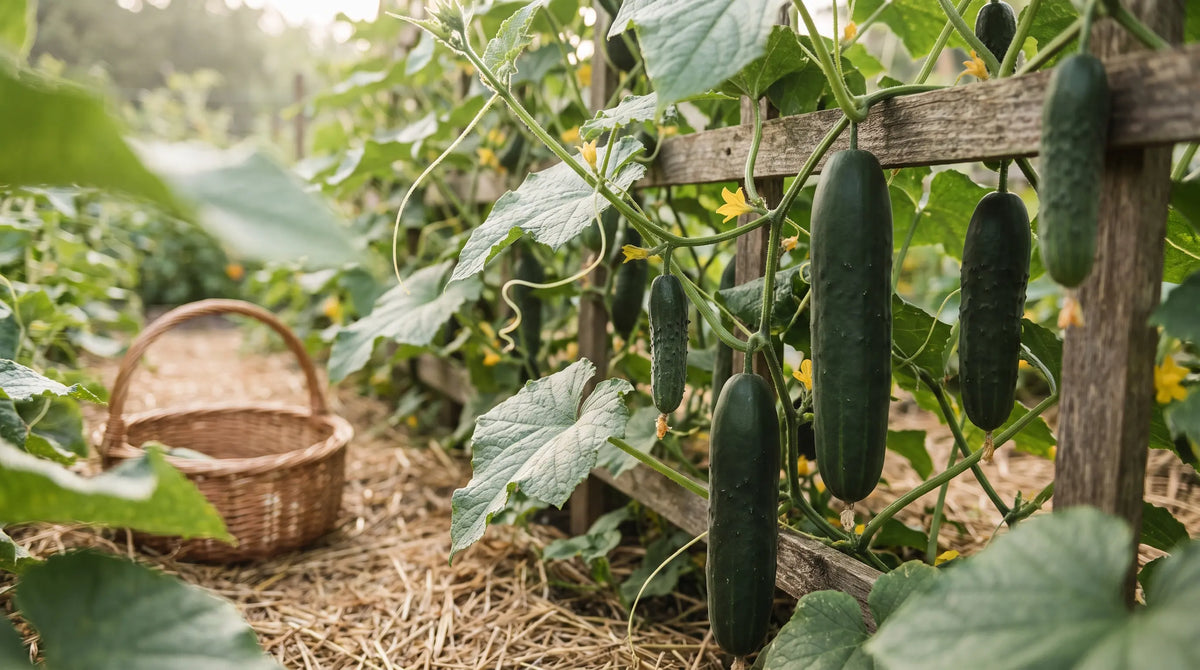
When to Pick Cucumbers for the Best Crunch (Size & Timing Guide)
Updated August 2026
The moment a cucumber goes from perfect to past it
You walk out to the garden in the morning, part the leaves, and there it is: a cucumber that looked small yesterday and now feels like a zucchini. That day or two makes all the difference. Pick at the right size and you get that clean snap and mild, sweet flesh. Wait too long and you get seeds, bitterness, and a soft middle. The good news is that timing cucumbers is easy once you know what to watch for.

Most cucumbers are ready far sooner than new gardeners expect. Once a flower opens, the fruit behind it can size up quickly in warm weather. That speed is why checking your plants every day during peak season matters so much.
Pick by size, not by the calendar
Days to maturity tells you roughly when the first fruit will show up, usually somewhere around 50 to 70 days from sowing. After that, size is your real guide, and the right size depends on what you grew and how you plan to use it.
| Type | Best picking size | What it is for |
|---|---|---|
| Pickling cucumbers | 2 to 4 inches | Whole pickles, gherkins |
| Slicing cucumbers | 6 to 8 inches | Salads, sandwiches, fresh eating |
| Burpless and long types | 8 to 12 inches | Thin skinned fresh eating |
| Small snacking types | 3 to 5 inches | Grab and go |
A ripe cucumber should be firm, evenly green, and glossy. Give it a gentle squeeze. If it yields at all, it is on its way out. If you see yellowing at the blossom end, or the fruit starts to look fat and dull, you have waited too long. Pick it anyway to keep the plant producing.
Pickling cucumbers
Pickling types are built to be picked young and small, when the skin is still bumpy and firm and the seeds are barely there. That is when they hold their crunch through the brine.
Sale

Boston Pickling Cucumber Seeds – Non-GMO HeirloomBest for picklingA classic pickling heirloom bred for small, crisp fruit picked at 2 to 4 inches. Bumpy skin, firm flesh, and heavy yields that hold their crunch in the brine.
Price$5.99
Sale Price$4.99
Slicing cucumbers
Classic slicers stay dependable, hold their dark green color, and tolerate common diseases well. Pick them around 8 inches, before the skin toughens and the seed cavity swells.

Marketmore 76 Cucumber Seeds – Non-GMO HeirloomBest slicerA dependable dark green slicer that stays firm and mild when picked around 8 inches. Disease tolerant and productive over a long season.
Price$4.99
How to harvest without hurting the plant
Never yank a cucumber off the vine. Pulling tears the stem, can damage the plant, and opens the door to disease. Instead, use scissors or pruners and cut the stem about a quarter inch above the fruit. Hold the cucumber in one hand while you cut so it does not drop.
Harvest in the morning when the fruit is cool and full of water. Cucumbers picked in the heat of the afternoon wilt faster and lose their snap sooner. If a fruit is warm from the sun, a quick dunk in cold water firms it right back up.
If you want reliable, uniform slicers for the whole season, a proven open-pollinated line takes the guesswork out of harvest timing.
Marketmore 76 Cucumber Seeds – Non-GMO HeirloomReliable pickAn open-pollinated workhorse that gives you uniform, easy to time slicers all season, so you always know when to pick.
Price$4.99
Pick often to keep them coming
This is the part most people miss. A cucumber plant is trying to make seeds, not feed you. Once a fruit matures fully on the vine, the plant slows down and starts to shut off new flowers. Every oversized cucumber you leave on is telling the plant its job is done.
So pick every day or two at peak season, even the small ones you are not ready to use. The more you harvest, the more the plant produces. A single healthy vine can hand you cucumbers for weeks if you keep it stripped of mature fruit.
What to do with a bitter one
Bitterness usually comes from heat stress, uneven watering, or fruit left on the vine too long. It concentrates near the stem end and just under the skin. If you bite into a sharp one, peel it, trim off the stem end, and steady your watering going forward. Keeping the soil evenly moist does more for flavor than almost anything else.
Storing what you pick
Fresh cucumbers keep best a little warmer than the fridge, closer to a cool pantry temperature. Wrap them loosely and use them within about a week for the best texture. Keep them away from tomatoes, apples, and bananas, since the ethylene those give off will turn a firm cucumber soft fast.
Frequently asked questions
How do I know when a cucumber is ready to pick?
Go by size and firmness, not the calendar. Pickling types are best at 2 to 4 inches, and slicers around 6 to 8 inches. The fruit should be firm, glossy, and evenly green. If it feels soft or yellows at the blossom end, it has gone past its prime.
What happens if I leave cucumbers on the vine too long?
They turn bitter, seedy, and soft, and the skin toughens up. Worse, a mature fruit signals the plant to stop making new flowers, so your whole harvest slows down. Pick oversized ones off anyway to keep the vine producing well over the season.
Should I pick cucumbers in the morning or evening?
Morning is best. The fruit is cool and full of water, so it stays crisp longer after picking. Cucumbers harvested in afternoon heat wilt faster and lose snap. If one feels warm, a quick soak in cold water helps firm it back up nicely.
How often should I harvest cucumbers?
Every day or two during peak season. Frequent picking keeps the plant flowering and fruiting instead of switching to seed production. Even small cucumbers you are not ready to eat are worth removing, since it boosts your total yield over time.
Why are my cucumbers bitter?
Bitterness usually comes from heat stress, uneven watering, or fruit left on the vine too long. It concentrates near the stem end and just under the skin. Peel and trim that end, then keep the soil evenly moist to prevent it in the next fruit.

- Choosing a selection results in a full page refresh.














 Easy Returns 30-day guarantee