


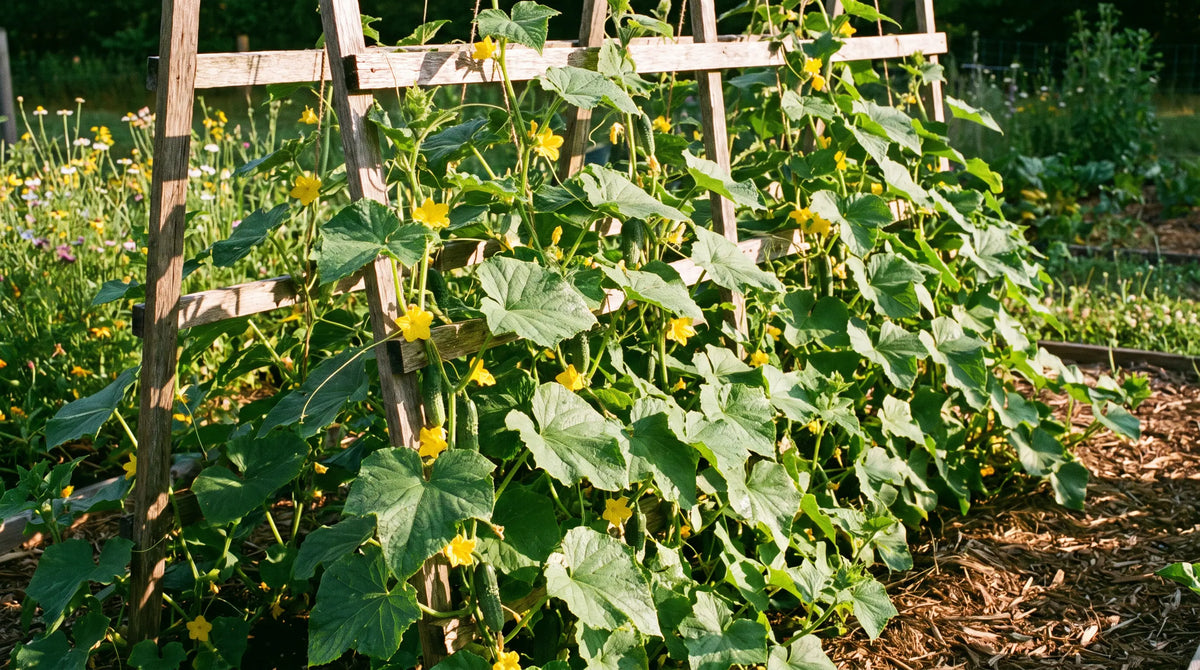
When to Plant Cucumbers for a Steady Summer Supply
Updated November 2026
If you've ever sown all your cucumber seed on the first warm weekend of spring, you know how the summer plays out: buried in cucumbers by July, a few crooked stragglers in August, dead vines long before frost. Knowing when to plant cucumbers fixes both ends of that. Sow the first batch one to two weeks after your last frost date, once the soil holds at least 65°F, then sow again every three weeks until 10 to 12 weeks before your first fall frost.
Wait for warm soil, not just the last frost
Frost will kill a cucumber, but cold soil ruins more early plantings. Seed will sprout at 60°F, barely, after close to two weeks, and the longer it sits in cool, damp ground, the more of it rots. At 70°F it's up in about a week. Near 80°F, three or four days.

Nights matter too. Hold off until they stay above 50°F. Chilled seedlings yellow and stall, and they often bear no sooner than seed sown two weeks later into warm ground. Check a soil thermometer at seed depth first thing in the morning, when the soil is coldest, and sow once it reads 65°F a few days running. In a slow spring, lay black plastic over moist soil a week or two ahead and plant through slits. It warms the soil by contact, so keep it snug and bury the edges.
When to plant cucumbers by zone
| USDA zone | First outdoor sowing | Last sowing for a fall harvest |
|---|---|---|
| 3 to 4 | Late May to mid June | Late June to early July |
| 5 | Mid May to early June | Mid to late July |
| 6 | Early to late May | Late July to early August |
| 7 | Late April to mid May | Early to mid August |
| 8 | April | Mid to late August |
| 9 to 10 | February to March | August to September |
Zones track winter lows, not spring warmth, so your frost dates and a soil thermometer still decide the best time to plant cucumbers. Cool coastal gardens, like much of the Pacific Northwest, often run weeks behind. In the hottest parts of zones 9 and 10, cucumbers do best as a spring and fall crop that skips the peak of summer.
When to start cucumber seeds indoors
Usually, you don't need to. Cucumbers hate root disturbance, and a rootbound or roughly handled transplant can sulk for a week or more, wiping out its head start.
Starting indoors pays off where summers are short, or when you want the first slicer a couple of weeks sooner. Sow two seeds to a pot about three weeks before planting out, and keep them on a heat mat near 80°F. Snip the weaker seedling rather than pulling it, harden off for a week, and plant out at one or two true leaves, root ball intact. A light row cover keeps off cucumber beetles, which spread bacterial wilt. Take it off when the flowers open so bees can get in.
Succession planting for a steady summer supply
A cucumber planting gives its heaviest picking for about a month, then slows as beetles, mildew, and the work of fruiting wear it down. Sow a few hills or a short row every three weeks, and each new planting starts bearing as the last one fades. In a zone 6 garden, that could mean sowings in mid May, early June, late June, and mid July.
Use a dependable slicer like Marketmore 76 for the main sowings and switch to picklers late in the season. Boston Pickling is ready in 55 to 60 days, usually a week or so ahead of a slicer, and that week matters when you're racing frost.
Sale

Boston Pickling Cucumber Seeds – Non-GMO HeirloomBest for late sowingsQuick heirloom pickler, ready in 55 to 60 days, so it's the one to sow last for a fall crop.
Price$5.99
Sale Price$4.99
Pick every day or two. A cucumber left to yellow on the vine tells the plant its job is done. Pull each planting once it quits, and sow the next one elsewhere if you can, so old vines don't pass beetles and mildew to young ones.
Time your dill to the pickling cucumbers
If you make pickles, you've probably watched dill go to seed weeks before the first pickling cucumbers showed up. Dill bolts as the days lengthen and heat builds, so a spring sowing is spent by midsummer. Instead, sow a short row each time you plant cucumbers, so fresh heads keep coming while the vines bear. For the jar, cut the heads in full flower or just as the green seed sets. Sow dill right where it will grow, a quarter inch deep, since its long taproot resents being moved.
Sale

Bouquet Dill Seeds – Non-GMO HeirloomPickle partnerCompact, classic pickling dill. Sow a pinch with each cucumber planting to keep fresh heads coming.
Price$4.99Starting at$3.99
Is it too late to plant cucumbers?
Probably not. Count back 10 to 12 weeks from your average first fall frost. That covers the roughly two months a vine needs to start bearing, a bit longer as days shorten, plus a few weeks of picking before cool nights shut it down. Midsummer seed comes up in days, but the surface dries fast, so soak the furrow, sow, and cover with dry soil that won't crust. For the last sowing, choose by what ends your season: frost calls for a quick pickler, mildew for the disease resistance of Marketmore 76.
Plan the whole summer bed around one soil reading
Soil that's warm enough for cucumbers is warm enough to sow squash, beans, and corn, and to set out tomato transplants. Peppers, melons, and okra like it a few degrees warmer, so give them another week or so.
Sale

Summer Vegetable Seeds Variety Pack – Non-GMO HeirloomWhole summer bedEvery mix includes a pickling and a slicing cucumber, plus squash, beans, and tomatoes.
Price$27.99
Sale Price$24.99
Every mix in the Summer Vegetable Seeds Variety Pack includes both a pickling and a slicing cucumber, plus squash, beans, and corn that can go in the same week.
Frequently asked questions
What soil temperature do cucumber seeds need to germinate?
Cucumber seed can sprout at 60°F, but slowly and unevenly, and the longer it sits in cold, damp soil, the more of it rots. Aim for 65°F or warmer at seed depth, read first thing in the morning. At 70°F seedlings appear in about a week, and near 80°F in three or four days.
How many weeks after the last frost can I plant cucumbers?
Plan on one to two weeks after your average last frost date. Frost after that date is common, so treat it as your cue to start checking the soil, not a planting day. Sow once the soil reads 65°F and nights stay above 50°F. A cold, wet spring can push that back by several weeks.
Should I direct sow cucumbers or start seeds indoors?
Direct sowing is simpler and works in most gardens, because cucumbers dislike root disturbance. Start indoors only for a short season or an earlier first harvest. Sow in individual pots about three weeks ahead and plant out at one or two true leaves, root ball intact.
Can I plant cucumbers in midsummer for a fall harvest?
Yes. Sow 10 to 12 weeks before your average first fall frost, since growth slows as the days shorten. A quick pickler gives you the best odds against frost. Soak the furrow before you sow, and water the seedbed daily in hot weather until the seedlings emerge.
How do I stagger cucumber plantings for a steady supply all summer?
Sow a few hills or a short row every three weeks, from when the soil reaches 65°F until 10 to 12 weeks before your first fall frost. Each planting bears heavily for about a month, so the next comes in as the last fades. Sow each wave away from the old vines so pests don't move over.

- Choosing a selection results in a full page refresh.









 Easy Returns 30-day guarantee