


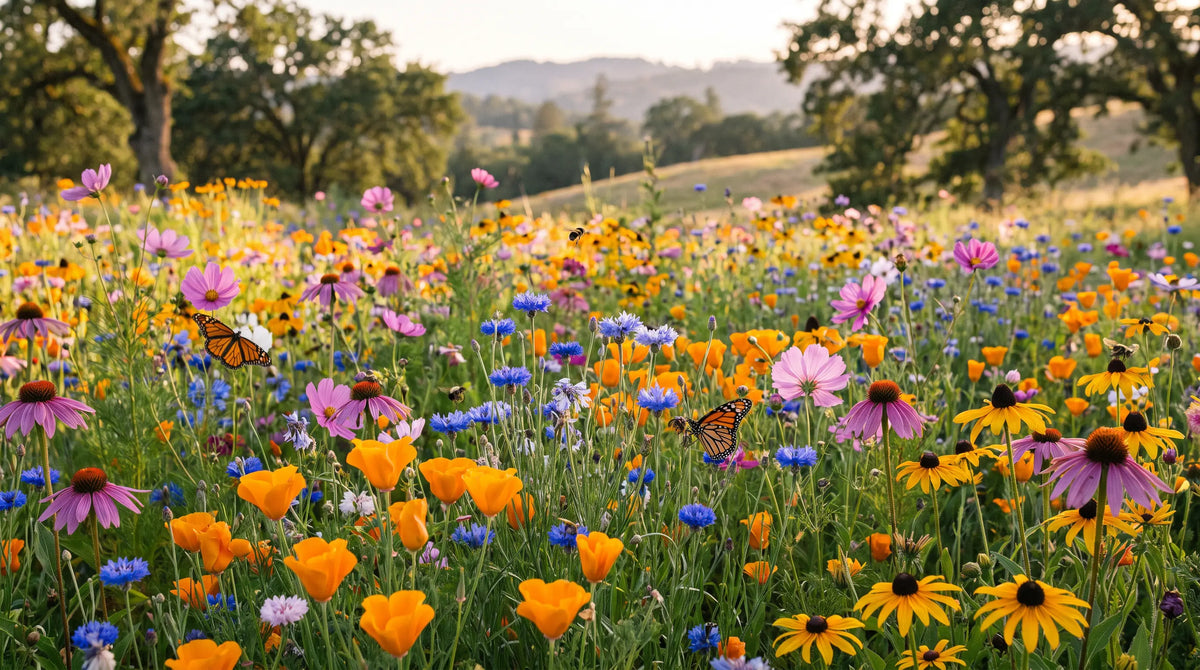
When to Plant Wildflower Seeds for the Best Bloom
Updated November 2026
You scattered wildflower seed on a warm June weekend, watered when you remembered, and by August had a thin, scraggly patch. The seed is rarely to blame. June sun dries the surface between waterings, and spring's weeds already own the bed. There are two good windows, fall and spring, and when to plant wildflower seeds comes down to your winters, your mix, and how much you want to water.
The best time to plant wildflower seeds
Left alone, wildflowers sow themselves. Seed drops in late summer and fall, then sprouts with the cool fall rains or lies dormant until spring. A fall sowing copies that rhythm and is the stronger choice for perennials and anywhere winters are mild. A spring sowing suits tender annuals and weedy ground, but you take over winter's job of keeping seed moist.

| Your winters | Fall window | Spring window |
|---|---|---|
| Cold (about zones 3 to 6) | Late fall, after several hard frosts, before the ground freezes | After your last frost |
| Mild (about zones 7 to 8) | Early fall, six to eight weeks before your first frost | Early spring, after your last frost |
| Warm (about zones 9 to 10) | Fall, once the summer heat breaks | Late winter, well ahead of the heat |
In Texas, sow from September into November, earlier in North Texas, so natives like bluebonnets sprout with the fall rains and overwinter as low rosettes. In California and the desert Southwest, sow just ahead of the winter rains. A spring sowing there runs into the dry season.
Fall sowing: let winter do the work
In cold-winter country, fall sowing means dormant sowing, where the seed lies still until spring. Sow into warm soil and a good share sprouts, only for winter to kill the seedlings. Wait for several hard frosts and soil that stays below about 50°F, even on sunny afternoons, then sow before the ground freezes. Freeze and thaw cycles work the seed in, and snowmelt keeps it damp.
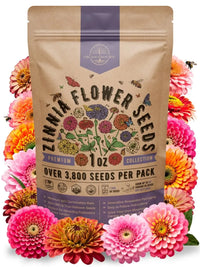
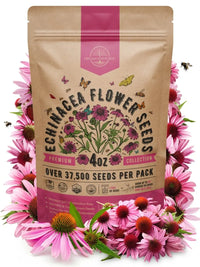
Hardy annuals such as poppies and cornflowers like fall sowing, since they sprout in cool soil and bloom before the heat. Zinnias and other tender annuals tend to rot in cold, wet ground, so save them for spring. Perennials gain the most. Many, coneflowers included, germinate better after a cold, damp winter. Sowing in spring? Fake that winter with several weeks in damp sand in the fridge. Chilling the seed dry does little.
Sale

Perennial Wildflower Seeds Mix – Non-GMO HeirloomBest for fall sowing16 hardy perennials, including coneflower and black-eyed Susan, that settle in well from a fall sowing and come back year after year.
Price$14.99Starting at$12.99
Missed the fall window? Sow in late winter onto frozen ground or a light snow, which prairie restorers call frost seeding. Seed shows against the white, and each thaw settles it in. Skip it on slopes, where melt carries seed off, or over thick dead grass, where it never reaches soil.
Spring sowing: warm soil and steady water
A spring sowing goes in after your last frost, once the soil warms. Zinnias and cosmos rot or sit idle in cold ground. Hardy annuals can go in a few weeks earlier, once a squeezed handful of soil crumbles instead of smearing. Many mixes hold both, so just after the last frost is the safe call.
The catch is water. Without snowmelt, it's on you to keep the surface damp until seedlings are up, often a light sprinkle every day or two in dry weather. Use a mist setting. A hard spray floats seed into puddles. Dry seed can wait, but a sprouted seed that dries out is dead, which is why spring sowings so often come up patchy.
On weedy ground, spring wins. It gives you time to flush out weeds first. Water the cleared bed, let the first flush sprout, and scrape it off at the surface, since digging only brings up fresh weed seed. On old lawn, repeat once or twice. And skip the fertilizer, which feeds weeds and grasses more than wildflowers.
Perennials sown in spring spend year one on roots and a low rosette of leaves, with the real show in year two. Sow a pinch in a labeled pot, too, so you can tell your seedlings from weeds. For first-year color, pick a blend that pairs fast annuals with returning perennials.
Sale

Butterfly Garden Wildflower Seeds Mix – Non-GMO HeirloomColor in year one23 nectar-rich annuals and perennials for butterflies and hummingbirds, with color the first summer and blooms that come back.
Price$14.99Starting at$12.99
How long until it blooms, and is it too late?
Most annual wildflowers bloom about two to three months after sowing, so count back from your first fall frost. With three months left and a hose handy, an annual mix still has time. In a hot Southern summer, seedlings often fry before they root, so wait for fall. In cold-winter areas, skip late summer and early fall: too late for annuals to bloom, too early for a dormant sowing.
Fall-sown patches usually flower earlier than spring-sown ones, since the seed sprouts the moment conditions allow. To stretch the season, sow part in fall and part in spring, or make two spring sowings a few weeks apart, for overlapping waves that feed bees and butterflies into fall.
Sale

Pollinator Garden Wildflower Seeds Mix – Non-GMO HeirloomSeason-long bloom19 annuals and perennials that open in overlapping waves, keeping bees and other pollinators fed across the season.
Price$24.99
Sale Price$22.99
Whenever you sow, stir the seed into dry sand so it spreads evenly and shows where it landed, then sow half in one direction and half crosswise. Walk the bed to press it in rather than raking it under. Many of the smallest seeds need light to sprout, and firm soil contact matters more than depth.
Frequently asked questions
What is the best month to plant wildflower seeds?
It depends on your winters. In cold areas, sow in late fall once several hard frosts have passed and the soil stays cold, often late October or November, or just after your last spring frost. In mild and warm areas, fall is best, from September to December, later where summers run hot.
Is it too late to plant wildflower seeds?
Rarely. Annuals bloom about two to three months after sowing, so if you have that long before your first fall frost and can water, sow now. If not, or if it's peak summer in the South, store the seed cool and dry and sow it in fall instead, after several hard frosts where winters are cold.
Can you plant wildflower seeds in the fall?
Yes, and for perennials it's often the better choice, since many germinate best after a cold, damp winter. In cold climates, wait for several hard frosts so the seed stays dormant until spring. In mild climates, sow in early fall so the seedlings can root in before winter arrives.
How long does it take for wildflowers to bloom from seed?
Most annual wildflowers bloom about two to three months after sowing, and a mixed planting keeps flowering in waves, often until frost. Perennials mostly spend year one on roots and a low rosette of leaves, with the real show from year two. Fall sowings tend to bloom earlier than spring ones.
When should I plant wildflower seeds in Texas?
Fall is the main season in Texas, roughly September into November, earlier in North Texas. Natives like bluebonnets sprout with the fall rains, grow through winter as low rosettes, and bloom in spring. Sow much later and they lose that head start, so expect smaller plants and a thinner show.

- Choosing a selection results in a full page refresh.









 Easy Returns 30-day guarantee