


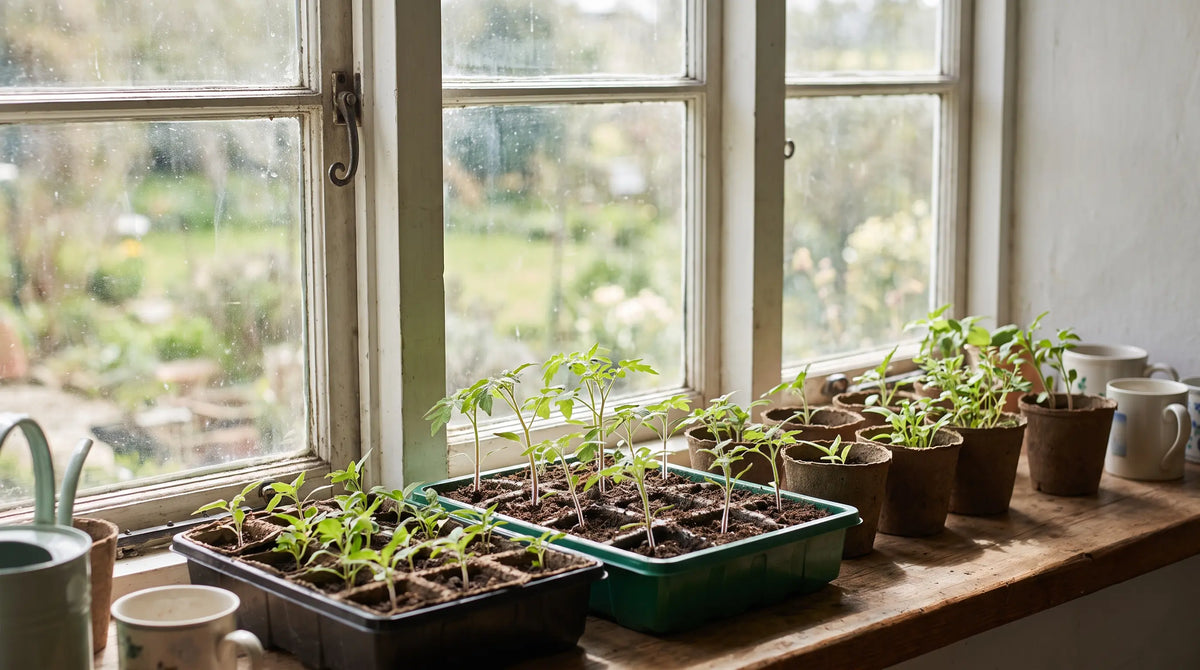
When to Start Seeds Indoors: A Simple Timing Guide by Zone
Updated October 2026
You bought the seeds, and now they sit in a drawer while you wonder whether it is too early, too late, or just right to start them on a windowsill. Here is the reassuring part: starting seeds indoors is almost entirely a timing question. Sow at the right moment and even ordinary seed comes into the season strong; sow at the wrong one and the best seed struggles. Learn to count backward from a single date and it stops feeling like guesswork and starts feeling like a plan.
Start with one date: your last frost
Almost every indoor sowing date is counted backward from one number: your average last spring frost, the point when nights stop dropping cold enough to damage tender growth. Find yours by ZIP code from a local extension office and treat it as your anchor. Everything after that is simple subtraction.

Here is what most charts leave out: that date is a fifty-fifty average, not a guarantee, so frost lands after it about half the time. For anything frost-tender, give it a week or two of cushion and watch the soil, not just the calendar. Warm-season crops sulk in cold ground even when the air feels mild, so a cheap soil thermometer tells you more than the forecast. If a cold snap threatens the week you meant to transplant, wait. A few extra days on the sill will not hurt a healthy seedling, but one frost will end it.
How many weeks of head start each crop wants
Different crops want different runways, and it comes down to how fast each one grows and how well it tolerates life in a pot. Slow growers need a long lead. Fast growers resent being confined and would rather go straight into warm ground. Here is a rough starting point for the vegetables and herbs most people grow.
| Crop | Start before last frost | Move outside |
|---|---|---|
| Peppers and eggplant | 8 to 10 weeks | after frost, warm soil |
| Tomatoes | 6 to 8 weeks | after frost |
| Basil and tender herbs | 6 to 8 weeks | after frost |
| Onions and leeks | 8 to 12 weeks | around last frost |
| Broccoli, cabbage, kale | 4 to 6 weeks | 2 to 4 weeks before frost |
| Lettuce and greens | 4 to 6 weeks | before last frost |
| Cucumbers, squash, melons | 2 to 4 weeks | after frost, warm soil |
Tomatoes get started too early more than any other crop. Six to eight weeks is genuinely plenty. A stocky seedling with a pencil-thick stem transplants better than a tall one that spent months reaching for a dim window, and it usually overtakes the leggy plant within a couple of weeks outdoors. If yours does stretch, use it: tomatoes root along a buried stem, so set them deeper at transplant to build a bigger root system. A dependable slicer like
Sale
gives you big, meaty fruit on forgiving plants, which makes it a friendly choice for a first indoor run.

Beefsteak Tomato Seeds – Red, Non-GMO HeirloomBeginner friendlyA classic red slicer with big, meaty fruit on forgiving plants, an easy first 6 to 8 week indoor start.
Price$4.99Starting at$3.99
Peppers are the opposite problem. They germinate and grow slowly, especially in cool soil, so they earn the earliest spot on the calendar. The classic mistake is sowing into cold mix and giving up when nothing shows in a week; peppers need real warmth to wake, and even then can take two to three weeks. Sow a garden classic like

California Wonder Pepper Seeds – Non-GMO HeirloomStart earlyA dependable bell pepper that rewards the early 8 to 10 week start and warm soil peppers need to size up.
Price$4.99
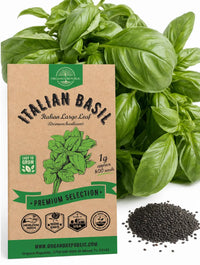
Herbs are the easy win.
Sale
comes up fast on a windowsill and hands you fragrant cuttings long before the tomatoes set fruit. Sow it shallow, since basil wants to be barely covered, and pinch the growing tip once plants have a few sets of leaves to push them bushy instead of tall. Start a small batch, then sow a little more every few weeks so the kitchen never runs dry.

Sweet Basil Seeds – Italian Large Leaf, Non-GMO HeirloomWindowsill winFast and fragrant on a windowsill, ready to pinch and harvest long before the tomatoes ripen.
Price$4.99Starting at$3.99
Rough timing by zone
Your growing zone hints at when that last frost usually arrives, which sets the whole calendar. Colder northern zones start later; milder southern zones start weeks earlier. One caution worth knowing: USDA zones actually rank average winter lows, not spring frost timing, so treat these as a rough guide and confirm your own last-frost date close to home. Two gardens in the same zone can run weeks apart depending on elevation and how near they sit to water.
| Zone | Typical last frost | Start tomatoes around |
|---|---|---|
| 3 | late May to early June | early to mid April |
| 4 | mid to late May | late March to early April |
| 5 | early to mid May | mid to late March |
| 6 | late April | early to mid March |
| 7 | mid April | late February to early March |
| 8 | late March | early to mid February |
| 9 | late February to March | January |
Give young seedlings what they need
Two things make or break indoor starts, and neither is complicated once you know what the plant is asking for.
The first is light, and it is where most windowsill starts fail. Late-winter sun sits low and short, so seedlings on a sill lean and stretch toward it. A simple shop light or LED bar hung a couple of inches above the leaves, raised as they grow and run fourteen to sixteen hours a day, keeps them compact and sturdy. Pale, stringy seedlings mean the light is too weak or too far off, not that they need more water.
The second is warmth, but only for germination. Peppers and tomatoes sprout fastest in soil around seventy to eighty-five degrees, so bottom heat from a mat or a warm room wakes them up. The move most guides miss is taking the tray off the heat once the seedlings emerge and shifting them somewhere bright and cooler; left cooking on a mat under lights, they shoot up thin and weak.
Two small habits save whole trays. Run a low fan nearby, since moving air builds sturdier stems and wards off damping-off, the fungus that topples healthy-looking seedlings at the soil line overnight. And water from below, letting the mix drink from a tray and dry slightly between waterings, rather than keeping the surface constantly wet.
Before anything moves out for good, harden it off. Over about a week, set the trays in a sheltered, partly shaded spot for an hour or two the first day, then longer and more exposed each day, so tender indoor leaves toughen to real sun and wind at their own pace. Cover or bring them in if a cold night threatens. Skip this step and a single bright, windy afternoon can scorch a month of careful growing in hours.
Put it on the calendar
Once you have your frost date and this countdown, the rest is marking a calendar and buying good seed. Work backward from your last frost, start the slow crops first, save the fast ones for last, and pencil in a week of wiggle room in either direction for when the weather argues. If you would rather not juggle a dozen packets, a broad mix like our variety pack spans most of these timing groups at once, which makes it an easy way to begin.
Frequently asked questions
How do I know when to start seeds indoors?
Count backward from your average last spring frost date, which you can find by ZIP code through a local extension office. Most crops want 4 to 10 weeks of a head start, so subtract each crop's weeks from that date. Since the frost date is only a fifty-fifty average, leave a cushion for tender crops.
When should I start tomato seeds indoors?
About 6 to 8 weeks before your last frost, and no earlier. Start them too soon and they grow tall and leggy before it is warm enough to move out. A short, stocky seedling with a thick stem transplants better, and you can set a stretched one deeper, since tomatoes root along the buried stem.
Which seeds should I start earliest?
Slow growers go first: peppers, eggplant, onions, and leeks, often 8 to 12 weeks before last frost. Peppers especially need warm soil and patience to germinate. Fast crops like squash and cucumbers wait until 2 to 4 weeks before, since they resent small pots and dislike having their roots disturbed.
Can I start seeds indoors too early?
Yes, and it is one of the most common mistakes. Seedlings sown too soon outgrow their light and pots and turn weak and leggy while it is still cold outside. If they stretch, the fix is usually more light held closer, not more water. It is safer to sow two weeks late than a month too early.
What does hardening off mean?
It is easing seedlings into outdoor conditions before you transplant them. Over about a week, set the trays in a sheltered, partly shaded spot for an hour or two, then longer and more exposed each day, so tender leaves toughen to real sun and wind. Cover or bring them in if a cold night threatens.

- Choosing a selection results in a full page refresh.












 Easy Returns 30-day guarantee