


How to Grow English Daisy From Seed
Updated July 2026
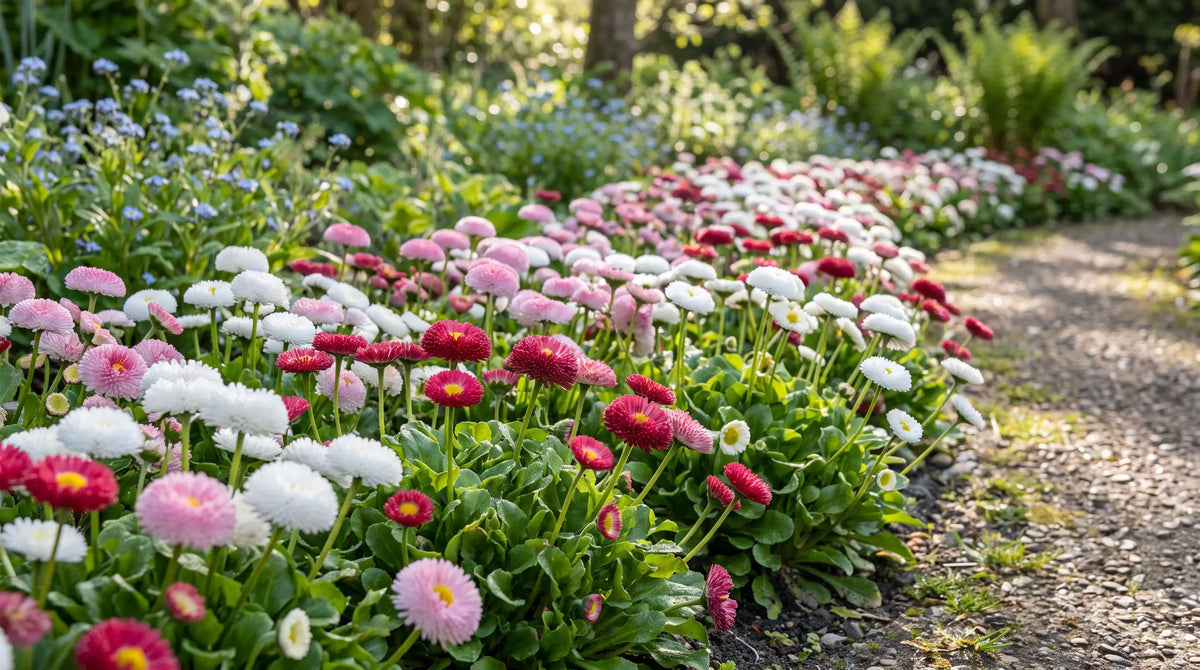
The English daisy (Bellis perennis) is the sweet, button-flowered little plant that carpets cool-climate lawns and edges cottage paths in white, pink, and rose. It is a cool-season charmer, blooming in spring, drawing early bees, and naturalizing gently by self-seeding once it settles in. Grown as a short-lived perennial where summers stay mild and as a biennial where they turn hot, it asks for one thing at sowing time: its seed needs light to germinate, so you leave it uncovered. Here is how to grow English daisy from seed.
Best tip
At a glance
 Botanical name Botanical name | Bellis perennis |
|---|---|
 Plant type Plant type | Cool-season perennial, often grown as a biennial |
 USDA zones USDA zones | 4 to 8 (biennial where summers are hot) |
 Sun Sun | Full sun to part shade |
 Days to maturity Days to maturity | Blooms in spring, often the second year |
 Height Height | 6 to 12 inches |
 Spacing Spacing | 6 to 8 inches apart |
 Water Water | Regular; keep evenly moist |
When to plant
How to plant
Growing and care
Sale

Mycorrhizal Fungi GranulesFeeds roots naturallyWork a little into the soil to help daisy seedlings root in and take up moisture.
Price$39.99Starting at$29.99
The best companion plants
Sale

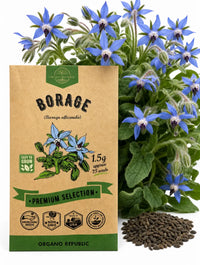
Borage Seeds – Non-GMO HeirloomHeirloom, non-GMOBorage brings bees to the same cool, moist beds English daisies enjoy.
Price$5.99Starting at$4.99
Sale

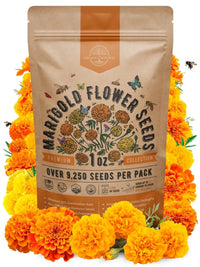
Marigold Seeds PackHeirloom, non-GMOMarigolds add long-lasting color and keep pests off the border.
Price$12.99Starting at$8.99
Sale

Nasturtium Seeds for Sale – Non-GMO HeirloomHeirloom, non-GMONasturtiums spill over path edges and share the daisy's love of cool weather.
Price$14.99Starting at$6.99
Harvest
Uses
Common problems
Frequently asked questions
Is English daisy a perennial or a biennial?
It depends on your climate. Bellis perennis is a short-lived perennial in cool regions (roughly USDA zones 4 to 8) but behaves as a biennial where summers are hot, growing leaves the first year and flowering the second before fading. Either way it self-sows, so it tends to stick around.
When should I sow English daisy seeds?
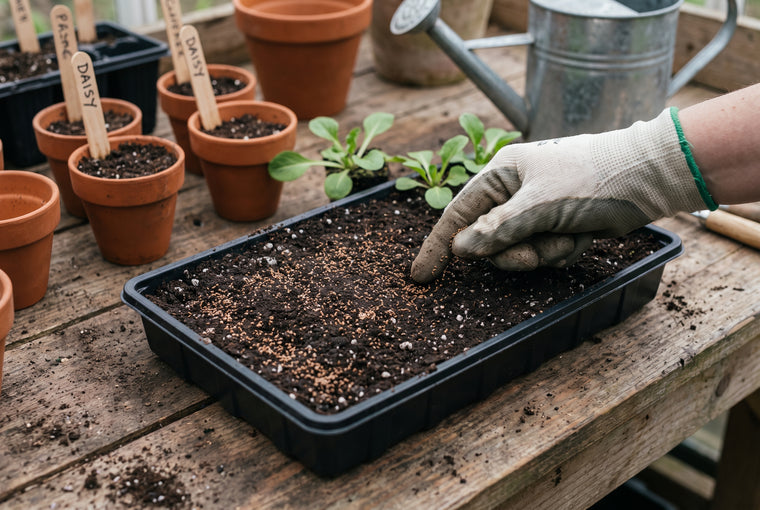
For blooms the following spring, sow in mid to late summer, either indoors or direct in the garden. In mild-winter areas you can also sow in early spring. Surface-sow the seed and do not cover it, since English daisy needs light to germinate, at around 65 to 70F.
Will English daisy survive hot summers?
It struggles in heat. In hot-summer regions the plants often decline or die back once temperatures climb, which is why they are treated as biennials or cool-season annuals there. Afternoon shade, steady moisture, and a mulch to keep roots cool help them last longer.
Does English daisy spread, and is it invasive?
It spreads gently by self-seeding and by slowly widening its rosettes, which is why it naturalizes so beautifully in lawns and along paths. In most gardens this is a charming feature, not a problem, and it is easy to pull or deadhead if you want to keep it contained.
How do I keep English daisies blooming?
Deadhead the spent button flowers regularly to keep new buds coming and to slow self-seeding if you prefer a tidier look. Keep the soil evenly moist, feed lightly in spring, and shear the plants back after the main flush to encourage a second round of bloom.
Are English daisies good for pollinators and cutting?
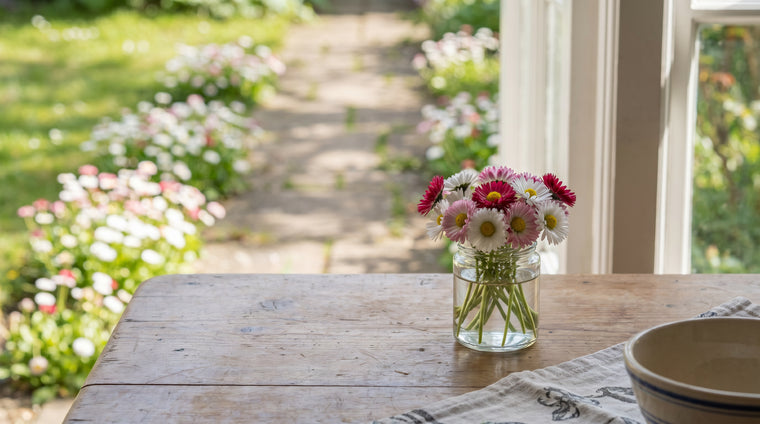
Yes. The open, nectar-rich flowers are visited by bees and butterflies in early spring when little else is blooming, and their neat rosette shape makes them ideal for edging and containers. The small blooms also make sweet miniature bouquets for a windowsill jar.
Sale

Edible Flower Seeds Variety Pack – Non-GMO Heirloom31 varieties of edible bloomsA rich mix of cottage-garden edible flowers for cool-season beds and borders.
Price$20.99Starting at$17.99
Love cool-season cottage flowers? These value sets pair beautifully with English daisies:
Sale
Edible Flower Seeds Variety Pack – Non-GMO Heirloom31 varieties of edible bloomsPansy, viola, calendula, borage and more for a full cottage border.
Price$20.99Starting at$17.99
Sale

Perennial Wildflower Seeds Mix – Non-GMO Heirloom16 perennial wildflowersA perennial wildflower mix for a low-care, pollinator-friendly meadow patch.
Price$14.99Starting at$12.99

- Choosing a selection results in a full page refresh.









 Easy Returns 30-day guarantee