


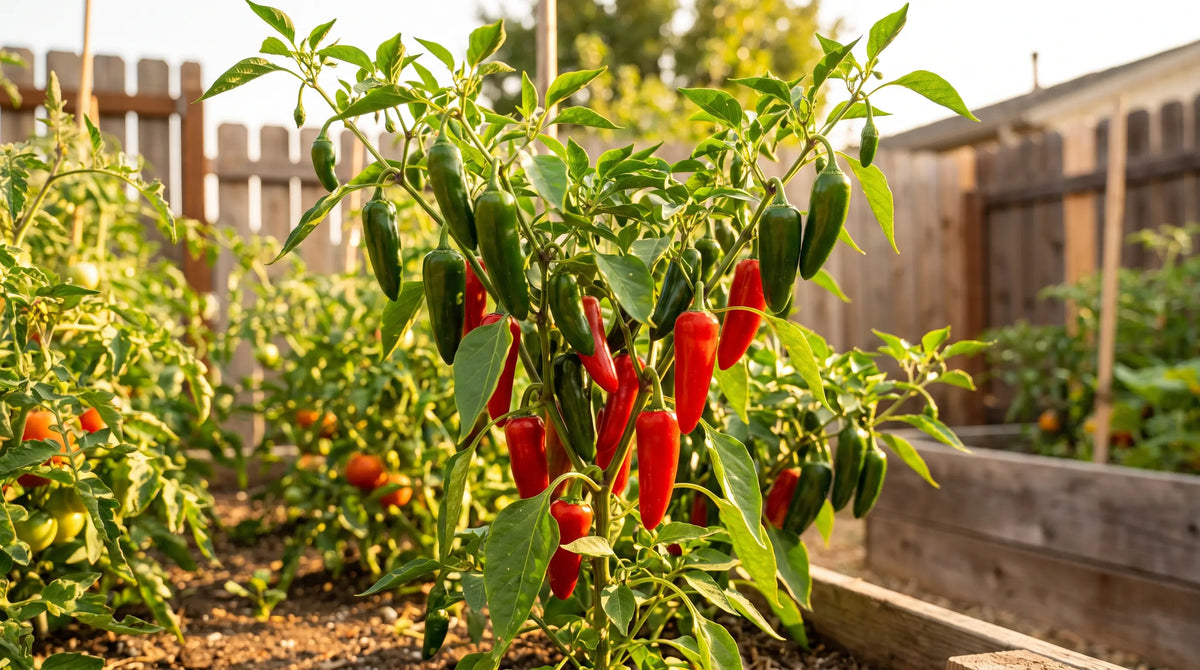
How to Grow Fresno Pepper From Seed
Updated July 2026
Fresno is a glossy, conical chile that looks like a jalapeno but ripens from green to bright red with a fruitier, slightly hotter bite. At roughly 2,500 to 10,000 Scoville heat units it sits in the same friendly medium range as a jalapeno, making it a versatile all-purpose cooking pepper. Pick it green for a crisp, grassy heat or ripen it red for a sweeter, smokier flavor.
Quick start
Best tip
At a glance
 Botanical name Botanical name | Capsicum annuum |
|---|---|
 Plant type Plant type | Warm-season annual |
 USDA zones USDA zones | 3 to 12 (grown as an annual) |
 Sun Sun | Full sun (6 to 8+ hours) |
 Days to maturity Days to maturity | 70 to 80 days green; ~90 red |
 Height Height | 24 to 30 inches |
 Spacing Spacing | 18 to 24 inches apart |
 Water Water | Regular and deep; keep evenly moist |
Uses
Frequently asked questions
How long does a Fresno pepper take to grow?
Fresno peppers are usually pickable green about 70 to 80 days after transplanting, and ripen to bright red roughly 2 weeks later. Start seeds indoors 8 weeks before your last frost for the strongest plants.
How hot is a Fresno pepper?
Fresno peppers run about 2,500 to 10,000 Scoville heat units, roughly the same as a jalapeno but often a touch hotter and fruitier, especially once they ripen to red. It is a friendly medium heat.
What is the difference between a Fresno and a jalapeno?
They look similar when green, but Fresnos are typically ripened to bright red with thinner walls and a fruitier, slightly hotter flavor. Jalapenos are usually eaten green with thicker walls. Fresnos shine fresh and in hot sauces.
When do I pick Fresno peppers?
Pick Fresnos green for a crisp, grassy medium heat, or wait until they turn glossy bright red for a sweeter, fruitier, slightly hotter flavor. Red Fresnos are the classic choice for hot sauces and salsas.

Fresno Pepper Seeds – Non-GMO HeirloomHeirloom, non-GMOHeirloom Fresno chile — bright, fruity heat that ripens from green to red.
Price$4.99
Want more peppers? These value packs pair Fresno with other sweet and hot varieties:
Sale

Pepper Seeds Variety Pack – Non-GMO Heirloom13 super-hot varietiesThirteen fiery chilis for heat lovers, from habanero to the hottest peppers we carry.
Price$19.99Starting at$16.99

- Choosing a selection results in a full page refresh.









 Easy Returns 30-day guarantee