


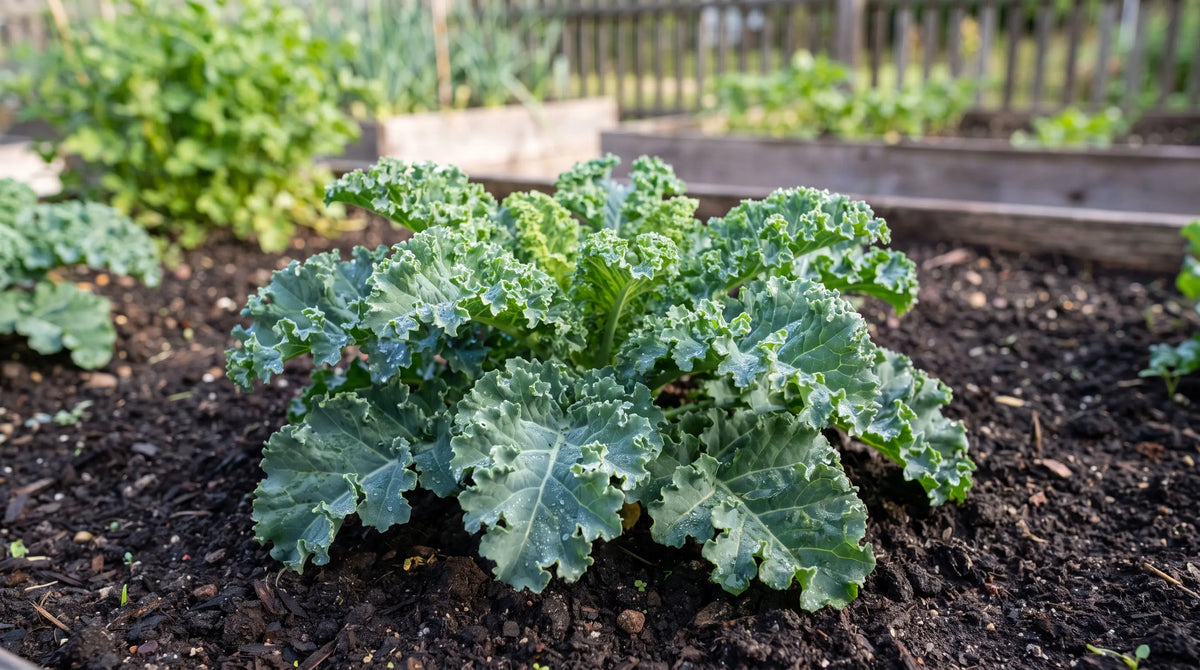
How to Grow Dwarf Siberian Kale From Seed
Updated July 2026
Dwarf Siberian is a compact, incredibly cold-hardy kale prized for its frilly blue-green leaves and vigorous, productive growth. It stays low and bushy, making it ideal for small beds, containers, and cut-and-come-again harvesting, and it shrugs off hard frost better than almost any other kale. Baby leaves are ready in about 25 days and full leaves in 50 to 60 days, and the flavor only sweetens as the weather cools. This guide covers how to grow Dwarf Siberian kale from seed, from sowing to a long overwintering harvest.
Ready to grow your own? Shop Kale Dwarf Siberian Seeds from Organo Republic.
Quick start
Best tip
At a glance
 Botanical name Botanical name | Brassica oleracea var. sabellica 'Dwarf Siberian' |
|---|---|
 Plant type Plant type | Hardy cool-season biennial grown as an annual |
 USDA zones USDA zones | 2 to 11 (extremely cold hardy) |
 Sun Sun | Full sun to part shade |
 Days to maturity Days to maturity | 25 days baby, 50 to 60 days full leaf |
 Height Height | 12 to 16 inches (dwarf, compact) |
 Spacing Spacing | Thin to 12 to 18 inches apart |
 Water Water | 1 to 1.5 inches a week; keep evenly moist |
Uses
Frequently asked questions
How cold-hardy is Dwarf Siberian kale?
Very. Dwarf Siberian is one of the hardiest kales you can grow and shrugs off hard frost, often keeping its frilly blue-green leaves productive into winter down to around 10 to 20F, especially with a little mulch. The cold actually sweetens the leaves.
How long does Dwarf Siberian kale take to grow?
You can start snipping baby leaves in about 25 days, and plants reach full-sized leaves in roughly 50 to 60 days. Because you harvest the outer leaves and the plant keeps growing from the center, one sowing can crop for months.
Is Dwarf Siberian kale good for containers and small gardens?
Yes. It stays compact and bushy, usually around 12 to 16 inches tall, which makes it one of the best kales for pots, raised beds, and tight spaces. Use a container at least 8 to 12 inches deep with one or two plants and pick the outer leaves as you need them.
What does Dwarf Siberian kale taste like?
It has tender, mild, slightly sweet leaves that are gentle enough to eat raw in salads or smoothies, and it only gets sweeter after frost. The frilly leaves also hold up well massaged, baked into chips, or added to soups and stir-fries.
Sale

Siberian Kale Seeds – Dwarf, Non-GMO HeirloomHeirloom, non-GMOHeirloom Dwarf Siberian kale — compact, extremely cold-hardy, and productive for months.
Price$5.99
Sale Price$4.99
Want more than kale? These value sets all include kale seeds, plus many more greens and veggies:

- Choosing a selection results in a full page refresh.










 Easy Returns 30-day guarantee