


How to Grow Purple Basil From Seed
Updated July 2026
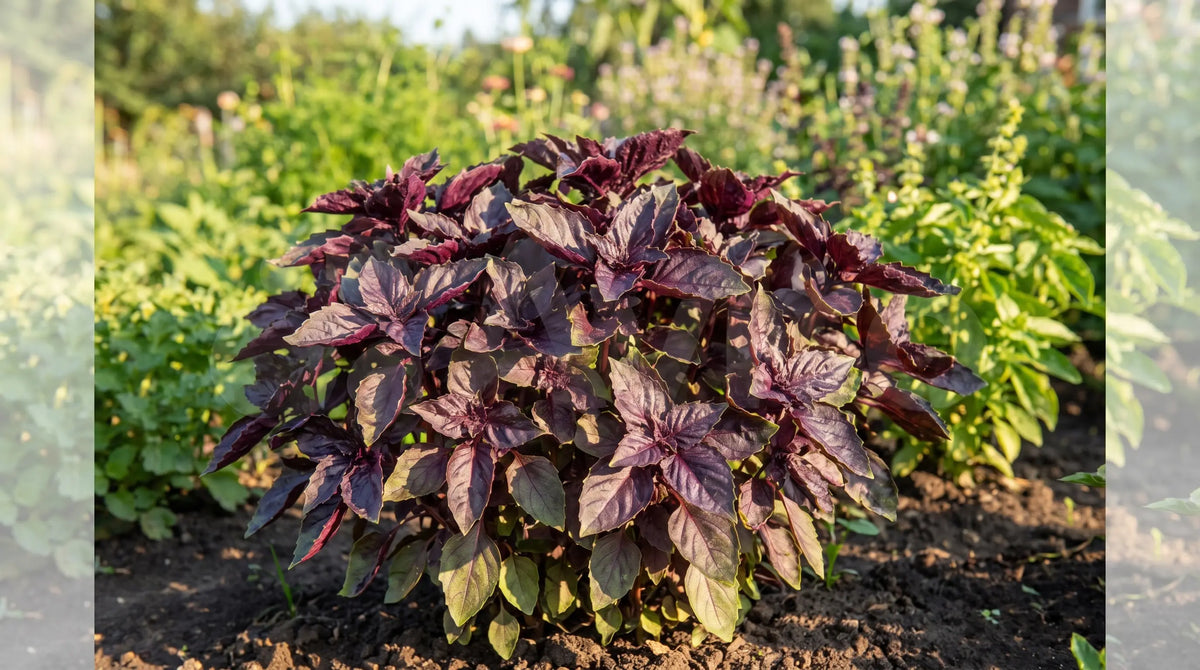
Purple basil earns its place twice over, as a striking garden ornamental and a genuine kitchen herb, and it grows from seed much like the sweet kind. This warm-season annual (Ocimum basilicum 'Dark Opal') brings deep-purple leaves to salads, garnishes, and ruby-tinted vinegars, and holds its color best in full sun. Here is everything you need, from sowing depth and warmth to pinching, harvest, and the companions that help it thrive.
Best tip
At a glance
 Botanical name Botanical name | Ocimum basilicum 'Dark Opal' |
|---|---|
 Plant type Plant type | Warm-season annual herb |
 USDA zones USDA zones | 2 to 11 (grown as a summer annual) |
 Sun Sun | Full sun (6+ hours) |
 Days to maturity Days to maturity | 60 to 80 days |
 Height Height | 14 to 20 inches |
 Spacing Spacing | Thin to 8 to 12 inches |
 Water Water | Regular; keep evenly moist, never soggy |
When to plant
How to plant
Growing and care
Sale

Mycorrhizal Fungi GranulesFeeds roots naturallyMix a little into the planting hole to boost basil's roots.
Price$39.99Starting at$29.99
The best companion plants
Sale

Beefsteak Tomato Seeds – Red, Non-GMO HeirloomCompanion plantBasil's classic partner. The two thrive side by side and pair perfectly on the plate.
Price$4.99Starting at$3.99
Sale

Nasturtium Seeds for Sale – Non-GMO HeirloomCompanion plantA cheerful trap crop that lures aphids away from your basil and tomatoes.
Price$14.99Starting at$6.99
Sale

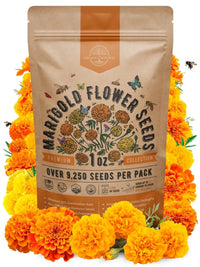
Marigold Seeds PackCompanion plantBright blooms that repel pests and pull in pollinators near your basil bed.
Price$12.99Starting at$8.99
Sale

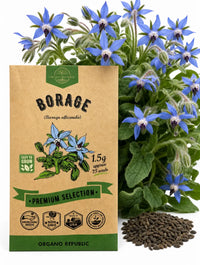
Borage Seeds – Non-GMO HeirloomCompanion plantIts blue star flowers draw bees and its scent helps deter pests around basil.
Price$5.99Starting at$4.99
Harvest
Uses
Common problems
Frequently asked questions
Why is my purple basil turning green?
Purple basil needs plenty of direct sun to develop and hold its deep color. In too much shade, or under weak indoor light, new leaves come in greener. Move it to the sunniest spot you have and the color will deepen again.
Does purple basil taste different from green basil?
Yes, a little. Purple basil, such as Dark Opal, is slightly milder and more clove-like than sweet Genovese basil, with a hint of spice. It is prized as much for its dramatic color as its flavor, and works well fresh in salads, garnishes, and infused vinegars.
How long does purple basil take to germinate?
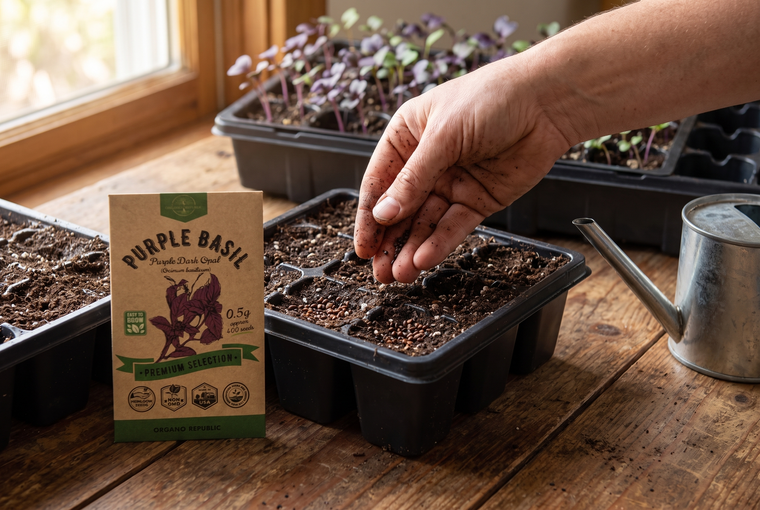
Purple basil can be a touch slower than green basil, usually sprouting in 7 to 14 days when the soil is kept evenly moist and warm, around 70F. Be patient and keep it warm, and use a heat mat if your seed-starting area runs cold.
Can I grow purple basil indoors?
Yes, but give it your brightest window or a strong grow light for at least 6 hours a day, since low light both slows growth and fades the purple color. Keep it warm, water when the top inch of soil dries, and pinch the tips to keep it bushy.
How do I harvest purple basil so it keeps growing?
Pinch or snip whole stem tips just above a pair of leaves rather than picking single leaves. Each cut prompts the plant to branch, so regular harvesting keeps purple basil bushy, colorful, and productive. Never take more than about a third of the plant at once.
What is purple basil good for?
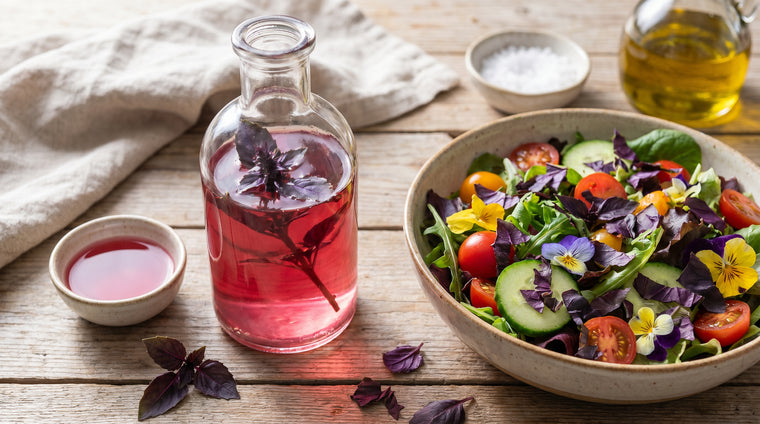
Purple basil is both ornamental and edible. Its deep color makes a beautiful garden edging and a striking fresh garnish, and it turns vinegars, oils, and herbal syrups a lovely ruby-pink. Use it fresh in salads and drinks to keep both its color and flavor.
Sale

Purple Basil Seeds – Dark Opal, Non-GMO HeirloomThe star of this guideHeirloom, non-GMO. Striking deep-purple Dark Opal leaves, beautiful and edible.
Price$4.99Starting at$3.99
Want more than purple basil? These culinary sets all include purple basil seeds, plus many more herbs:
Sale

Culinary Herbs & Edible Flower Seeds Variety Pack – Non-GMO Heirloom30 varieties, purple basil includedOur biggest culinary herb and edible-flower set, with purple basil and 35 more.
Price$21.99Starting at$19.99

- Choosing a selection results in a full page refresh.









 Easy Returns 30-day guarantee