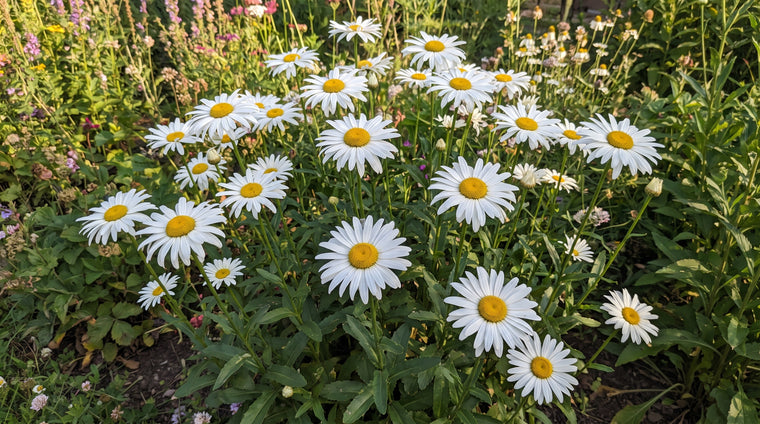
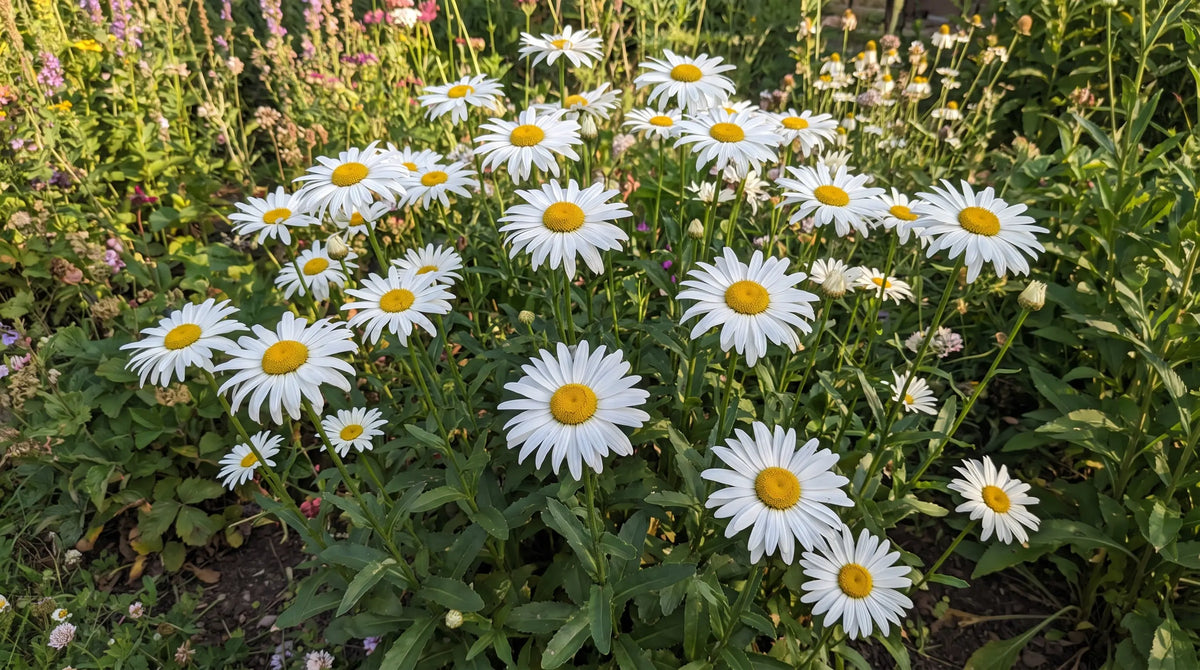
Classic white Shasta daisies with yellow centers blooming in a sunny garden bed

How to Grow Shasta Daisy From Seed

Updated July 2026

The Shasta daisy is the flower everyone pictures when they think of a daisy: crisp white petals circling a sunny yellow eye, standing tall and cheerful in the summer border. This classic perennial (Leucanthemum x superbum, including the beloved 'Alaska') is tough, reliable, and easy to grow from seed, coming back year after year in USDA zones 4 to 9. Give it full sun and decent drainage and it rewards you with armfuls of long-lasting cut flowers and a border that looks fresh from early to midsummer. This guide walks you through growing Shasta daisies from seed to bloom.

Best tip

Divide the clumps every few years. Shasta daisies are vigorous, and after two or three seasons a clump can crowd itself into weaker growth and smaller flowers. Digging it up and splitting it into several pieces in spring or fall rejuvenates the plant, gives you free new daisies to spread around the garden, and keeps the flower show at its best for years.

At a glance

Botanical nameLeucanthemum x superbum 'Alaska'
Plant typePerennial flower
USDA zones4 to 9
SunFull sun (tolerates light afternoon shade)
Days to maturityBlooms early to midsummer; full bloom usually in year two
Height2 to 3 ft
Spacing12 to 24 in
WaterModerate; consistent moisture, well-drained soil

When to plant

Sow Shasta daisy seeds indoors 6 to 8 weeks before your last spring frost, or direct sow outdoors in late spring once the soil has warmed. As a perennial, it can also be sown in early fall in mild climates to bloom the following year. Pick a spot in full sun with well-drained soil; a little afternoon shade is fine in very hot regions. Because it is a perennial, patience pays off: the first year builds strong roots, and the big flower show arrives the second summer.

How to plant

Shasta daisy seeds need light to germinate, so press them gently onto the soil surface and barely cover them, no more than about an eighth of an inch. Keep the mix warm, around 65 to 70F, and evenly moist, and expect sprouts in 10 to 20 days. Grow seedlings on in bright light until they have a few sets of true leaves, then harden them off and transplant outdoors, spacing plants 12 to 24 inches apart. Give them room and airflow, since good spacing keeps the foliage healthy and the clumps vigorous.

Growing and care

Shasta daisies are easygoing once established. Water them consistently, aiming for evenly moist but never waterlogged soil, and give a light feeding in spring if your soil is poor. Deadhead spent blooms through the season to keep the flowers coming and the plant tidy. The single most important long-term task is division: dig and split the clumps every two to three years in spring or fall to keep them vigorous and free-flowering. Tall varieties may need a little support in exposed spots, and cutting plants back after flowering keeps them neat.

The best companion plants

Shasta daisies shine in a sunny perennial border. These heirloom favorites bloom alongside them and share the same easy care:

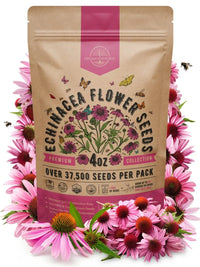
Echinacea Seeds Pack
Echinacea Seeds PackPollinator favoriteNative purple coneflower, a hardy perennial that blooms with Shasta daisies and feeds pollinators.$4.99$3.99
View product
Cosmos Seeds
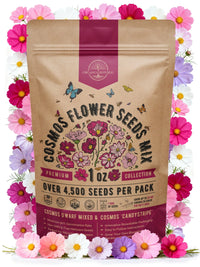
Cosmos SeedsHeirloom, non-GMOAiry, daisy-like flowers that mingle beautifully with Shasta daisies in beds and bouquets.$14.99$12.99
View product
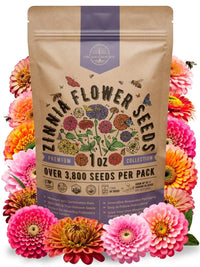
Zinnia Seeds Pack
Zinnia Seeds PackHeirloom, non-GMOBold, long-lasting cut flowers that love the same full sun as Shasta daisies.$14.99$12.99
View product

Give them room and expect the big show in year two. The two things that trip up new Shasta daisy growers are impatience and overcrowding. As a perennial from seed, it usually blooms sparsely the first year and fully the second, so do not give up early. And because the clumps spread, planting too tightly leads to poor airflow and mildew. Space plants well and divide them over time. Grown as an ornamental, it is not a food plant.

Harvest

Shasta daisies are wonderful cut flowers. Snip stems in the cool of the morning when the flowers have just fully opened and the centers are still tight and bright, cutting long stems down into the foliage. They can last a week or more in a vase with fresh water. Regular cutting doubles as deadheading and encourages more blooms. To save seed, leave a few flowers to fade and dry on the plant, then collect the ripe seed from the centers once they turn brown and dry.

Uses

The Shasta daisy is a border classic, bringing clean, cheerful white-and-yellow color to cottage gardens, perennial beds, and pollinator plantings. Its sturdy, long-lasting blooms make it one of the best daisies for cutting, and its open flowers offer easy landing pads and nectar for bees, butterflies, and other beneficial insects. Reliably perennial and largely deer resistant, it is a dependable backbone plant for a sunny garden that looks good year after year.

Common problems

  • Few or no flowers the first year: normal for a perennial grown from seed. Plants build roots the first season and put on their main show in year two.
  • Crowded, tired clumps with smaller blooms: they need dividing. Dig and split the clumps every two to three years in spring or fall to renew them.
  • Leggy, flopping stems: too much shade or overly rich soil. Grow in full sun, and stake or support tall varieties in windy, exposed spots.
  • Powdery mildew or leaf spot: fungal issues in crowded, humid conditions. Space plants for airflow, water at the base, and remove affected foliage.
  • Aphids on buds and new growth: rinse them off with water, encourage ladybugs, or use insecticidal soap if they persist.

Frequently asked questions

Do Shasta daisies come back every year?

Yes. Shasta daisy (Leucanthemum x superbum, such as the 'Alaska' variety) is a hardy perennial in USDA zones 4 to 9, returning each spring for years. Clumps grow steadily and bloom best when you divide them every two to three years. Started from seed, plants often reach full flowering in their second summer.

How long do Shasta daisies take to grow from seed?

Shasta daisy seeds usually germinate in 10 to 20 days in warm soil. As a perennial, it spends its first year building roots and foliage, then puts on its main display of classic white, yellow-centered flowers from early to midsummer of the second year. Sow in spring for blooms the following season.

Should you deadhead Shasta daisies?

Yes. Snipping off faded flowers (deadheading) keeps Shasta daisies blooming longer and stops them from setting excess seed. Cut spent blooms back to a leaf or side bud, and you will often be rewarded with a fresh flush of flowers later in the season. Leave a few final blooms in fall if you want some self-sowing.

Are Shasta daisies deer resistant?

Shasta daisies are considered fairly deer resistant. Deer tend to pass them by in favor of tastier plants, though no flower is completely deer proof, and hungry deer will sample almost anything. They are a reliable choice for gardens with light to moderate deer pressure, especially planted among other aromatic or resistant perennials.

How big do Shasta daisies get?

Most Shasta daisies grow 2 to 3 feet tall and form clumps about 1 to 2 feet wide. Give them full sun and space plants roughly 12 to 24 inches apart for good airflow. They make excellent, long-lasting cut flowers, so plant a generous patch if you love bringing daisies indoors.

Ready to grow your own Shasta daisies? Start with our non-GMO, heirloom 16 Perennial Wildflower Mix for years of easy color, or explore the full range at /collections/wildflower-seeds and fill your beds with classic daisies.

16 Perennial Wildflower Seeds Mix
16 Perennial Wildflower Seeds MixBest value16 heirloom perennial wildflowers for years of easy color from a single sowing.$14.99$12.99
View product

Filling out a sunny border? Add these non-GMO heirloom wildflower mixes:

21 Annual Wildflower Seeds Mix
21 Annual Wildflower Seeds Mix21 fast annual wildflowers for quick color while your perennial daisies establish.$24.99$22.99
View product
23 Birds & Butterflies Wildflower Seeds Mix
23 Birds & Butterflies Wildflower Seeds Mix23 nectar-rich wildflowers chosen to draw hummingbirds and butterflies to your beds.$14.99$12.99
View product
19 Bees & Pollinators Wildflower Seeds Mix
19 Bees & Pollinators Wildflower Seeds Mix19 bee-friendly blooms to turn a sunny daisy border into a buzzing pollinator haven.$24.99$22.99
View product
Maxim Kaufman, Founder and CEO of Organo Republic

By Maxim Kaufman — Founder & CEO, Organo Republic

Maxim founded Organo Republic in 2017 and personally selects, tests, and grows the heirloom, non-GMO varieties the company offers. Under his leadership, Organo Republic was named Agri Business Review’s Top Non-GMO Seed Variety Solution 2026.