


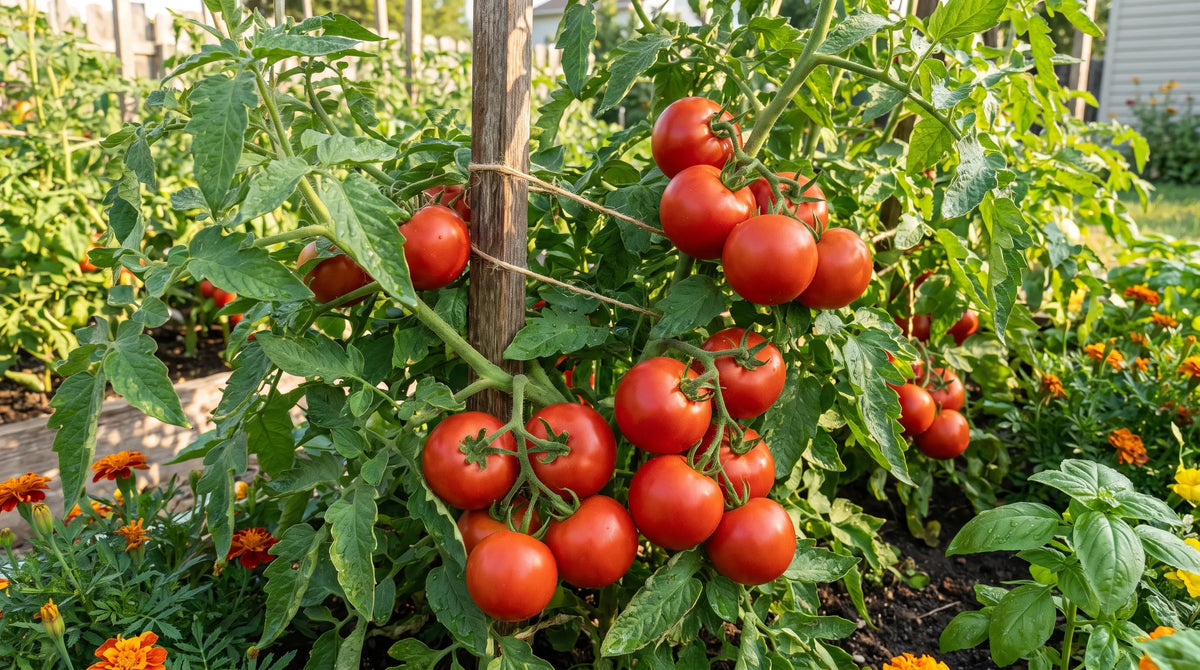
How to Grow Marglobe Tomatoes From Seed
Updated July 2026
Marglobe is a classic 1920s heirloom slicing tomato that has earned its place in gardens for a century. This determinate plant sets smooth, deep-red, medium-large globes in reliable, heavy crops, then ripens most of them over a few weeks in about 75 days. It carries built-in resistance to verticillium and fusarium wilt, so it produces dependably with little fuss. Meaty and versatile, Marglobe is equally at home sliced fresh on a sandwich or put up by the jar for canning and sauce.
Quick start
Best tip
At a glance
 Botanical name Botanical name | Solanum lycopersicum |
|---|---|
 Plant type Plant type | Warm-season annual (determinate) |
 USDA zones USDA zones | 3 to 12 (grown as an annual) |
 Sun Sun | Full sun (6 to 8+ hours) |
 Days to maturity Days to maturity | 75 days from transplant |
 Height Height | 3 to 4 feet (determinate) |
 Spacing Spacing | 24 to 36 inches apart |
 Water Water | Deep and even; 1 to 2 inches a week |
Uses
Frequently asked questions
How long does Marglobe tomato take to grow?
Marglobe ripens in about 75 days from transplant. Start seeds indoors 6 to 8 weeks before your last frost, set plants out once the soil is warm, and you will pick smooth, deep-red globes through the heart of summer.
Is Marglobe determinate or indeterminate?
Marglobe is a determinate tomato, so it grows to a compact bush and sets most of its fruit over a few weeks. A short stake or cage is enough support, and you will not need to prune it the way you would a tall indeterminate vine.
What is Marglobe tomato good for?
Marglobe is a dual-purpose slicer and canner. Its smooth, deep-red, medium-large fruit is meaty enough for fresh slices and sandwiches, yet its heavy, uniform yields make it a favorite for canning, sauce, and putting up tomatoes for winter.
Is Marglobe tomato disease resistant?
Yes. Marglobe is a classic 1920s heirloom prized for its resistance to verticillium and fusarium wilt, which is why it produces such reliable, heavy crops. Rotate where you plant tomatoes each year and water at the base to keep foliage healthy.
Sale

Tomato & Tomatillo Seeds Variety Pack – Non-GMO Heirloom14 tomato & tomatillo varietiesFourteen heirloom tomatoes and tomatillos in one pack — the easiest way to grow a whole rainbow of varieties.
Price$19.99
Sale Price$16.99
Want more tomatoes? These value packs pair Marglobe with other varieties:

- Choosing a selection results in a full page refresh.
















 Easy Returns 30-day guarantee